Key Takeaway
- Choosing the right floor tiles in Singapore means matching material properties to how each room is actually used, not just how the tile looks in a showroom.
- Porcelain is the most widely used flooring material in Singapore homes because of its density, water resistance, and low maintenance requirements.
- Granite flooring offers a premium natural stone look with strong durability, but requires periodic sealing and careful finish selection to avoid slip risk in wet areas.
- Room usage, foot traffic, moisture exposure, and substrate condition all affect which tile performs best over time.
- Home renovation Singapore projects that skip these considerations often end up with tiles that look great on day one but cause problems within the first few years.
Introduction
Most homeowners spend more time choosing tile colours and patterns than they do thinking about how the tile will perform. That’s understandable. A floor tile selection involves hundreds of options, and the visual appeal is immediately obvious. The slip rating, water absorption rate, and maintenance requirements are not.
In Singapore, those practical factors matter more than they do in most other places. High ambient humidity means moisture management is constant. Wet areas in bathrooms, kitchens, and utility rooms face more sustained exposure than in drier climates. And with compact HDB layouts where open-plan living puts a single tile type across multiple zones, a choice that works in the living room may not be the right call for the kitchen.
This guide covers the factors that actually determine how floor tiles Singapore homeowners choose will perform over ten or fifteen years: material type, slip resistance, finish, thickness, and maintenance. Practical and specific, room by room.
What Are Floor Tiles?
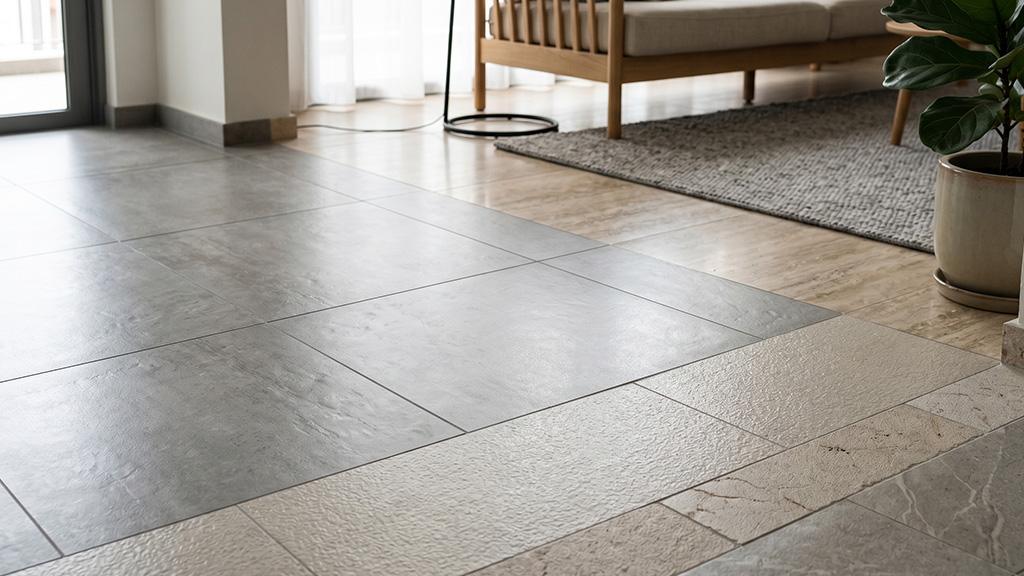
Floor tiles are hard surface coverings installed over a prepared substrate to protect the floor and provide a finished surface for daily use. They differ from wall tiles in two key ways: they must meet higher break-strength and slip-resistance standards, and they need to handle the physical load of foot traffic. Common types used in Singapore include ceramic, porcelain, homogeneous, natural stone (granite, marble, slate), and large-format sintered stone panels. Each differs in density, porosity, hardness rating, and maintenance requirements. Choosing between them starts with understanding what the space demands.
Porcelain and Homogeneous Tiles: The Practical Default
Porcelain is the most widely installed flooring material in Singapore homes, and the reasons are practical. It’s manufactured from refined clay fired at high temperatures, producing a surface that is denser, less porous, and harder than standard ceramic. According to This Old House, porcelain tiles are an excellent choice for high-traffic areas and moisture-prone rooms, and floor-tile glazes should rank 7 on the Mohs hardness scale, the same rating as quartz, to resist scratching from daily use.
Homogeneous tiles are a specific category of porcelain where the colour and composition run through the full thickness of the tile, not just on the surface glaze. This matters for durability: if the surface chips or scratches, the tile still looks consistent beneath. Most Singapore homeowners living in HDB flats or condos will encounter homogeneous tiles in their common areas, bathrooms, and kitchens as the standard installed finish.
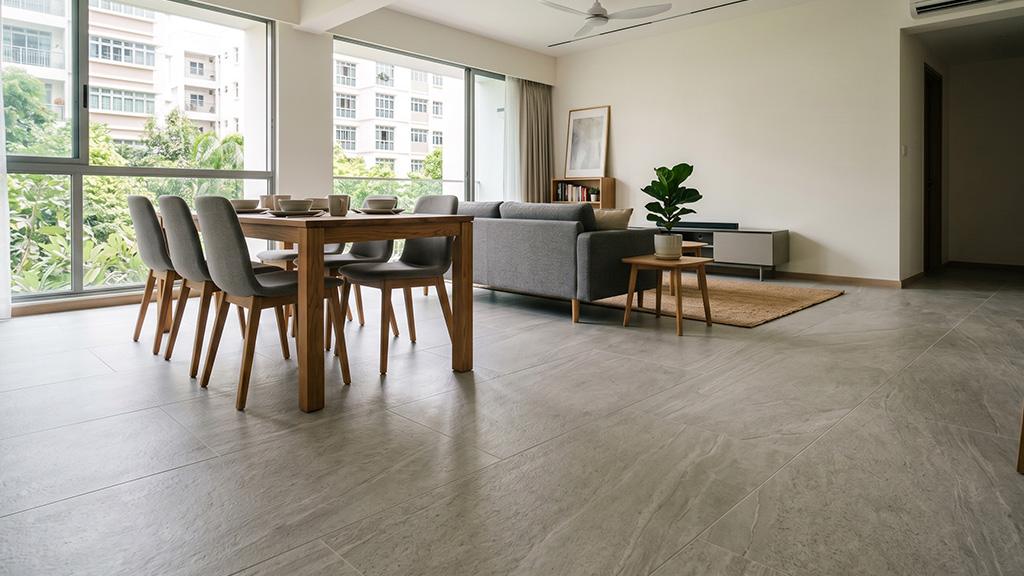
When choosing floor tiles in Singapore for a full home renovation, most homeowners now opt for porcelain in formats of 600mm by 600mm or larger. These expansive tiles minimize grout lines, which not only simplifies maintenance but also creates a seamless, modern aesthetic that works perfectly in open-plan living spaces.
The main consideration with porcelain is finish selection. A polished or high-gloss porcelain floor looks striking but becomes slippery when wet. A matte or textured finish provides far better grip in bathrooms, kitchens, and entrance foyers where wet feet or shoes are routine. Mismatching the finish to the room type is one of the most common tile selection errors in Singapore home renovation.
Granite Flooring: Natural Stone With Specific Demands
Granite flooring has been a fixture in Singapore homes for decades, particularly in older landed properties and condo developments where the emphasis was on materials that feel premium and last for generations. The case for granite is genuine. It’s one of the hardest natural stones used in flooring, ranking between 6 and 7 on the Mohs scale, and its density makes it highly resistant to scratching and heavy traffic over time.
The visual appeal is also distinct from engineered materials. No two granite slabs look identical. The mineral patterns, crystal formations, and colour variations within each piece give granite flooring a depth that no tile or laminate can replicate. For a foyer, a living room feature floor, or a bathroom, that uniqueness is part of the value.
The demands of granite flooring are real, though. Granite is porous to a degree that varies by the specific stone, and without sealing, liquids can penetrate the surface over time. This leads to staining, particularly with oils, sauces, or dark liquids. In a Singapore household where curry, soy sauce, and cooking oils are common kitchen staples, an unsealed granite floor in the kitchen is a maintenance commitment that some homeowners underestimate.
Sealing granite flooring on installation, and resealing every one to two years depending on usage, keeps the surface resistant. This isn’t complicated, but it’s an ongoing requirement that porcelain or sintered stone surfaces don’t share. TSD’s detailed guide to granite stone in Singapore covers how to assess granite quality, finish options, and sourcing considerations for residential projects.
Finish also matters for safety. Polished granite floors are genuinely slippery when wet. For a bathroom or an outdoor area, a honed or flamed finish provides significantly better slip resistance without compromising the natural stone aesthetic.
“Granite flooring earns its place in rooms where the visual richness of natural stone matters most. In utility spaces and wet areas, a finish that provides grip matters more than one that looks pristine.”
Natural Stone vs Engineered Surfaces: Choosing for the Room
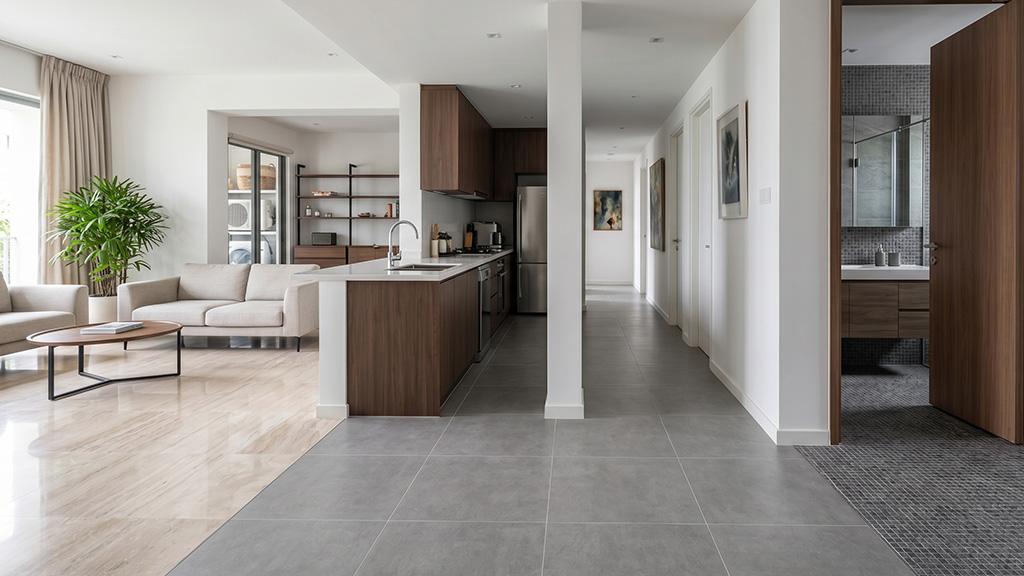
Not every space in a Singapore home calls for the same flooring material. The decision between natural stone and engineered surfaces comes down to which room you’re tiling and what that room actually does.
Living rooms and bedrooms are the easiest spaces for natural stone. Foot traffic is moderate, liquid exposure is minimal, and the main requirement is that the floor looks good and holds up to daily walking. Both granite and large-format porcelain perform well here. The choice between them is mainly aesthetic and budgetary.
Kitchens and wet areas require more careful thinking. A kitchen floor in Singapore sees cooking oil, water, and cleaning products daily. Granite can handle this well when properly sealed. Porcelain handles it without sealing. Marble doesn’t handle it well at all: it etches from acidic substances and stains readily in a cooking environment. If the floor is the backdrop to an active kitchen, material porosity and acid resistance should weigh as heavily as appearance.
Bathrooms have the highest slip risk of any room in the home. Textured porcelain or honed natural stone in smaller formats (300mm by 300mm or mosaic formats) provide better grip than large polished slabs. For a master bathroom with a rain shower or a wet room layout, tile format and finish are safety decisions, not just aesthetic ones.
Entrance foyers and corridors handle the highest foot traffic and the most direct outdoor-to-indoor transition. Sand, grit, and dirt tracked in from outside will scratch softer surfaces over time. Dense homogeneous tiles or granite with a honed finish are the most durable options for these zones.
For homeowners planning flooring across multiple rooms in a single home renovation Singapore project, TSD’s floor tiles Singapore guide covers material trends, format options, and how to create visual continuity across connected spaces without using the same tile everywhere.
“The best floor tile isn’t the one that looks best in isolation. It’s the one that still performs well in year eight, under the conditions of the specific room it was installed in.”
Thickness, Substrate, and Installation Considerations
Tile thickness affects structural performance, not just weight. Standard floor tiles run between 8mm and 12mm for most residential applications. Large-format tiles (800mm by 800mm and above) often come in 10mm to 12mm thickness to reduce the risk of cracking across a span. Thinner tiles are used for wall applications, not floors, and using a wall tile on a floor is a common error that leads to premature cracking or surface wear.
The substrate condition matters as much as the tile itself. A floor tile laid onto an uneven or structurally unsound base will crack at stress points regardless of the material quality. For HDB renovations, homeowners are not permitted to hack the original floor screed during the first three years after receiving the flat. Laying new tiles over the existing floor finishes is permitted, using adhesive, but the added layer changes the floor height at transitions like doorways and has specific requirements under HDB’s renovation guidelines for building works.
Grout selection also plays a long-term maintenance role. Standard grout in wet areas discolours over time. Epoxy grout costs more and is harder to install, but it resists staining and moisture penetration far better in bathrooms and kitchens. For homeowners who’ve scrubbed grout for years, specifying epoxy from the start removes that problem entirely.
What Are the Right Floor Tiles for Singapore Homes?
The right floor tiles in Singapore depend on three things: the room’s moisture exposure, the level of foot traffic it handles, and the maintenance commitment you’re prepared to keep. Porcelain is the most practical and durable choice for most rooms and most homeowners. Granite flooring brings natural stone character to living and bedroom spaces with regular sealing. Large-format natural stone or sintered stone suits homeowners who want a premium aesthetic and are choosing a supplier who handles fabrication and installation with precision.

Frequently Asked Questions
1. What is the most durable floor tile for Singapore homes?
Porcelain and homogeneous tiles are the most durable flooring materials for most Singapore homes. They’re dense, non-porous, and require no sealing. For areas that prioritise a natural stone look, granite flooring with a honed finish and proper sealing performs strongly over fifteen years or more with standard maintenance.
2. Do granite floor tiles need to be sealed in Singapore?
Yes. Granite is porous and should be sealed on installation and resealed every one to two years, depending on the level of use and exposure. In kitchens and bathrooms, regular sealing prevents liquid absorption and staining. In living rooms and bedrooms with lower exposure, the resealing interval can be extended.
3. Can I lay new floor tiles over existing tiles in an HDB flat?
Yes, in most cases. Laying new tiles over existing floor finishes using adhesive is permitted under HDB guidelines, subject to restrictions on total floor height increase and waterproofing requirements in wet areas. Hacking of the original floor screed is not permitted during the three-year restriction period after receiving a new flat. Check current HDB guidelines before proceeding.
4. What floor tile finish is safest for bathrooms in Singapore?
Matte, textured, or honed finishes provide significantly better grip than polished surfaces in wet conditions. For bathrooms, a slip resistance rating of R10 or above (or a wet pendulum test value of 36 or higher) is the recommended minimum for residential use. Smaller format tiles also provide more grout lines, which improves grip in shower areas.
5. How do I choose between porcelain and natural stone flooring for my renovation?
Porcelain is the lower-maintenance choice: it’s non-porous, never needs sealing, and resists moisture and staining without any treatment. Natural stone like granite, offers a unique visual quality that engineered materials can’t replicate, but requires sealing and careful finish selection. The decision usually comes down to how much maintenance effort you’re prepared to commit to, and how much the natural variation of stone matters in the room’s design.
Choosing floor tiles for a Singapore home is easier when you work backwards from how the room is used, rather than forwards from what looks good in a catalogue. Porcelain handles the practical demands of most rooms without asking much in return. Granite flooring rewards the homeowner who wants natural stone character and is prepared to maintain it. Large-format surfaces in sintered stone or natural stone suit homes where premium material quality and visual continuity across rooms are the priority.
If you’re planning a home renovation Singapore project and want to compare flooring and surface options side by side, TSD’s full range of surfaces covers granite, sintered stone, quartz, and more, with in-house fabrication and installation. You can also review TSD’s guide to kitchen countertops Singapore for how surface choices extend across the kitchen floor and countertop as a connected design decision.