Key Takeaway
- Choosing the right dining table top in Singapore means matching the surface to how the table is actually used, not just how it looks in a catalogue.
- Quartz table tops are non-porous, resist staining without sealing, and suit households that cook frequently and eat at the table daily.
- Sintered stone table tops offer the strongest heat and scratch resistance of any engineered surface, making them ideal for open-plan dining areas close to the kitchen.
- Marble and natural stone bring visual richness but require sealing and careful maintenance in households with young children or frequent spills.
- A custom table top allows homeowners to specify dimensions, edge profiles, and finish type for a table that fits the room precisely.
Introduction
The dining table is one of the most used surfaces in a Singapore home. It handles meals, homework, laptop sessions, and whatever else the household brings to it. Most people spend more time choosing the base and the chairs than they do thinking about what the table top is made of. Then the surface starts showing stains, scratches, or heat marks, and the material decision becomes very obvious in hindsight.
For a dining table top in Singapore, the choice of surface material isn’t just aesthetic. Humidity, heat from food placed directly on the table, and the wear of daily family use all put surfaces to the test. A marble top that looks stunning in a showroom may require more care than a busy household can commit to. A wood veneer top that suits a certain style may not hold up in a kitchen-adjacent dining area where cooking is intensive.
This guide covers the main surface materials used for dining table tops in Singapore, how each performs under daily conditions, and what to consider when choosing or commissioning a custom piece.
What Is a Dining Table Top in Singapore?
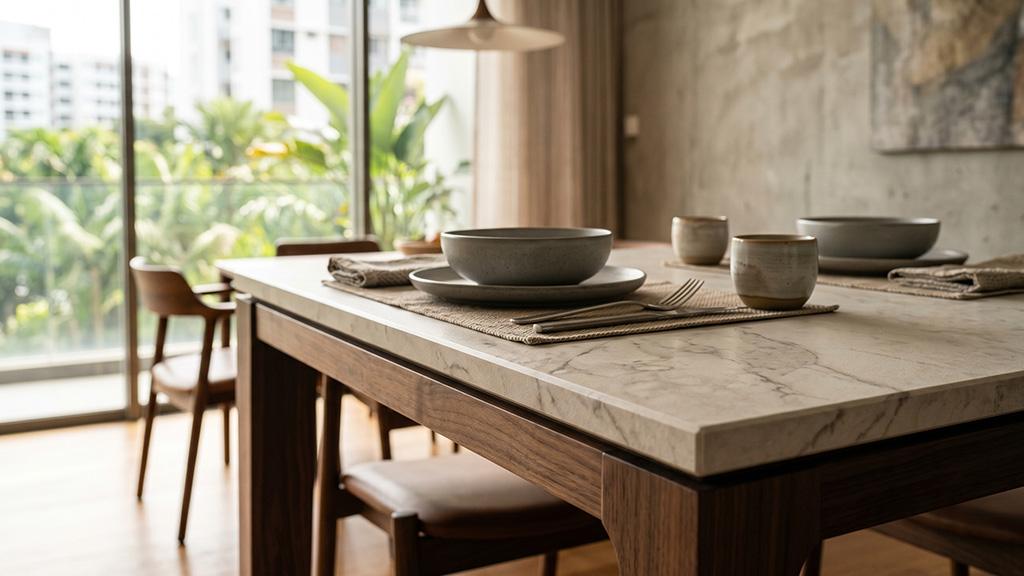
A dining table top in Singapore refers to the horizontal surface of a dining table, specified by material, thickness, dimensions, edge profile, and finish. Unlike ready-made furniture table tops made from laminate or wood veneer over MDF cores, stone and engineered stone table tops are fabricated from solid slabs cut and profiled to size. Common materials include quartz, sintered stone, marble, granite, and timber. Each differs in porosity, hardness, heat tolerance, and maintenance requirements. The right choice depends on how the table is used, how many people use it, and what level of upkeep the household can sustain long-term.
Quartz Table Tops: The Low-Maintenance Choice
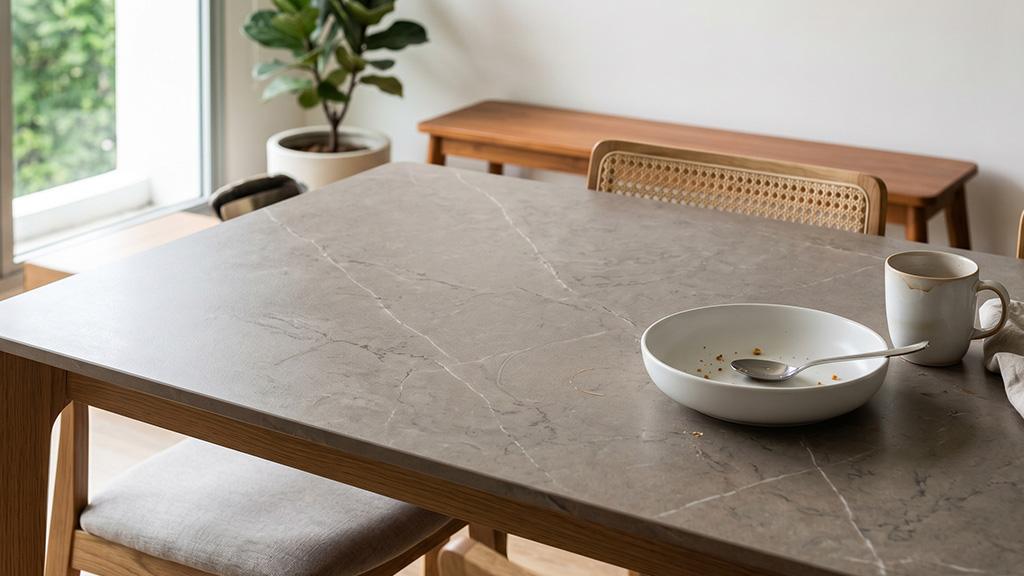
Quartz table tops suit Singapore households that want a surface that performs well without asking much in return. Quartz is engineered from approximately 90 to 95% crushed natural quartz bound with polymer resin and pigments. The result is a non-porous slab that resists staining without any sealing, cleans with a damp cloth, and maintains a consistent appearance over years of daily use.
The non-porous surface is particularly relevant for a dining table. Soy sauce, curry, coffee, and fruit juice, all common in Singapore households, sit on the surface rather than soaking in. A prompt wipe-down removes them completely. For families with young children or households that eat at the table daily, this property reduces everyday maintenance to almost nothing.
Quartz table tops come in a wide range of designs, including patterns that closely replicate marble veining or concrete textures. For homeowners who want a stone look without natural stone’s maintenance demands, quartz delivers that result at a mid-range price point. According to Caesarstone’s care and maintenance guide, quartz surfaces are engineered to be non-porous and non-absorbent, and do not host bacteria, mould, or mildew, making them a hygienic surface choice for dining and food preparation areas.
The one limitation worth understanding is heat. Quartz contains polymer resin, and sustained direct heat can soften or discolour the resin layer. Placing a hot pot directly from the stove onto a quartz table top is not advisable. A trivet or heat pad prevents this. For most dining situations, where food arrives at the table in serving dishes rather than directly from a hob, this limitation rarely comes into play.
TSD’s detailed guide to quartz countertops in Singapore covers material properties, thickness options, and what to confirm with your fabricator before installation.
“A quartz table top in a Singapore household handles daily meals, morning coffee, and weeknight homework without showing any of it. The surface asks almost nothing in return.”
Sintered Stone Table Tops: For Households That Want the Most Durable Surface
Sintered stone table tops sit above quartz in both performance and price. Sintered stone is manufactured without polymer resin. Natural minerals are fused under approximately 25,000 psi of pressure at temperatures exceeding 1,200 degrees Celsius, producing a slab that is denser than quartz, fully non-porous, and heat-resistant without any limitation.
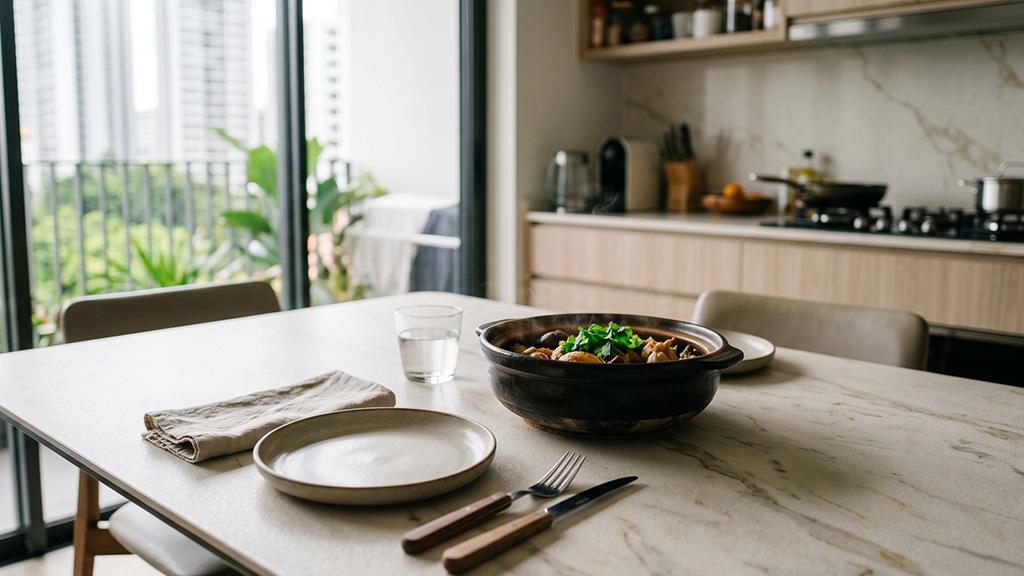
For a dining table in an open-plan Singapore home, where the dining area sits adjacent to or within the kitchen zone, heat resistance matters. A sintered stone table top handles a hot serving dish placed directly on the surface without any risk of discolouration or surface damage. No trivets required. For households that cook intensively and move food quickly from the kitchen to the table, this is a genuine practical advantage.
Scratch resistance is also stronger with sintered stone. At 7 to 8 on the Mohs hardness scale, sintered stone resists everyday scratches from cutlery, ceramic plates, and ceramic mugs more effectively than most other surface materials. For a table used multiple times daily by a family, that resistance means the surface looks consistent over a longer period.
Sintered stone table tops are UV-stable, which means they don’t fade or yellow with exposure to natural light. For Singapore homes with large windows or dining areas that receive strong sunlight, this stability is a meaningful long-term advantage over quartz, which is not recommended for sustained UV exposure.
TSD’s overview of sintered stone advantages and properties covers how the material performs across different applications, including dining surfaces, in Singapore’s climate.
Marble and Natural Stone: When Aesthetics Take the Lead
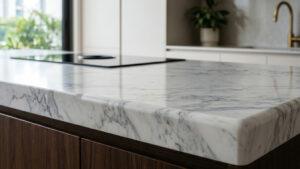
Marble dining table tops carry a visual quality that no engineered material can fully replicate. The natural veining, depth, and mineral variation of real marble make every table unique. For a dining room that prioritises a premium aesthetic, marble is genuinely difficult to match.
The practical considerations are real. Marble is porous, and without sealing, liquids penetrate the surface over time. Acidic substances, including lime juice, vinegar, and certain sauces, etch marble by reacting with the calcite in the stone. Etching leaves dull marks on the surface that a sealant cannot prevent. They can be polished out by a stone professional, but the process requires effort and cost.
For a Singapore household where the dining table sees daily family meals with varied cuisine, marble requires a maintenance commitment. Regular sealing, prompt cleaning of spills, and careful handling of acidic substances keep a marble dining table looking good, but these habits need to be consistent. In households with young children or heavy daily use, the maintenance burden often outweighs the aesthetic reward.
Granite is a more forgiving natural stone option. Its hardness and density make it less prone to etching, and a sealed granite table top resists staining well. For homeowners who want natural stone character with fewer of marble’s sensitivities, granite is worth considering alongside engineered alternatives.
As This Old House notes when discussing stone surfaces, natural stone tiles and slabs are more porous than ceramic or engineered options and require special care, including sealing, to protect against staining and moisture penetration. The same principle applies to dining table tops in natural stone.
Custom Table Tops: Getting the Size, Edge, and Finish Right
A custom table top is the right choice when standard furniture dimensions don’t fit the room, or when the homeowner wants a specific material and finish combination that ready-made tables don’t offer.
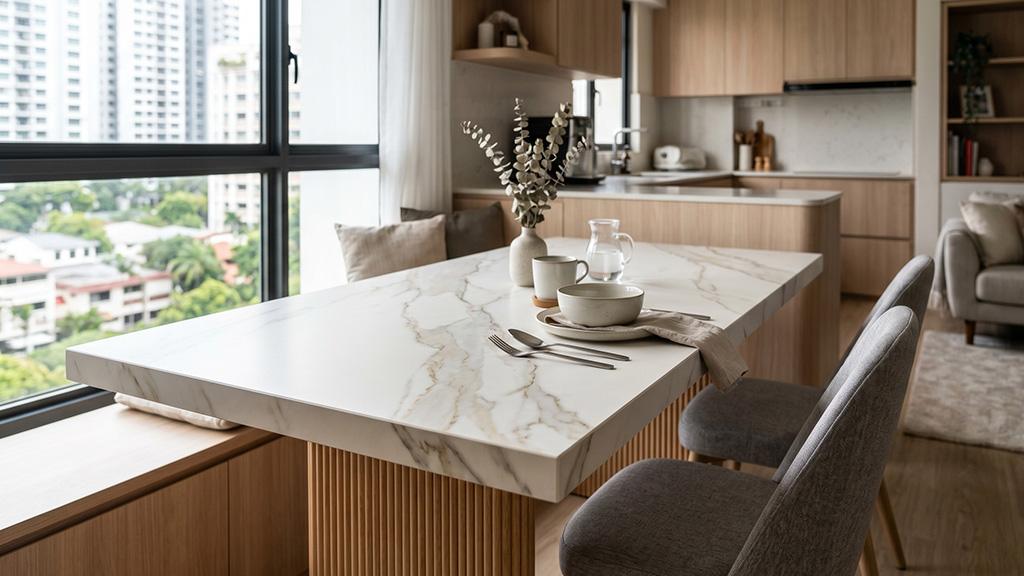
Stone and engineered stone custom table tops are fabricated to exact dimensions. A dining area in an HDB flat may require a table that fits a specific length between the kitchen counter and the living room furniture. A landed property dining room may suit a long, generous table that a standard furniture range doesn’t produce. Commissioning a custom table top solves both problems.
Edge profiles are part of the custom specification. A square edge gives a clean, modern look. A bevelled or eased edge is safer in households with children and reduces chipping risk at corners. A waterfall edge, where the surface continues vertically down the sides of the table legs, creates a striking design statement that works well in contemporary open-plan spaces.
Thickness affects both the visual weight and the structural performance of the table top. A 20mm sintered stone or quartz slab is standard for most dining table applications. A 30mm slab reads as more substantial and suits larger tables where the additional depth improves the visual proportion.
TSD’s comparison of sintered stone vs quartz covers how each material performs across different custom applications, including table tops, and what to discuss with your supplier before fabrication begins.
“A custom table top gives you a surface that fits the room, not a room rearranged to fit a standard piece of furniture. For Singapore apartments where space is measured carefully, that difference matters.”
Which Dining Table Top Is Right for Your Singapore Home?
The right dining table top in Singapore depends on three things: how often the table is used and by whom, how close it sits to the cooking zone, and how much maintenance the household can sustain long term. Quartz table tops suit most Singapore households well: they’re non-porous, low-maintenance, and available in a range of designs at a mid-range price. Sintered stone table tops are the stronger choice for open-plan spaces, high-heat dining environments, or households that want the most durable surface available. Marble and granite suit homeowners who prioritise natural stone aesthetics and are prepared to maintain them.

Frequently Asked Questions
1. What is the most durable surface for a dining table top in Singapore?
Sintered stone table tops offer the highest durability for a dining table. The resin-free composition handles direct heat, resists scratches from cutlery and ceramics, and never needs sealing. Quartz is close behind and suits most households well. Both outperform marble and natural stone for daily family use.
2. Does a quartz table top need to be sealed?
No. Quartz is non-porous by manufacture and does not require sealing at any point. Spills sit on the surface and wipe off cleanly. This is one of the main practical advantages over marble or granite dining table tops, which need periodic sealing to maintain their stain resistance.
3. Can I commission a custom table top in quartz or sintered stone in Singapore?
Yes. Both materials are available as custom table tops fabricated to specific dimensions, edge profiles, and thicknesses. TSD offers in-house fabrication and installation in Singapore, which means the table top is cut, profiled, and fitted by the same team, rather than outsourced to a third party.
4. Is marble a practical choice for a dining table in Singapore?
Marble suits dining tables in rooms that see light use and where the household can commit to regular sealing and prompt spill management. For daily family dining in Singapore, particularly with children or with cuisine involving acidic ingredients, marble requires more care than most households find practical. Engineered alternatives offer a similar aesthetic with significantly lower maintenance.
5. What thickness should a stone dining table top be?
For most dining table applications, 20mm is the standard and practical thickness for both quartz and sintered stone. It provides sufficient depth for the span of a standard dining table without unnecessary weight. For larger tables or designs with a waterfall edge, 30mm provides additional structural depth and a more substantial visual presence.
The dining table carries more daily weight than most surfaces in a Singapore home. The material needs to handle meals, withstand spills, and keep looking good through years of regular family use. Quartz and sintered stone table tops deliver that performance without demanding anything in return beyond a simple wipe-down. Natural stone brings something no engineered material can replicate, but it asks more of you in exchange.
If you’re planning a custom table top or comparing surface options for your dining room, TSD’s full range of quartz, sintered stone, and granite surfaces is available at their Singapore showroom, with in-house fabrication and installation handled end to end.