In Singapore’s sleek skyline and contemporary interior designs, natural stone has quietly become one of the most favoured materials by architects, interior designers, and homeowners alike. From HDB flats upgrading for resale value to luxury condominium finishes, natural stone is more than an aesthetic luxury—it offers long-term benefits that align with the demands of modern living in a tropical, humid climate. This article explores the reasons behind its popularity, current considerations in cost and maintenance, and whether it truly makes sense for your home.
What “Natural Stone” Means
When we talk about natural stone in Singapore, we refer to quarried materials such as granite, marble, limestone, slate, travertine, and similar stones. These are raw materials shaped, polished, finished, and sealed for interior and exterior use. They differ in hardness, porosity, veining, appearance, and price.
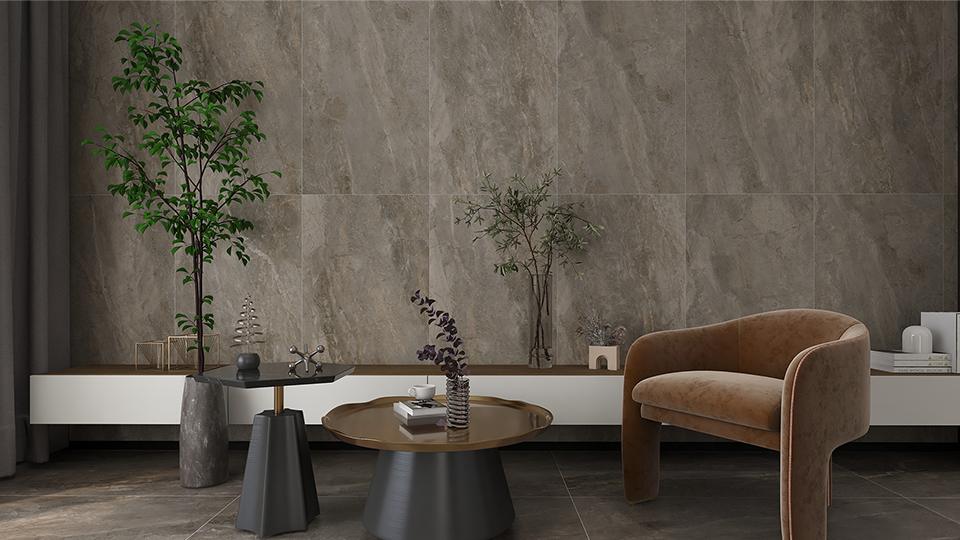
Benefits of Natural Stone for Modern Singapore Homes
Durability & Longevity
One of the strongest advantages of using natural stone is its durability. Granite, for example, resists scratches, high temperatures, and moisture—qualities that make it ideal for high-traffic zones like kitchen countertops and bathroom vanities. Once sealed properly, many natural stone surfaces can endure for decades with minimal replacement, making them a sustainable investment. (From TSD.sg content on granite stone benefits)
Aesthetic Appeal & Uniqueness
Natural stone offers variations in colour, texture, and pattern that no manufactured material can exactly replicate. The unique veining in marble, the granular depth of granite, or the earthy textures of slate give each piece its character. For homes that strive for elegance, sophistication, or a touch of nature inside, no two pieces are identical adds to the charm.
Thermal Comfort & Energy Efficiency
Singapore’s climate is hot and humid year-round, with frequent rainfall and high humidity. Natural stone, due to its thermal mass, can absorb heat during the day and release it gradually, which helps moderate indoor temperatures. This effect can reduce reliance on air conditioning, lowering energy bills. Additionally, lighter-coloured stone surfaces reflect heat better, keeping interiors cooler. (Insights from sources on natural stone in sustainable home designs)
Low Maintenance (When Done Properly)
Although some types of natural stone are more porous (such as limestone or softer marble) and require sealing, many others are relatively easy to clean and maintain. With routine care—such as occasional resealing, using mild detergents, wiping stains quickly—natural stone can keep its beauty over time. Because it ages well, its value tends to hold up or even increase, especially in homes and condos where premium finishings matter.
Increased Property Value & Perceived Luxury
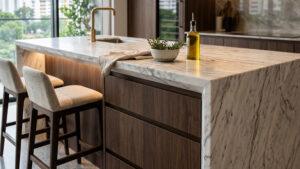
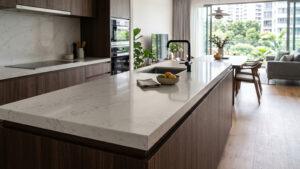
Natural stone finishes are seen as luxury finishes in Singapore’s property market. Kitchens with granite or marble countertops, bathrooms with stone flooring or vanity tops, and feature walls clad in stone tend to give homes an edge for resale. Buyers often perceive homes with natural stone materials as higher-quality, giving these features a strong return on investment.
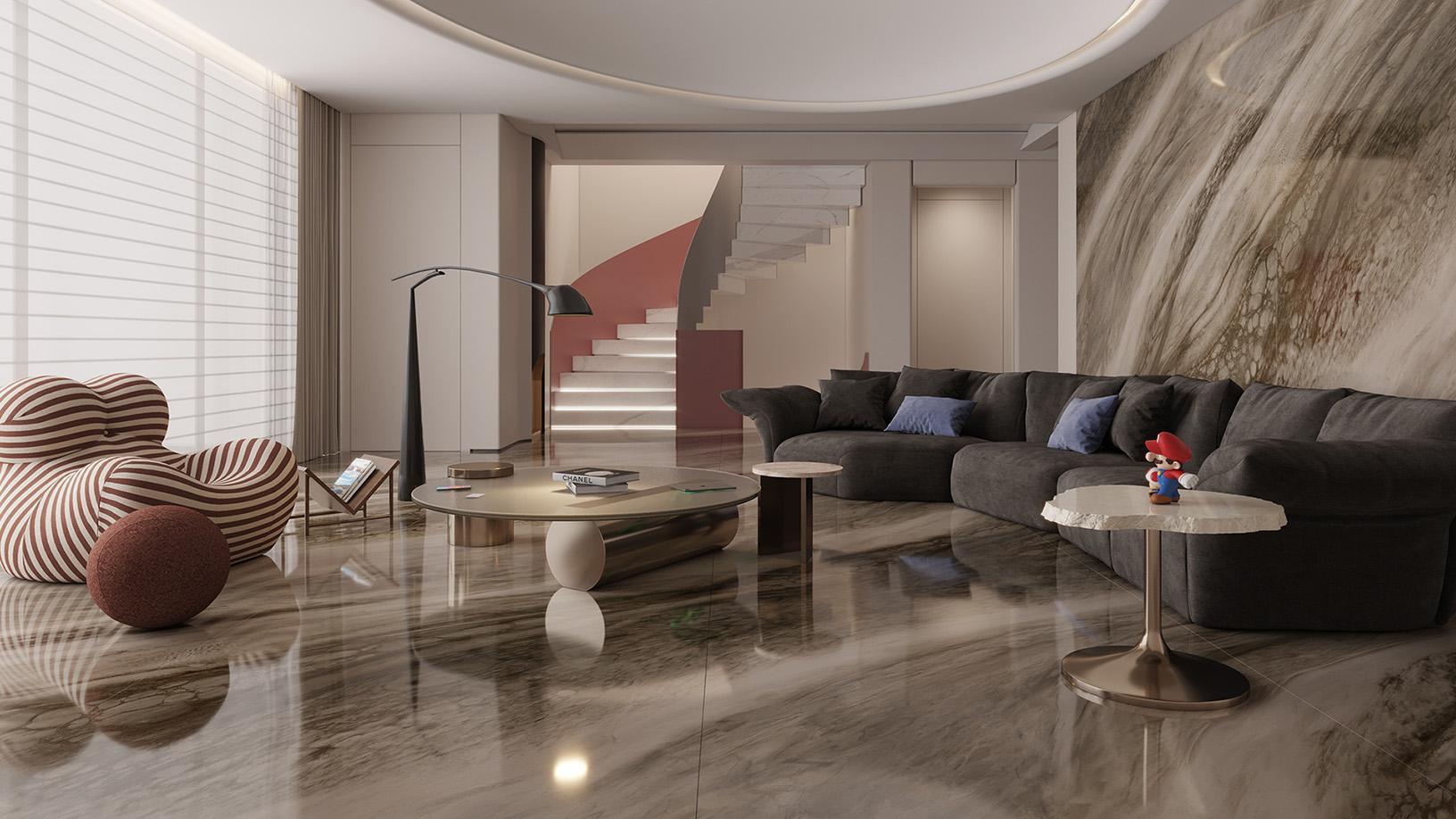
Considerations & Challenges in Using Natural Stone in Singapore
While natural stone has many advantages, there are also factors homeowners must weigh to ensure the best outcome.
Cost
Natural stone tends to be more expensive than many tiles or synthetic alternatives. Material costs can vary widely depending on the type of stone (granite is usually less expensive than rare marble), the finish, slab thickness, and quality. On top of that, installation and labour costs in Singapore are not negligible. For example, natural stone tiles (marble, granite, etc.) are often priced between S$10 S$30 per square foot just for the material, depending on type and finish.
Weight & Structural Restrictions
Many HDB (Housing & Development Board) flats or older buildings have load-bearing limitations. Natural stone slabs are heavy. Before proceeding with full stone flooring or thick slabs for feature walls, homeowners must verify structural loading capacity. Sometimes, thinner slabs or engineered stone alternatives are considered to mitigate weight.
Porosity & Sealing
Some stones are porous and can absorb moisture, staining from food, spills, or acids. Without proper sealing and upkeep, surfaces like marble can become etched or discoloured. Maintenance includes periodic sealing and gentle cleaning methods.
Installation Complexity & Costs of Labour
Installing natural stone properly requires skilled craftsmen: correct substrate preparation, precise cutting, polishing, finishing, and sealing. Installation mistakes can lead to visible joints, uneven surfaces, or water ingress. Labour is a significant component of total cost in Singapore renovation budgets.
Read More: Cosentino Singapore : Elevating Urban Spaces with Innovative Surfaces and Design Trends
What’s Trending in Singapore (2025)
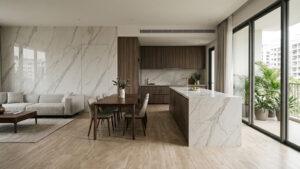
- Many homeowners are favouring feature accents rather than full stone flooring in entire flats, especially in resale HDBs. Accent walls, kitchen countertops, and bathroom vanities provide high impact without covering large areas, reducing cost and weight issues.
- Stone types with lighter tones, subtle veining, and natural textures are in vogue—”warm minimalism” or “nature-inspired interiors” are strong design trends.
- A rising interest in sustainability: stones from quarries with responsible sourcing, lower transport carbon, and long lifespan are more valued. Homes are being viewed from a longer-term perspective.
- Alternative surface materials that mimic natural stone (engineered or sintered stones) are also growing in popularity for those who want some advantages of stone, but at lower cost, weight or maintenance requirements.
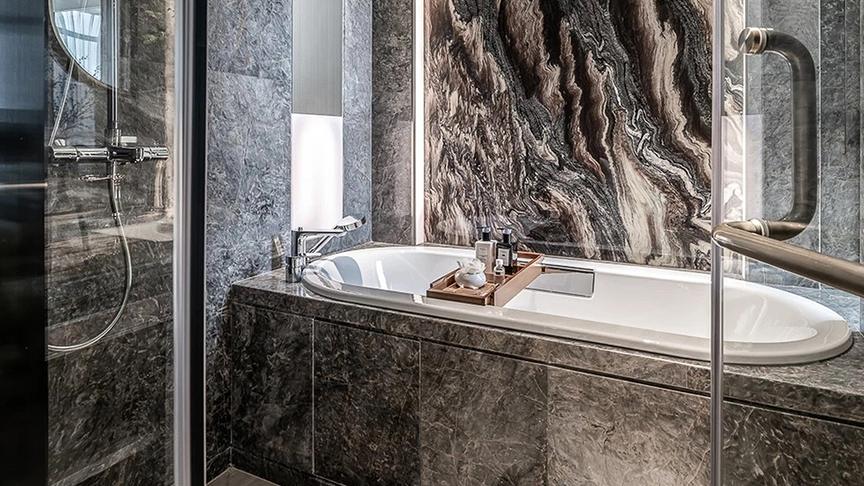
Practical Tips for Using Natural Stone Well in Singapore Homes
- Choose the right stone type for the location: granite or denser stones for wet zones or high use (“wet zones” such as kitchen counters, bathrooms), softer stones for less demanding areas.
- Always get the stone sealed properly (if required), and follow the maintenance instructions to prevent staining or damage.
- Work with experienced stone suppliers and installers who understand local climate, humidity, and structural constraints.
- Use stone in moderation where needed: as accents, countertops, top surfaces, or feature walls can give a great visual effect with less cost.
- Consider lighter colours or polished finishes to reflect light and reduce heat absorption in interiors.

FAQs
Q1. Is natural stone significantly better than tiles or engineered stone for Singapore’s climate?
Natural stone has advantages in durability, thermal mass, and luxury finish that tiles or engineered materials may struggle to match, especially in how they age. However, tiles and engineered stone often cost less, are easier to maintain, and are lighter. If you want something that looks luxurious, lasts long, and you are willing to invest in proper care, natural stone is often a strong choice for Singapore’s hot and humid climate.
Q2. What types of natural stone are most suitable for Singapore homes?
Granite and dense stones are particularly suitable for kitchen countertops, outdoor spaces (balconies, feature facades), or anywhere high wear or moisture is expected. Marble is excellent for bathrooms and decorative walls, but requires more maintenance—slate or limestone offers rustic or earthy finishes. Always consider finish (polished vs honed vs flamed) and sealing. Also, check structural weight limits in your unit (especially for HDB).
Q3. How much extra does natural stone add to renovation costs in Singapore?
Material costs for natural stone tiles are often in the range of S$10 to S$30 per square foot or more, depending on type, rarity, thickness, and finish. Labour and installation can increase the overall cost considerably. For example, when comparing with porcelain or ceramic, natural stone often has both higher material and installation margins. In renovation cost breakdowns, premium materials like marble or marble countertops can push budgets upward significantly.
Conclusion
Natural stone remains a preferred material choice for Singapore’s modern homes because it blends luxury, durability, and aesthetic uniqueness in ways few materials can replicate. Despite higher upfront costs, careful selection, proper installation, and regular care can make natural stone a long-term asset: visually, functionally, and in terms of property value.
If you are considering natural stone for your home—whether for your kitchen, bathroom, feature walls, or flooring—ensure you do your homework on stone type, supplier credibility, structural limitations, and maintenance needs. For Singaporeans looking to create refined, timeless interiors that endure both climate and trends, natural stone is very often worth the investment.