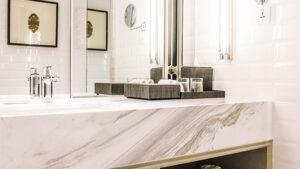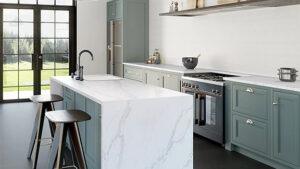
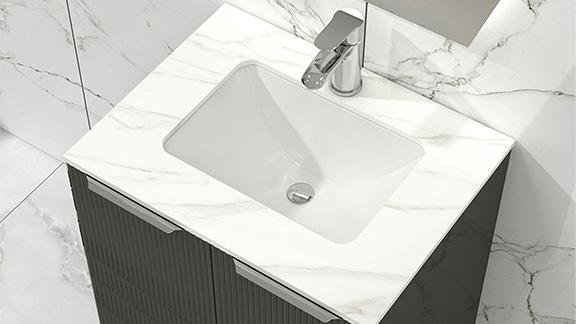
Key Takeaways
- A sintered stone is a man-made surface that uses very high temperatures and force to create a dense, nonporous material. This method is comparable to the longevity of natural rock because it has a more uniform shape and covering.
- Sintered stone is a material that performs very well in Singapore’s humid and high-traffic environment. It is used in kitchens, bathrooms, and even semi-outdoor areas.
- Sintered stones are resistant to heat, abrasion, and stains, while they are also easy to maintain. Their extensive palette of finishes makes it possible for a property owners to combine a variety of interior designs without much fuss.
- Sintered stone usually comes with a higher initial cost compared to the options of laminate or ordinary quartz glass, despite its features. In addition to the need for skilled installation, repair work can be particularly difficult in the event of damage.
- The sintered stone meaning goes further than its durability; it also depends on the selection of the correct thickness, finish, and color. sintered stone, together with a suitable choice, can simultaneously satisfy the needs of the working environment as well as the tastes of the modern house.
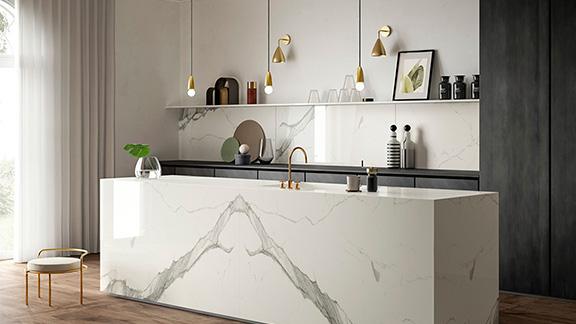
Introduction
Sintered stones in Singapore have now become a topic of discussion in terms of their novel representation, longevity, and capacity to fulfill the needs of contemporary living. The right choice of material in a small household, considering the surface in constant use, is now more important than ever before.
Asia Pacific leads worldwide sintered stone revenue with over 40% share, which establishes the region as one of the most rapidly expanding markets for product adoption.
It is a nonporous and dense material that works well not only in kitchens and bathrooms but also in feature walls and even outdoors. But besides its aesthetic appeal, what makes the homeowner in Singapore opt for it is its durability despite little maintenance.
The following guide focuses on its manufacturing process, areas of use, pros and cons, and how to make the right choice for your home.
What is Sintered Stone?
Sintered stone in everyday requirements is a man-made surface created by compressing natural rocks such as quartz glass, feldspar, and silica under extremely high temperatures and stresses.
The present method mirrors how natural rocks form under the Earth’s surface over a thousand years. But this happens in a controlled setting and in a very short time. The result is a tightly packed material with a very small space between the atoms, which gives it its strength and durability.
The sintered stone’s meaning is often compared with that of a porcelain slab or engineered quartz glass, although there is a clear difference. Unlike several engineering elements using resins, this surface relies entirely on mineral bonding. That is the reason they manage heat so well and maintain their position even under strain.
Because of this manufacturing process, the final product is:
- Dense and highly durable
- Non-porous, resisting water and stains
- Stable under heat and sunlight
- Consistent in pattern and finish
These qualities have made sintered stone a strong contender for both residential and commercial interiors.
Check Also: Engineered Stone Explained: Smart Countertop & Flooring Ideas
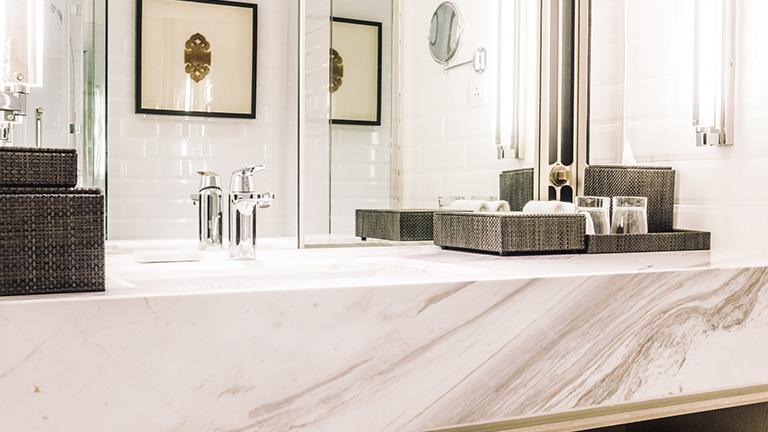
Why Homeowners in Singapore Want Sintered Stone?
Regional living conditions have a strong influence on material alternatives. High humidity, warm temperatures, frequent use of the kitchen and bathroom spaces can quickly wear down a surface that is not equipped to cope with the situation.
Surface area is intensively used in compact layouts across several Singaporean homes, especially apartments and condominiums. The tables can be used as a preparation area, a dining area, and sometimes even a workstation.
This is where sintered stone fits naturally into everyday living:
- It doesn’t absorb moisture, reducing the risk of stains or bacteria buildup
- It remains stable even with frequent exposure to heat from cooking
- It handles repeated use without showing early signs of wear
- It retains its appearance with simple cleaning routines
Beyond the performance, there’s a design angle too. The interiors of Singaporean houses are usually minimal and clean. The wide range of textures and forms available makes it possible for the owner to achieve a high-end style that does not rely on the innate rock formations that require excessive maintenance.
It is not surprising that innovations and renovations of houses continuously integrate this material into the kitchen, vanity top, and wall panel.
What are the Benefits of Sintered Stone?
With this situation in mind, it is helpful to look at what makes the present material attractive in ordinary use.
-
Strong Resistance to Heat and Scratches
There may be a hot pot and a pan placed directly over the outer layer without causing damage. The current is particularly helpful in a busy kitchen, where quick movement is a cornerstone of everyday cooking.
Their abrasion resistance also helps to maintain a clean appearance, even alongside regular use of utensils and kitchen implements.
-
Non-Porous Surface for Better Hygiene
As the facade does not absorb liquid, the spill does not go down as much as the leak does, compared to the leak in. This makes cleaning easier and reduces the risk of staining common items such as coffee, sauce, or oil.
For families in Singapore, where cooking is common, this feature adds a layer of convenience in everyday life.
-
UV Resistance for Indoor and Outdoor Use
Unlike a couple of elements that fade away in time, it retains its color material even when it is exposed to the light of the sun. That’s why it’s suitable for regions near windows, a balcony, or a semi-outdoor kitchen.
-
Low Maintenance Routine
There’s no need for seals anywhere else for special treatment. To keep it clean, a basic cleaning with water and a mild detergent is sufficient. The current cost of maintenance, as well as the cost of long-term care is both the period and the cost of care.
-
Design Flexibility
It covers a wide range of textures, from the marbleised surface to the solid, tactile surface. That allows the owner to deal with a wide range of diverse issues, from minimalistic to industrial and even authoritative inside.
Continue Reading: Sintered Stone vs Marble: How to Choose the Perfect Surface?
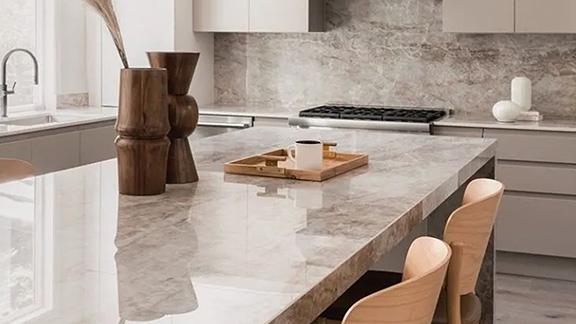
Where Sintered Stone Might Fall Short?
There are some limitations that need to be kept in mind before choosing at the same time.
-
Higher Upfront Cost
Compared with laminate or entry-level quartz glass, sintered stone has a higher price tag. For a more spacious surface, such as the kitchen island or a full-height wall panel, the expenses can quickly add up.
-
Installation Requires Expertise
Their density makes it difficult to shape and draw. You will need expert installers with the correct tools for the present method. Disadvantaged installations may be able to solve problems such as unbalanced edges or otherwise unsuitable adjustments.
-
Edge Chipping Risk
While the top itself is robust, the sides and corners are at risk of damage. This liability is reduced by careful handling during installation and regular use of the aid.
-
Repairs Can be Challenging
Assuming the roof is damaged, repair is not always simple. A single option to replace a sector could remain an option in some cases.
Such comparisons are of value against the benefits for property owners active within a renovation budget in Singapore.
How to Choose the Right Type For Your Home?
If you think about using it, a few simple checks can help you narrow down the correct option.
-
Thickness
- Choosing the right thickness helps balance durability with cost.
- 6mm–12mm: Suitable for vertical applications like walls or cabinet cladding
- 12mm–20mm: Better for countertops and high-use surfaces
-
Surface Finish and Daily Use
- Matte finishes are easier to maintain and hide fingerprints
- Polished finishes create a glossy look but may need more frequent cleaning
- Textured finishes provide grip, which is useful for flooring or outdoor areas
-
Matching Your Space
In a compact Singapore apartment, a pair of light sunglasses may make the kitchen or bathroom seem more open. In addition, as a characteristic factor, darker tones are adequate in larger houses.
-
Viewing Full Slabs
Rather than relying on a small sample, try to see a complete slab in the store. The present gives a more vivid impression of the shape, the veining, and the uniformity of the color.
-
Warranty and Supplier Support
Check the second cover subordinate to the guarantee and request assistance with after-sales. Assuming that difficulties will arise in the future, the present can provide a contrast.
A Quick Comparison With Other Materials
To put it in place, it helps to see how it compares with other common facade options.
| Feature | Sintered Stone | Quartz | Granite |
| Heat Resistance | High | Medium | High |
| Maintenance | Low | Low | Medium |
| Porosity | Non-porous | Low | Porous |
| UV resistance | High | Low | Medium |
| Cost | Medium–High | Medium | Medium–High |
As each material has its own setting, sintered stone stands out in scenarios where heat exposure and low maintenance are on the agenda.
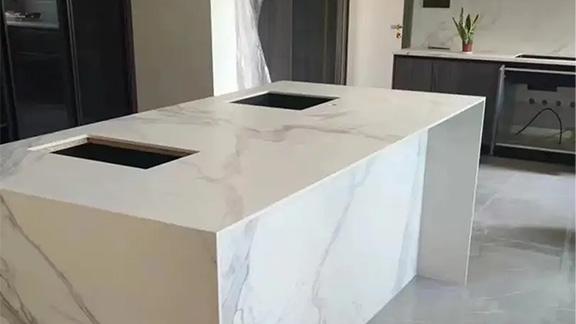
Conclusion
The sintered stone has become a popular choice in Singapore due to its longevity, clean appearance, and ease of use. It is suitable for modern urban life, where the surface needs to be able to manage everyday clothes without drawing attention.
At the same time, higher initial costs and installation requirements make it necessary to plan carefully before deciding to abandon the project.
TSD works with you as part of a team responsible for consulting, customizing, manufacturing, and installing surfaces of various types, guaranteeing impeccable quality throughout all the stages of production and delivery.
Having gained experience within both residential and commercial applications, we excel in the design and manufacture of quartz, sintered stone, and natural stone surfaces that will stand the test of time.
Contact TSD’s team today to create a surface that meets all your expectations. Call at +65 6908 5147 to discuss your requirements. Visit TSD to view our portfolio and book an appointment.
FAQs: People Also Ask
-
Is sintered stone worth the price in Singapore?
The value lies in its longevity and reduced maintenance for multiple owners. It can compensate for maintenance costs that other components may entail in the long run.
-
Can it crack easily?
Its construction is to remain robust, but it appreciates a primarily difficult surface; it can break under heavy influence, especially in a company with an edge.
-
Is it better than quartz?
It’s based on how it’s used. Quartz works very well indoors, whereas the sintered stone isin local exposure to heat and sunlight.
-
How do you clean it daily?
It is adequate to use a soft fabric in water and a mild detergent. In order to maintain its protective layer, avoid rough or abrasive cleaners.