Key Takeaways
- A fluted wood kitchen works as a design composition when the stone countertop is specified to contrast the timber’s vertical texture rather than compete with it.
- Smooth and honed stone surfaces are the most reliable countertop specification alongside fluted wood because the contrast between rough-grain timber ridges and calm flat stone is what produces the visual tension that makes the pairing interesting.
- Tone relationship matters as much as finish. The stone should share an undertone with the timber rather than sitting in a different colour family entirely.
- In Singapore’s compact open-plan kitchens, fluted wood panels are most commonly applied to island bases, feature cabinet faces, or pantry doors rather than full perimeter cabinetry, and the stone countertop must read well at both close range and across the living zone.
- Sintered stone in warm grey, soft stone, and travertine-effect tones is the most practical Singapore specification alongside fluted wood because its heat resistance and zero-porosity surface handle the cooking demands of the kitchen without visual maintenance concerns.
Introduction
The fluted wood kitchen has moved from a design editorial curiosity to a renovation brief that Singapore homeowners and their contractors are actively planning around. The vertical groove pattern pressed into timber cabinet fronts and island panels creates a tactile surface quality that flat-front cabinetry cannot produce, and when the rest of the kitchen is specified to support it, the result is a kitchen that reads as crafted rather than assembled.
The pairing that makes or breaks this outcome is the stone countertop alongside the fluted timber. Fluted wood generates a lot of surface activity through its ridge-and-groove rhythm. The stone surface that sits on top of or beside it needs to respond to that activity in a specific way. Get the finish and tone relationship right and the two surfaces create a dialogue between texture and calm. Get it wrong and the kitchen reads as cluttered or unresolved.
This blog maps the texture-pairing mechanics of fluted wood and stone surfaces, with specific guidance on which finishes, tones, and materials work in Singapore kitchen conditions.
What Is a Fluted Wood Kitchen?
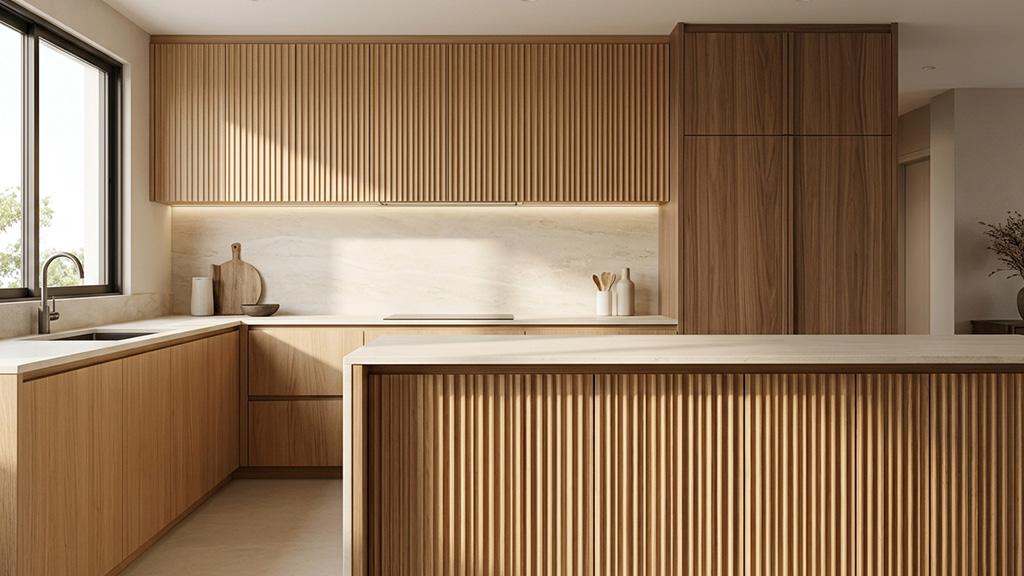
A fluted wood kitchen is a kitchen design that incorporates timber surfaces, most commonly cabinet fronts, island panels, or feature doors, with a vertically ridged or grooved profile applied across the face. The ridges run in parallel lines from top to bottom, creating a surface that catches light differently across its width and produces a handcrafted, artisanal quality distinct from flat-panel or Shaker cabinetry.
As Ideal Home’s guide to fluted kitchen cabinets explains, fluted and reeded textures have become a dominant design focus across residential interiors, and within kitchen design specifically, the trend has embedded itself as a feature that combines the return of natural wood with the current appetite for tactile surface interest. The texture is characterised by evenly spaced grooves that create a subtle, tactile rhythm, adding depth without visual heaviness. It works across light oak, walnut, dark oak, and painted timber fronts depending on the kitchen palette.
Why Fluted Wood and Stone Is a Considered Pairing, Not a Default One
Most design content about fluted kitchen cabinets focuses on the timber choice, the groove depth, and the application zone: island base, full perimeter cabinetry, or feature panels. Less attention goes to what sits on top of it.
The stone countertop in a fluted wood kitchen carries a specific design responsibility. Fluted timber already has a strong visual presence. The ridges catch and redirect light, produce a directional pattern that the eye follows vertically, and create a surface depth that flat cabinetry cannot match. A stone countertop that introduces a competing level of visual activity compounds that presence into noise rather than composition.
The design principle behind making this pairing work is contrast. Fluted timber contributes texture. Stone contributes calm. The countertop is most effective when it reads as a quiet horizontal plane that allows the timber’s vertical rhythm to be the active element. A highly polished surface with dramatic veining beside fluted oak panels gives the eye nowhere to rest. A honed surface in a warm neutral tone beside the same panels provides exactly the counterpoint that makes the fluted texture read as intentional rather than busy.
“Fluted detailing is set to remain a standout design feature in 2026, bringing texture and a softer flow into the home. Fluted surfaces add depth without overwhelming a kitchen.” (Ideal Home, Kitchen Cabinet Trends 2026)
Which Stone Surfaces Work Best in a Fluted Wood Kitchen
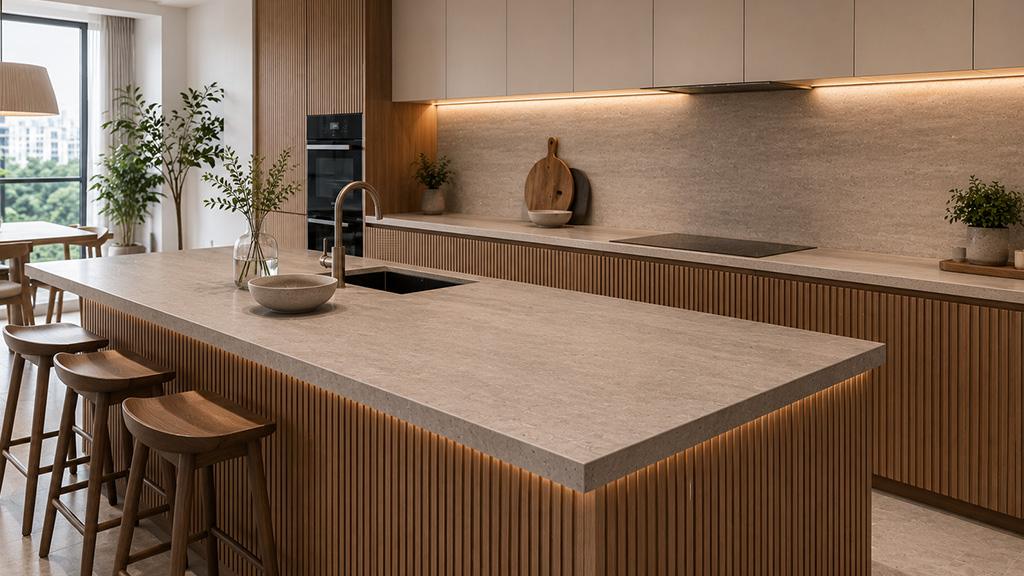
Honed or Matte Sintered Stone
Sintered stone in a honed or matte finish is the strongest countertop specification for a fluted wood kitchen in Singapore. The surface reads as flat and calm without reflecting light across the kitchen, which is the visual quality needed to counterbalance the ridge activity of fluted timber panels. It also performs practically in the specific conditions of Singapore kitchens: direct high heat from wok cooking, humidity, and frequent contact with acidic ingredients are all handled without surface degradation or the need for sealing. For a kitchen design Singapore brief that includes fluted timber and requires a low-maintenance stone surface, sintered stone in a honed finish is the most complete answer.
The tone families that work alongside fluted timber are warm grey, soft stone, travertine-effect beige, and warm off-white. These tones share the earthy undertone of natural timber, which means the countertop and the cabinet surface feel as though they come from the same material sensibility even when they are clearly different surfaces. A sintered stone countertop in a cool blue-grey against a warm oak fluted island reads as disconnected. The same stone in a warm sandy grey beside the same timber reads as composed.
Honed Quartz in Warm Neutral Tones
Quartz in a honed finish is the second strongest specification choice. The engineered consistency of quartz means the tone and pattern are predictable across multiple slabs, which matters when the countertop runs alongside fluted island panels in an open-plan kitchen where multiple surfaces are visible simultaneously. A warm white or soft grey quartz with fine veining and a honed finish provides the calm horizontal plane that fluted timber needs beside it while delivering the practical performance of a non-porous, low-maintenance surface.
The specification caution is the same as for any quartz in a Singapore kitchen: avoid placing the countertop in direct prolonged heat contact. In a fluted wood kitchen where the island is a social and serving surface as much as a cooking surface, this is usually manageable. The prep and cooking zone on the perimeter can carry sintered stone for maximum heat performance, while the island, which typically sees lower direct heat, carries quartz.
Stone-Look Surfaces in Travertine and Limestone Effects
Stone-look surfaces in travertine and limestone-effect patterns are particularly well suited to the fluted wood kitchen for a specific visual reason. Travertine’s horizontal banding and warm buff tones share a natural material quality with timber grain. When a travertine-effect stone-look surface sits alongside fluted oak or walnut panels, the two materials appear to come from the same earth-toned material family despite being entirely different surfaces. The effect is a kitchen that reads as natural and layered rather than designed around a theme.
In a honed or matte finish, travertine and limestone-effect sintered stone beside fluted timber is one of the most considered texture pairings available in Singapore’s stone surface market. The horizontal patterning of the travertine effect responds to the vertical ridge of the fluted timber in the same way that opposing rhythms in music create harmonic interest rather than conflict.
What to Avoid
Polished surfaces with high movement or dramatic veining beside fluted timber are the combination most likely to produce a kitchen that reads as unresolved. A polished Calacatta-effect slab with wide gold veining beside a walnut fluted island puts two active, high-character elements in direct competition. Both surfaces individually might be compelling. Together, they fight for visual attention.
Very dark stone surfaces beside light-toned fluted timber create a contrast so high that the composition requires everything else in the kitchen to be very carefully controlled to hold together. This can work at a larger scale in a kitchen with significant natural light and generous proportions, but it is a difficult specification to manage in the compact condo and HDB kitchens that characterise much of Singapore’s residential renovation market.
Where to Apply Fluted Wood in a Singapore Kitchen
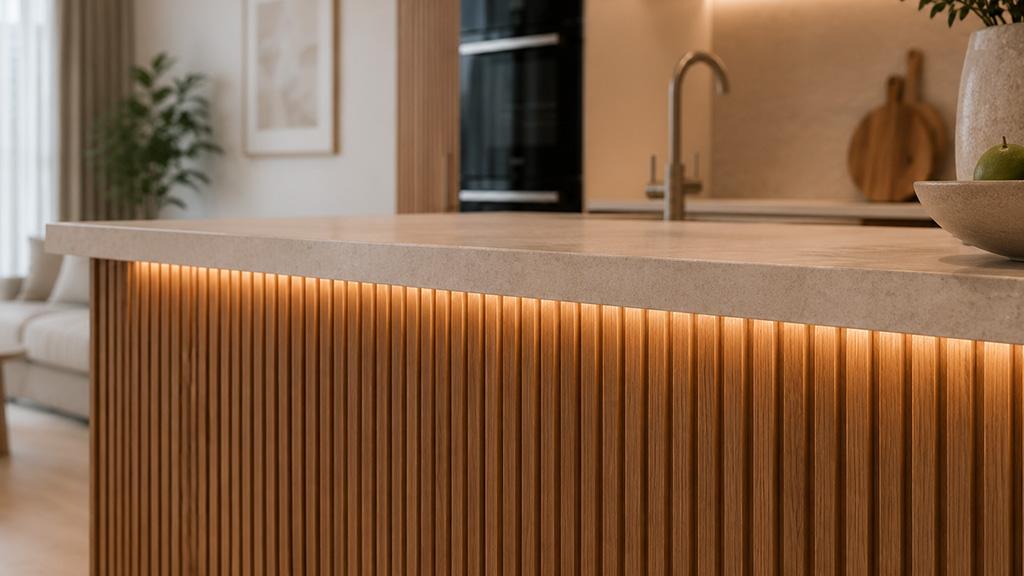
The most common application zones for fluted timber in Singapore kitchen design are the island base panel, a feature pantry or larder door, and occasionally the lower cabinet faces on a single wall run. Full-perimeter fluted cabinetry is less common in Singapore’s compact kitchens because the groove rhythm across every cabinet surface accumulates visual weight quickly.
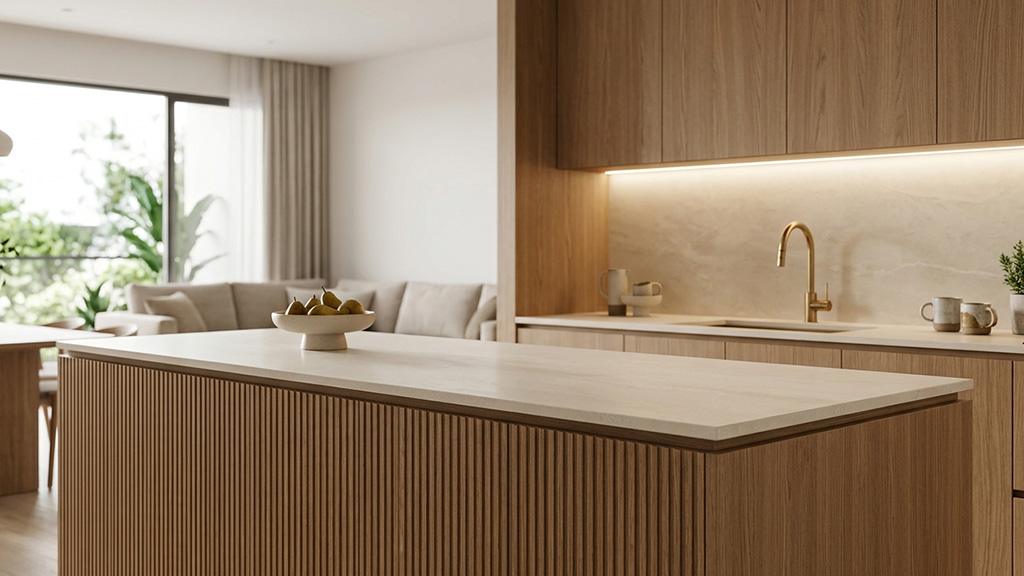
The island base panel is the strongest application zone. The fluted panel faces outward toward the living and dining area in an open-plan layout, which means it functions as a design feature visible from across the room and as a tactile detail appreciable at close range for anyone seated at the island. The stone countertop on top of the island is the natural counterpart: it is the surface that sits in the broadest light, draws the eye on approach, and provides the horizontal calm above the vertical rhythm of the fluted panel below.
For choosing the right stone surface for any room in your Singapore home and for homeowners planning a fluted island application, the sequence should be: confirm the timber tone and groove depth first, then select the countertop to complement it. The countertop selection is a response to the timber character, not a parallel decision made independently.
A feature pantry or larder door with fluted timber is a more contained application that allows the texture to be introduced without committing the entire kitchen to the pattern. In this application, the stone countertop on the perimeter run can be the same specification as any other kitchen. The stone does not need to be designed around the fluted panel because the panel is not immediately adjacent to the countertop.
The Role of Timber Tone in the Stone Selection
Fluted timber comes in a range of stain tones that each call for a different stone surface response.
Light oak and blonde timber are the most flexible. They carry a warm yellow-cream undertone that works beside warm whites, travertine tones, and soft warm greys. As Ideal Home’s 2026 kitchen cabinet trends note, natural oak cabinetry paired with a white-toned stone worktop creates a versatile and warm composition that suits a wide range of kitchen styles. In a fluted application, this pairing benefits from a stone with a slight warmth in the background tone. Pure cool white would create an undertone conflict with the yellow-cast oak.
Mid walnut tones carry a deeper, red-brown warmth. They work beside warm grey and sandy stone tones, travertine effects, and mid-tone creams. They conflict with cool white and blue-grey stones. The richer the walnut colour, the more the stone specification needs to share that warmth to avoid the countertop reading as detached from the timber.
Dark oak and smoked timber work beside warm charcoal, deep stone, and dark travertine tones. They also work beside stark white in high-contrast applications where the pairing is deliberate and the rest of the kitchen palette supports the contrast. In compact Singapore kitchens, very dark timber beside a very light stone countertop is the higher-risk specification because the contrast competes with the kitchen’s other design elements for visual priority.
“The texture of reeded cabinets lends itself perfectly to leaning into more of a natural look with warm wood tones. Style the cabinets sparingly. Let the textural details and natural woods speak for themselves.” (Ideal Home, Fluted Kitchen Cabinets)
Practical Considerations for Singapore Kitchens
Singapore kitchens operate in specific conditions that affect how a fluted wood and stone pairing performs over time. The humidity is consistently high. Cooking involves high heat and strong flavours. And in most condo and HDB layouts, the kitchen is visible from the main living area, which means the countertop reads as a design element in the room as much as a work surface.
These conditions favour sintered stone for the countertop in a fluted wood kitchen. The zero-porosity of sintered stone means no moisture absorption at the surface, no staining from turmeric, oil, or acidic ingredients, and no requirement for periodic sealing that would represent an ongoing maintenance task. In a kitchen that already carries the higher-maintenance material of natural timber, a low-maintenance stone surface balances the material equation.
The finish specification matters practically as well as aesthetically. A matte or honed stone surface does not show fingerprints or daily cooking residue as readily as a polished surface, which is relevant in a kitchen where the countertop is frequently in use and frequently visible from across the open-plan space. Daily cleaning of a honed stone surface beside a fluted timber island produces a kitchen that looks consistently well maintained without significant daily effort.
FAQS
1. What stone surface works best alongside fluted wood kitchen cabinets?
Honed or matte sintered stone in warm grey, travertine-effect, or soft stone tones is the most reliable specification. The flat, calm surface quality of a honed finish provides visual contrast to the ridge-and-groove rhythm of fluted timber, and the warm neutral tones share an undertone with natural timber. Highly polished surfaces with dramatic veining are more likely to create visual competition with the fluted texture.
2. What tone of stone works best beside oak fluted cabinets in Singapore?
Warm whites, soft travertine beiges, and warm sandy greys work best beside light oak fluted panels. These tones share the yellow-warm undertone of oak timber, which means the countertop and cabinets read as part of the same warm material palette rather than as contrasting elements. Cool white and blue-grey stones create an undertone conflict with oak’s warmth.
3. Should the entire kitchen be fluted or just the island?
For most Singapore kitchens, restricting the fluted timber to the island base panel or a single feature cabinet zone is the more practical approach. Full-perimeter fluted cabinetry accumulates visual weight quickly in compact spaces and leaves less room for the kitchen’s other elements to contribute. An island with a fluted base panel and a stone countertop is a complete composition in itself.
4. Is sintered stone or quartz better for a fluted wood kitchen in Singapore?
Both perform well, but sintered stone is the stronger specification for the primary cooking zones in Singapore kitchens. Its heat resistance is higher than quartz, which matters when the countertop is adjacent to gas hobs, and its zero-porosity surface handles the strong ingredients common in Singapore cooking without surface concerns. Quartz is a strong choice for island applications where direct heat contact is less frequent.
5. Can dark timber and light stone work in a Singapore kitchen with fluted panels?
Yes, but it requires careful management of the rest of the kitchen’s palette. High contrast between dark fluted timber and a very light stone countertop is a strong visual statement that draws significant attention to the island zone. In Singapore’s compact open-plan kitchens, this level of contrast needs the surrounding elements, flooring, walls, and hardware to be calm enough to absorb it. A mid-contrast pairing, such as walnut timber beside a warm grey stone, is easier to manage in most kitchen scales.
Conclusion
The fluted wood kitchen is a design direction with genuine staying power, built on the return of natural materials and tactile surface interest that defines the current era of Singapore residential renovation. The stone countertop specification alongside it is where the composition either comes together or falls apart. Getting the finish, tone, and material choice right at the planning stage, with the timber character in mind from the start, is what produces the result that reads as designed rather than assembled.
TSD supplies and fabricates stone and sintered stone surfaces across all the finish families relevant to a fluted wood kitchen pairing. If you want to view full slab samples against a timber sample in your planned tone, visit the showroom at 16 Joo Koon Circle, call +65 6908 5147, or email tsd.enquiry@gmail.com to arrange an appointment.