Upgrading your kitchen surface is one of the biggest decisions in any renovation. When comparing Caesarstone vs quartz, many Singapore property owners, and homeowners find themselves confused by branding, material composition, and price differences.
The wider market context adds another layer to that discussion. Globally, quartz continues to dominate the conversation, a recent kitchen design industry report found that 78% of industry professionals expect quartz to remain the most popular countertop material through 2029, ahead of granite and other natural stone options. Within this growing segment, Caesarstone holds an estimated approximately 15.6% of the global engineered stone market as of 2024, placing it among the leading brands in the category alongside Cosentino’s Silestone line.
This blog breaks down what each option offers, how they perform in Singapore properties, and what to consider before committing. You will evaluate the surfaces through their performance on durability and maintenance and design flexibility and return on investment to make your kitchen project perfect.
What are Quartz and Caesarstone?
The comparison of Caesarstone versus quartz requires the resolution of a widespread misunderstanding before starting the comparison.
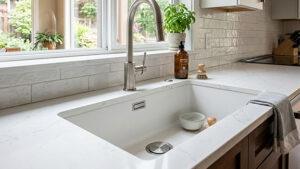
Engineered stone surface, quartz contains natural quartz crystals which manufacturers mix with resins and pigments to create the material. The result is a non-porous, durable slab designed for countertops.
Caesarstone exists as a brand that manufactures engineered quartz surfaces through its unique product formulation process and quality control procedures and design collection development.
In simple terms:
- All Caesarstone surfaces are quartz.
- Not all quartz surfaces are Caesarstone.
Customers who compare Caesarstone and quartz products are making a choice between two different quartz brands that include a high-end premium product.
The material definitions establish a framework which researchers use to study how local conditions affect performance results.
Learn More : Sintered Stone Countertops in Singapore: Benefits, Pricing & Care
Why Surface Choices are Necessary?
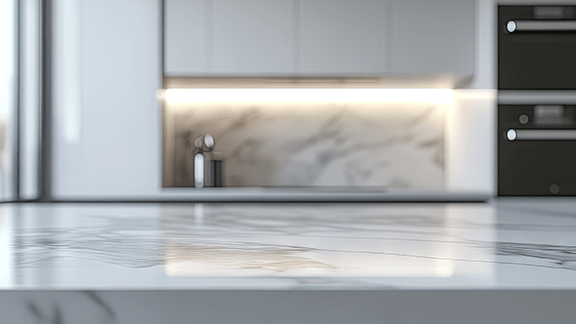
The kitchen environment requires different conditions in Singapore because it has higher humidity levels, frequent cooking, and compact layouts which work against the operation of cooking equipment in compact spaces.
Here’s why your choice matters:
- Humidity resistance: Non-porous surfaces develop protection against moisture because they block water from entering their structure.
- Heat exposure: Local households usually practice stir-frying and heavy cooking as their main cooking activities.
- Space optimisation: Small kitchens benefit from sleek finishes because they create an illusion of more spaciousness.
- Property value: Quality surfaces determine the resale value of workplaces and condos and landed homes according to their property value specifications.
Middle to upper-income households consider the Caesarstone versus quartz debate because they need products which will last for extended periods while delivering dependable performance and trustworthiness from recognised brands.
The appearance of a kitchen space holds equal importance with its functional qualities for modern kitchen design.
Design Versatility and Visual Appeal
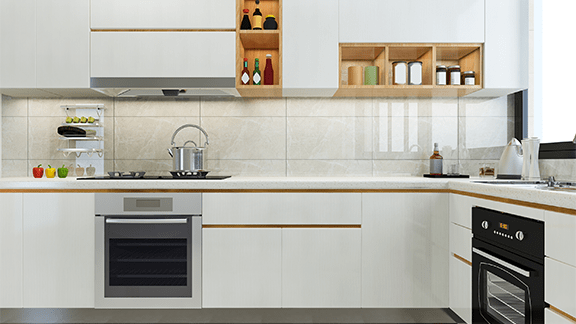
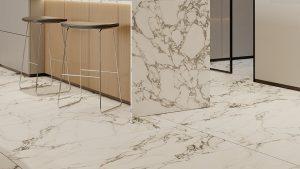
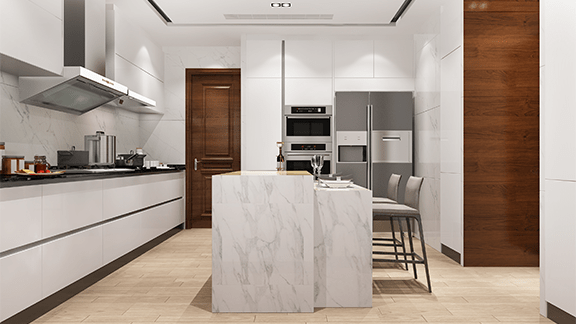
The kitchen design in Singapore uses clean lines and handleless cabinets and neutral palettes as its main elements. Both quartz and Caesarstone work well with this particular design style.
1. Quartz (General Brands)
- Wide range of colours and patterns
- Marble-look and concrete-inspired finishes
- Usually more budget-flexible
2. Caesarstone
- Curated designer collections
- Consistent pattern control
- The premium finishes of our products feature advanced detailing work
Some customers prefer Caesarstone because of its brand reputation and product consistency while other customers choose different quartz brands because they provide the identical aesthetic appearance at reduced prices.
Design evaluation of quartz and Caesarstone requires you to bring sizable material samples which should be assessed in your kitchen’s actual lighting conditions. Showroom lighting can distort tones.
The visual aspect of a product is important, but its actual value emerges through its usage throughout multiple days.
Explore More: Sintered Stone vs Quartz Countertops: Differences, Benefits, and Which One Wins
Durability, Maintenance, and Everyday Use
A kitchen countertop needs to handle all daily kitchen activities which include cutting with knives, placing hot pots, dealing with liquid spills, and performing cleaning tasks.
Both quartz and Caesarstone surfaces generally offer:
- Scratch resistance
- Stain resistance
- Non-porous structure
- No sealing required
However, quality control may differ across manufacturers. In the Caesarstone vs quartz comparison, the distinction often comes down to:
- Resin ratios
- Manufacturing standards
- Warranty coverage
- Long-term colour consistency
For busy Singapore households that cook frequently, these small differences can matter over time.
Maintenance Tips:
- The cleaning process requires mild soap together with water for everyday use.
- People should not use strong chemical substances because they should remain safe.
- Trivets should be used for placing cookware that contains hot contents.
- People should use chopping boards because they help preserve the surfaces of their dining areas.
Neither choice offers complete protection against damage, but both choices function effectively in standard home environments.
Most decisions depend on performance details, but budget constraints and long-term value estimation determine which option gets selected.
Cost Considerations and Value Over Time

Renovators must consider budget limits before making their renovation decisions. The pricing for quartz surfaces in Singapore depends on both brand and origin and thickness of the material.
The following section presents a typical comparison between two items:
| Factor | Quartz (General Brands) | Caesarstone |
| Price Range (Singapore) | Mid-range; varies by origin and supplier | Mid to high range; priced at a premium tier |
| Brand Premium | Lower; often positioned as value-driven | Higher; established global brand reputation |
| Material Composition | Engineered quartz (natural quartz + resin); ratios vary by manufacturer | Engineered quartz with proprietary formulations and tighter quality control |
| Warranty Coverage | Depends on supplier; may range from limited to extended warranties | Typically structured manufacturer-backed warranty |
| Design Collections | Wide selection across suppliers; marble, concrete, solid colours | Curated designer collections with controlled patterns |
| Colour Consistency | May vary slightly between batches | Known for consistent slab-to-slab uniformity |
| Availability in Singapore | Broad availability across local fabricators and renovation firms | Available through authorised dealers and selected partners |
| Customisation Options | Flexible sourcing across multiple brands and finishes | Limited to brand catalogue but refined finish options |
| Resale Perception | Viewed as durable engineered stone | Recognised brand name may add perceived value |
| Lead Time | Often shorter due to multiple distributors | May depend on stock and authorised supply chain |
When discussing Caesarstone vs quartz with contractors, ask for:
- Slab thickness options
- Installation costs
- Edge profile pricing
- Warranty documentation
The total project cost difference between actual results and initial estimates tends to happen when Singapore suppliers offer their promotional discounts.
The assessment process begins with the evaluation of design and durability and pricing which leads to the determination of next project activities.
What is the Right Choice for Your Kitchen?
The procedure to assess quartz vs Caesarstone requires you to proceed through these specific steps:
- You should visit multiple showrooms throughout Singapore to see the slabs in person for your comparison.
- You should ask for physical samples which you will use to test in your kitchen’s actual lighting conditions.
- You need to inquire about warranty conditions together with the details of after-sales service protection.
- The installer background should be evaluated because the quality of fabrication work requires equal importance to both material selection and installer background.
- You need to find a design that matches your cooking habits while considering your cooking frequency because cooking requires special design requirements.
Renovators should choose materials based on which materials match their design requirements and cooking methods and renovation budget instead of choosing the superior material.
The industry trends provide insights which show the actual material performance throughout various construction projects.
Discover More : Granite in Singapore: Comparing Grades, Costs & Applications
Why Designers Continue Choosing Quartz?
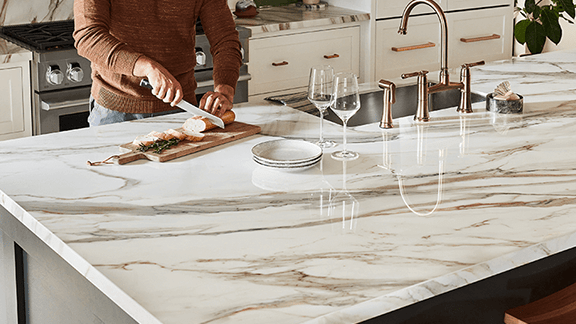
The National Kitchen & Bath Association (NKBA) 2026 Kitchen Trends Report shows that quartz stays durable according to its findings which Real Simple reported.
The NKBA surveying process involved more than 600 kitchen designers and remodelers and industry professionals to gather information about their material preferences at present and future times. The findings showed that 78% of professionals expect quartz to remain the most popular countertop material through 2029, placing it well ahead of granite and marble.
Designers provided multiple explanations for their ongoing preference for this design option because:
- Low maintenance compared to natural stone
- No sealing requirements
- Strong resistance to stains and scratches
- Consistent patterns suited to modern kitchens
The application of this process shows how actual renovation work proceeds. Designers who create high-traffic kitchen spaces report that customers now place greater importance on long-lasting materials which are easy to maintain in homes with high activity levels.
Customers select quartz because it offers them an attractive solution which works well for their daily needs although granite and marble maintain their appeal as natural materials with unique aesthetic qualities.
The shift in the industry demonstrates that quartz has transitioned from its previous status as an optional surface material to become the primary surface selection for most modern kitchen designs.
Continue Reading : Granite in Singapore: Comparing Grades, Costs & Applications
Conclusion
The choice between Caesarstone vs quartz depends on what you consider most important. The Caesarstone brand offers a safer option for you because you value its brand consistency and its dedicated design approach and its organised warranty system. The other quartz brands provide you with better value because you need different price options and multiple supplier relationships.
Singaporeans who want to create a modern kitchen should choose materials that last a long time and match their maintenance needs and their desire for lasting kitchen features. You should complete your selection process by visiting showrooms to check samples and consult with experienced fabricators about your options.
Speak to the team at TSD when you’re comparing quartz vs Caesarstone and want expert guidance in Singapore. As a one-stop stone specialist, TSD handles selection, customisation, fabrication, and installation under one roof, no handovers between contractors.
With decades of experience in residential and commercial stonework, a fully equipped fabrication workshop, and in-house profiling stations, TSD delivers precision-cut quartz and natural stone surfaces customised to your space.
Contact our showroom at 16 Joo Koon Circle (629047) by appointment, call +65 6908 5147, or email tsd.enquiry@gmail.com to discuss your kitchen project today.
FAQs

Q1. Is there a real difference between Caesarstone vs quartz?
Yes, but it’s mainly about brand versus category. Quartz is the material type. Caesarstone is a manufacturer of quartz surfaces. Differences may show up in price, warranty, and design selection rather than core durability.
Q2. Which is better for Singapore’s climate, quartz vs Caesarstone?
Both perform well in Singapore’s humidity because they are non-porous. The quartz vs Caesarstone comparison focuses more on brand preference and finish options rather than climate suitability.
Q3. Does quartz chip or crack easily?
Quartz is durable but not indestructible. Heavy impact on edges can cause chips. Professional installation reduces this risk.
Q4. Is Caesarstone worth the higher price?
It depends on your priorities. Some homeowners, and property owners prefer the reassurance of a global brand and extended warranty. Others are comfortable choosing alternative quartz brands with good reviews.