Key Takeaways
- Office pantry countertops fail faster than residential kitchen surfaces, not because of heavier use, but because shared-use patterns are unpredictable and nobody manages them the way a homeowner manages their kitchen.
- A shared pantry puts through a specific damage profile: hot beverage contact, food prep without proper wiping, cleaning chemicals from whoever grabbed the spray bottle, and residue from dozens of people using the same surface daily.
- Polished stone looks impressive in a newly fitted office pantry and starts showing wear within months. Honed and matte countertop finishes hide contact marks that accumulate in shared-use environments without looking neglected.
- Sintered stone and engineered quartz handle pantry conditions well without a maintenance schedule nobody will stick to. Porous surfaces that require periodic sealing are liabilities in an unmanaged shared kitchen.
- Colour matters differently in an office than at home. Mid-tone neutrals hide the daily reality of a shared surface. Very light or very dark countertop finishes demand cleaning attention that shared spaces never get.
Introduction
Most Singapore office pantries are designed like small residential kitchens. Same material logic, same finish choices, same aesthetic priorities. The result is that most start looking tired within eighteen months. Not because they are poorly built, but because the surface specification was never matched to how the space actually works.
A home kitchen countertop is used by the same people, cleaned on a routine, and treated with some level of care. An office pantry countertop is used by everyone. Cleaned by whoever grabs the spray bottle. Subject to what happens when dozens of people interact with a surface daily with no shared sense of ownership.
That difference in use pattern is the gap most commercial countertops in Singapore fit-outs miss. Getting the specification right means understanding what a shared pantry does to a surface. Which materials stay sharp without active management. Which finishes perform under Singapore office lighting.
Why the Pantry Counter Gets Misspecified
The problem starts at the briefing stage. When a designer or office manager specifies a pantry, the brief almost always references residential kitchen aesthetics. The use profile rarely gets discussed.
A residential kitchen handles maybe fifteen to twenty surface contact events a day. An office pantry with twenty staff handles two to three times that before lunch. Every person using it brings a different level of care. Some wipe up immediately. Some leave coffee rings. Some prep food directly on the surface. Some apply bathroom cleaning spray. The surface must perform across all of these behaviours without anyone taking responsibility for maintaining it.
That is the brief for commercial countertops Singapore offices actually need. Instead, specifiers default to whatever looks good in the sample room, and the pantry surface begins its slow deterioration the moment the office opens.
“The pantry counter is the most democratic surface in an office. Used by everyone, maintained by no one. That single fact should define the specification.”
What a Shared Pantry Does to a Countertop Every Day
Office pantry countertops face a damage pattern that sits between residential and commercial food service. Not heavy enough to require the stainless steel of an actual commercial kitchen, but far more demanding than a home kitchen surface.
Hot beverages are the most consistent damage agent. Coffee, tea, and hot water make contact with the surface dozens of times a day. On porous stone, that means staining and heat stress at the surface. On sintered stone, there is no meaningful reaction.
Food residue is the second issue. People prep food at pantry counters without the care they would apply at home. Something gets sliced; nothing gets wiped. Bread crumbs, sauce splatter, fruit juice. On a non-porous surface, a daily wipe handles all of it. On a porous surface with sealing degradation, these become the start of a staining problem that compounds.
The cleaning chemical issue is underappreciated. In a home, one person controls what goes on the counter and what cleans it. In a shared pantry, whoever restocks the supplies determines the cleaning regime. Harsh chemicals, abrasive sprays, alcohol-heavy sanitisers. Non-porous stone surfaces with no sealing requirement are the only category immune to all of these.
Fabrication quality shapes how long a counter holds up, regardless of the material chosen. Guidance on countertop durability and specification in high-use environments confirms that seam placement, cutout clearances, and continuous substrate support all affect performance over time. In a pantry, the cutouts around the sink and any integrated appliances need the same fabrication rigour as a commercial counter.
Which Stone Surfaces Hold Up in a Shared Office Pantry
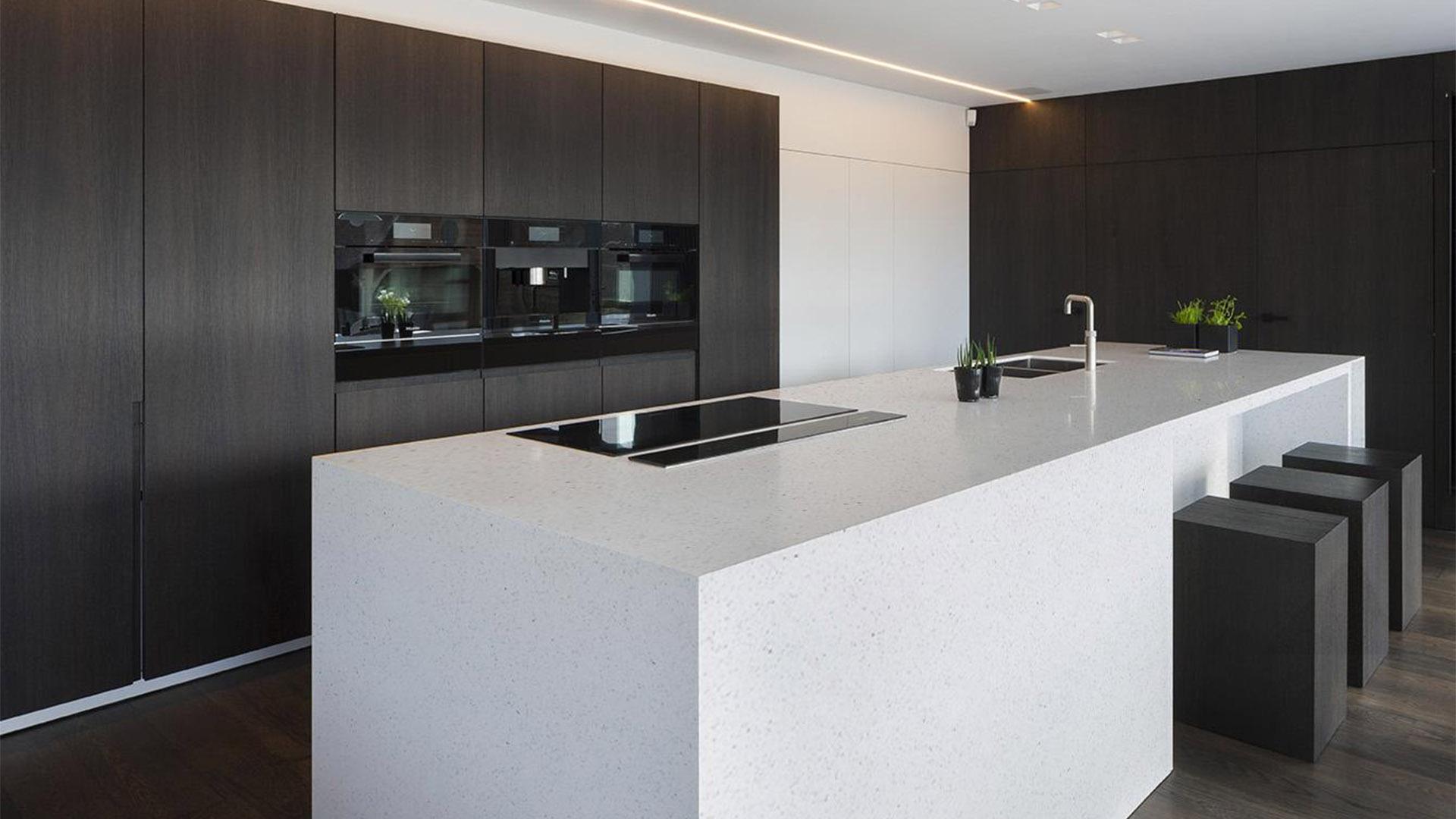
The question is not which material looks best. It is which material performs without a maintenance regime.
Sintered stone is the strongest answer for shared commercial countertops in Singapore offices. Non-porous, it requires no sealing, resists hot beverage contact, and handles the range of cleaning products applied by different people on different days. Large-format slabs reduce seam frequency across a counter run, which matters where the sink and appliance cutouts already introduce multiple joins. Fewer seams means fewer hygiene points and a cleaner visual line. See the slab formats and thickness options in our sintered stone countertop in Singapore overview.
Engineered quartz is the strong second choice, particularly where consistent colour across multiple pantry counters in a multi-floor fit-out matters. Non-porous, stain-resistant, and with no sealing requirement, quartz handles the shared pantry brief well for moderate-temperature contact. The consideration is that quartz contains resin, which can discolour under sustained direct heat. For a pantry where a coffee machine or hot water dispenser sits on the counter permanently, keeping the surface away from that heat point is worth building into the fabrication brief. Our comparison of stone surfaces covers how both materials perform across different use conditions.
Granite can work where the aesthetic calls for natural stone character, but the sealing requirement is a real commitment in a shared environment. Unsealed or under-sealed granite in a shared pantry accumulates staining that a managed residential kitchen would catch early. If granite is specified, the maintenance schedule must be built into the building management plan from day one.
Marble is not suited to a shared office pantry. Acid sensitivity from coffee, juice, and cleaning products, combined with no one managing the surface carefully, produces rapid deterioration in a shared pantry.
Finish and Colour for Office Pantry Conditions
Surface finish is the decision that most directly determines how a pantry counter reads after six months of use. Not on install day. After six months of shared contact.
Polished stone shows everything: every fingerprint, every coffee ring, every smudge. In a home, one person is responsible. In a shared office pantry, a polished surface looks worse within a week than a home kitchen looks in a year. The same micro-contact marks that disappear on a honed surface catch overhead office lighting on a polished one.
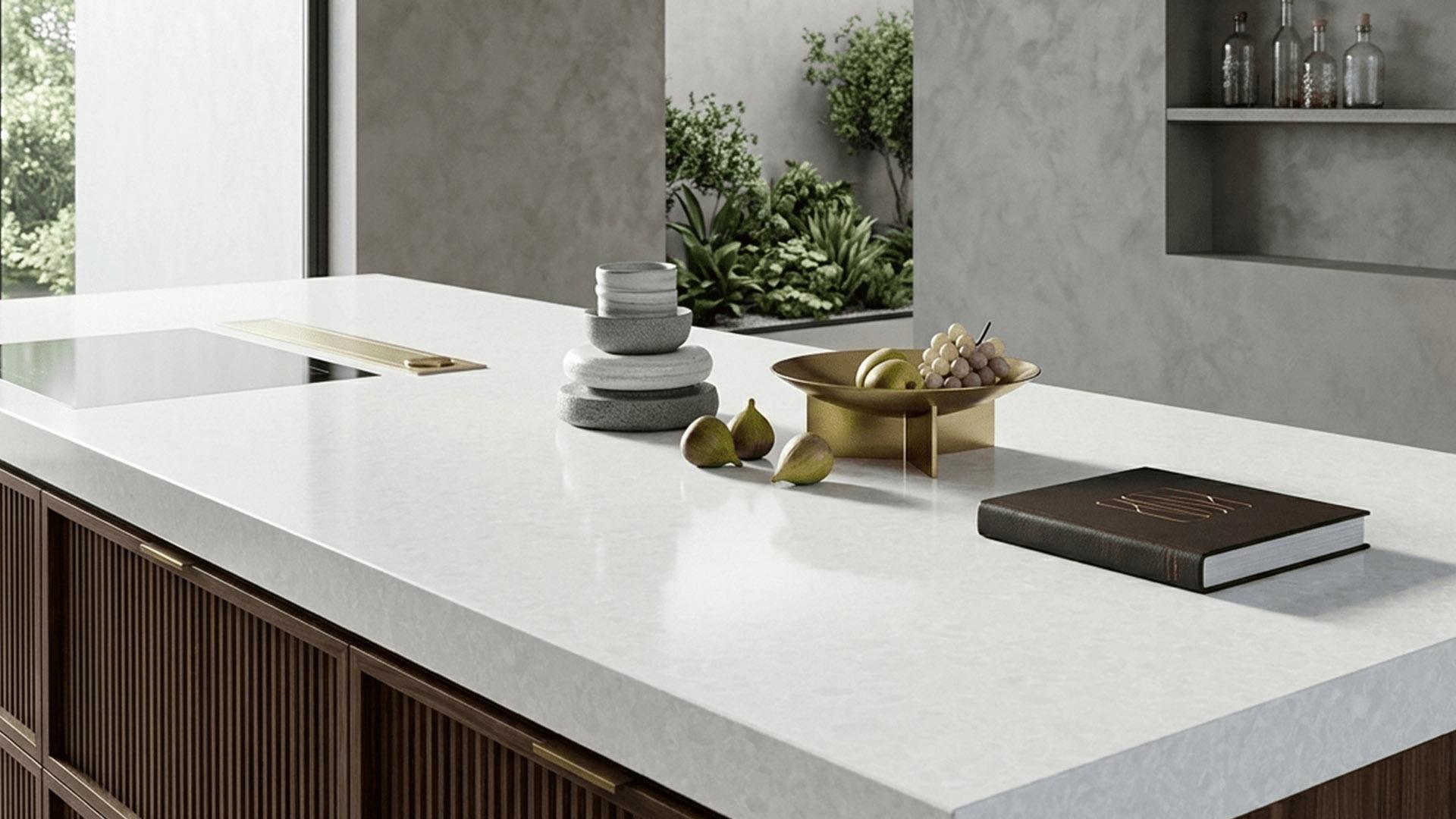
Honed and matte countertop finishes are the practical specification for a shared pantry. Contact marks and surface variations disappear into the texture rather than catching the light. For sintered stone, matte finishes come as standard. For quartz, honed options are worth specifying over polished.
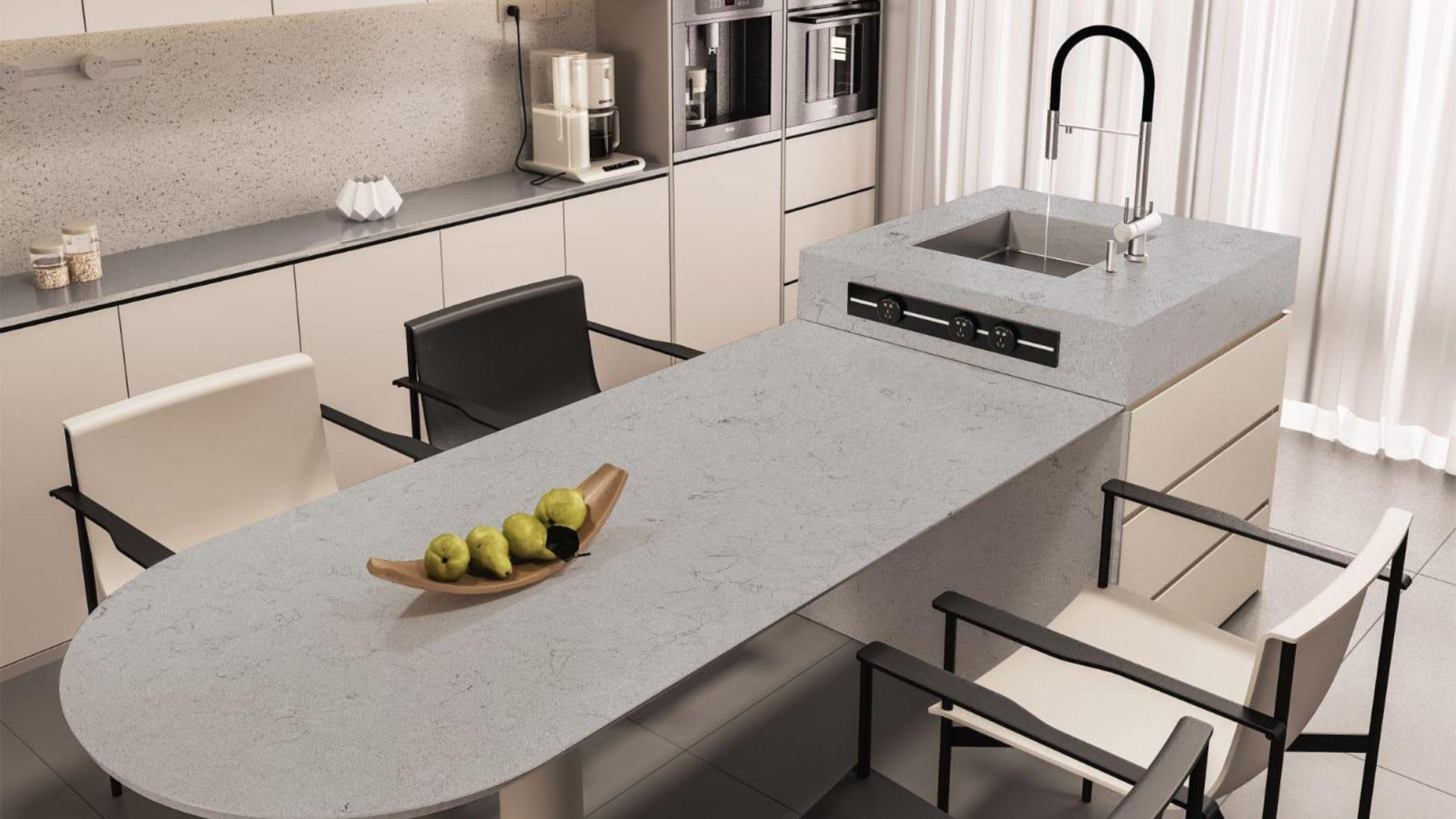
Colour follows the same logic. Very light countertops read every mark in a shared environment. Very dark ones reveal water marks and cleaning residue at the same rate. Mid-tone neutrals: warm greige, soft grey, concrete tone, and warm taupe, hide the reality of daily shared use better than either extreme. These tones also read consistently under the warm LED downlighting of Singapore commercial fit-outs, where lighter stones can shift cooler and darker ones absorb light entirely.
A stone selected in a neutral showroom can read differently under the actual office lighting conditions. Viewing slab samples in the space before committing is the step that prevents colour regret after installation. Our sintered stone countertop in Singapore page covers finish options and how they perform across commercial applications.
Frequently Asked Questions

1. Why do office pantry countertops wear faster than home kitchen surfaces?
Shared use without shared responsibility. A home kitchen surface is managed by the same people on a consistent routine. A pantry counter is used by many, cleaned by whoever is available, and exposed to cleaning products nobody controls. That combination produces a damage pattern a residential specification was not designed for.
2. Which countertop finish is best for a shared office pantry?
Honed or matte. Polished countertop finishes reveal contact marks, fingerprints, and smudges quickly under shared-use conditions. Honed and matte finishes absorb daily contact without looking neglected. For sintered stone, matte is standard. For quartz, specify honed over polished.
3. Does countertop colour matter in an office pantry?
Yes. Very light and very dark commercial countertops in Singapore offices show daily marks more visibly than mid-tone neutrals. Warm greige, soft grey, and concrete tones hide shared-use reality better and read consistently under warm office LED lighting.
4. Is sintered stone worth the cost premium for an office pantry?
For a shared-use environment with no dedicated maintenance regime, yes. The premium over quartz or granite is offset by no sealing requirement, resistance to whatever cleaning products get used, and a surface that holds up without active management.
5. Can the same stone used in the pantry be used across other office surfaces?
Yes, and specifying the same slab family across pantry counter runs, credenza tops, and reception counters is the practical choice for a consistent fit-out. Large-format sintered stone slabs can be fabricated for all of these from the same batch, ensuring colour and finish consistency across the whole floor.
Office pantry countertops fail when the specification treats the space like a home kitchen. Getting it right starts with the actual use pattern: shared, unsupervised, and subject to cleaning approaches no one person controls. To see how sintered stone and quartz perform across commercial applications at full slab scale, visit TSD at 16 Joo Koon Circle or contact us at tsd.enquiry@gmail.com.