Key Takeaways
- Stain-resistant kitchen surfaces in Singapore need to handle more than the occasional spill. Turmeric, curry sauces, dark coffee, soy-based marinades, and cooking oils all land on kitchen worktops here regularly.
- Materials differ significantly in how they respond to these stains. The gap between a surface that wipes clean and one that absorbs colour permanently comes down to whether the material has open pores or not.
- A stone counter surface with no open pores does not absorb liquid. Spills sit on top and wipe off. A porous surface, such as granite, marble, or natural stone, needs to be sealed and the seal kept up, or staining becomes permanent.
- Finish matters as much as material. Polished surfaces show stains more visibly than honed or matte ones, even when neither has actually absorbed anything. A matte stone counter surface shows fewer daily marks in a busy cooking kitchen.
- Keeping stain-resistant kitchen surfaces clean in Singapore is not complicated. Soap, water, and a wipe-down after cooking is all most surfaces need.
Introduction

Singapore kitchens cook differently from most of the world. Turmeric goes into curry, kecap manis into stir-fries, dark soy into marinades, palm sugar into desserts, and chilli oil into everything. A morning kopi leaves its ring. The daily routine leaves its evidence on whatever surface is in the kitchen.
Most countertop choices get made based on how the slab looks in a showroom. Very few get made based on what happens when a pot of curry bubbles over at 7 pm. But after a year of real Singapore cooking, good choices become obvious.
What Singapore Cooking Actually Does to a Kitchen Worktop
Turmeric is the most stubborn staining agent in a typical Singapore kitchen. The yellow pigment in fresh and powdered turmeric bonds strongly to porous surfaces and does not come out with soap and water alone. On a sealed granite or marble worktop where the seal has worn down, turmeric stains can set permanently within minutes.
Cooking oils are the second major staining source. Palm oil, sesame oil, and coconut oil, all used regularly in local cooking, leave residue that builds up on porous surfaces over time. On honed or matte natural stone without a current seal, oil absorbs into the surface and darkens it gradually over time.
Dark coffee, soy sauce, and ketchup all carry colour compounds that stain open-pore surfaces. A countertop that looks clean after a gentle wipe may still accumulate colour beneath the surface if the material is porous and the seal has worn.
Stain-resistant worktop surfaces work best when spills are wiped promptly. On sintered stone and engineered quartz, even oil, vinegar, soy sauce, curry, and turmeric sit on the surface and wipe off cleanly without leaving permanent colour.
“The staining story for most Singapore kitchens comes down to one question: does the liquid sit on top, or does it go in? If it goes in, you have a problem.”
Materials That Handle Singapore Stains Well
The two materials that hold up best in a Singapore cooking kitchen are sintered stone and engineered quartz. Both are produced as dense, smooth surfaces. Liquid does not absorb into them. Curry, turmeric, coffee, and oil sit on the surface until they are wiped off. Neither needs sealing. Neither develops a permanent stain from normal daily cooking.
Sintered stone goes one step further on heat resistance. It handles a hot wok base placed directly on the surface without any reaction. Engineered quartz handles heat well for everyday cooking. Sustained high heat from a wok or cast iron pan can affect it, so placement relative to the hob is worth thinking about. Both are genuinely stain-resistant kitchen surfaces for Singapore conditions.
For day-to-day upkeep, both materials are simple. Dish soap and water after cooking, with a wipe before the residue dries. No special products, no sealing, no annual maintenance routine.
Our comparison of sintered stone and quartz countertops covers exactly where each material performs differently and where they overlap.
Materials That Struggle With Singapore Stains
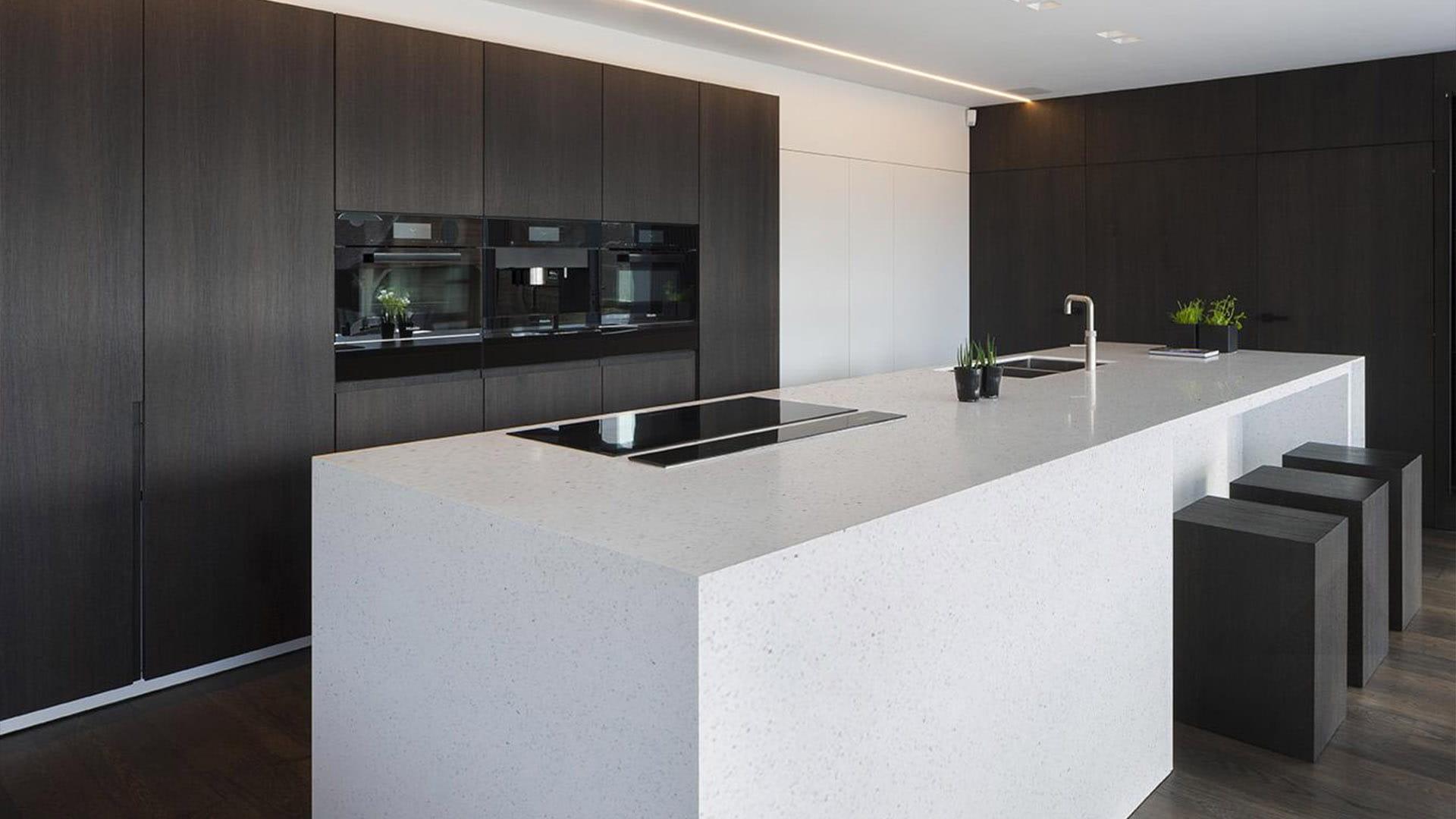
Granite, marble, limestone, and other natural stones are porous. They stain. How quickly depends on the current state of the seal and how long a spill sits before being wiped.
A properly sealed granite kitchen worktop resists staining reasonably well. But sealing degrades. In a Singapore cooking kitchen used daily and cleaned with household products, a seal lasts roughly 12 to 18 months. After that, reapply it. Many homeowners do not keep up with this, and the surface becomes progressively more vulnerable to turmeric, oil, and coffee stains over time.
Marble is more sensitive than granite. Marble reacts to acids: lime juice, vinegar, tamarind, certain cleaning sprays. These etch the surface and create dull spots even when the seal is intact. For a kitchen that cooks regularly with these ingredients, marble is a difficult stone countertop surface to maintain long-term.
None of this means you cannot use natural stone in a Singapore kitchen. But the choice needs to factor in the actual maintenance commitment, not just the aesthetic.
Our guide to kitchen countertop care and materials covers where each material fits different household cooking habits.
Why Finish Changes How Stains Look on the Same Material
Two slabs of the same material, one polished and one honed, will behave differently when a stain lands on them. The difference is not about whether the material absorbs liquid but about how its surface shows marks.
A polished surface reflects light directly. Fingerprints, cooking oil films, and water marks all catch that reflected light and become visible quickly. So in a Singapore cooking kitchen, polished surfaces need cleaning more often, not because they stain more deeply, but because every contact shows. This can make a perfectly clean surface look dirty within a few hours of normal use.
A honed or matte stone counter surface diffuses light across its texture. The same oil mark, fingerprint, or water residue disappears into the finish rather than catching the light. Between cleanings, the surface reads more consistently clean. For daily cooking, a honed finish on sintered stone or quartz is more forgiving in practice, not just in theory.
Colour choice interacts with finish in the same way. Very light countertop colours show every mark under Singapore kitchen lighting. Very dark ones show water marks, cleaning spray residue, and fingerprints at the same rate. Mid-tone surfaces in warm concrete, grey-beige, or soft charcoal directions hide the daily reality of a real cooking kitchen better than either extreme.
Kitchen Surface Care That Actually Works Day to Day
For sintered stone and quartz, the care routine is simple. Wipe up spills when they happen, clean with mild dish soap and water after cooking, and dry it off. That is the entire routine.
Stains on these materials come from two places: leaving something to dry overnight, or using cleaning products that are too harsh. Bleach sprays and abrasive pads work against the surface finish on quartz, even though the material resists the stain itself.
For natural stone worktops, daily upkeep is more involved. The seal needs to be applied regularly and tested periodically. When a drop of water no longer beads on the surface and spreads out instead, the seal has broken down. Reseal the stone before cooking with anything acidic or pigment-heavy.
The simplest principle for stain-resistant kitchen surfaces and kitchen surface care across all materials: clean up after cooking. A surface wiped down as part of the cooking routine, before the spill dries, performs better than any material specification alone.
Our guide to maintaining sintered stone surfaces covers day-to-day care for both residential and commercial applications.
Frequently Asked Questions

1. What are the most stain-resistant kitchen surfaces for a Singapore cooking style?
Sintered stone and engineered quartz are the strongest options. Neither has open pores, so turmeric, curry, soy sauce, coffee, and cooking oils all sit on the surface and wipe off without leaving permanent colour. Both avoid the sealing maintenance that natural stones need.
2. Does turmeric stain kitchen worktops permanently?
On a sealed surface or one with no open pores, no. Turmeric sits on the surface and can be wiped off if dealt with promptly. On a porous natural stone where the seal has worn down, turmeric can stain permanently within minutes. The solution is either a material with no open pores, like sintered stone or quartz, or a natural stone with a current, well-maintained seal.
3. Is marble practical as a stone counter surface in Singapore?
It depends on the cooking style and maintenance commitment. Marble reacts to acids (lime juice, tamarind, vinegar) and needs consistent sealing. For a household that cooks daily with these ingredients, marble is difficult to keep in good condition. For a lightly used kitchen or a dry zone away from the hob, it is more manageable.
4. How often does a granite kitchen worktop need to be resealed?
Every 12 to 18 months is a reasonable expectation for an active Singapore kitchen. The exact interval depends on the granite type, finish, and how hard the kitchen gets used. A simple test: put a drop of water on the surface. If it beads, the seal holds. If it spreads and soaks in, the stone is vulnerable until you reseal it.
5. What kitchen surface care routine works for a busy household?
For sintered stone or quartz: wipe spills while still wet, clean with mild dish soap and water after cooking, and avoid abrasive pads. For natural stone: the same daily routine, plus sealing on schedule. The most important habit for any material is cleaning up after cooking rather than leaving residue to dry.
Stain-resistant kitchen surfaces are not complicated to find. The right material matched to how you actually cook makes kitchen surface care simple. If you cook daily with turmeric, oils, and soy-based sauces, a surface with no open pores removes the maintenance burden. Visit our showroom at 16 Joo Koon Circle or reach us at tsd.enquiry@gmail.com.