Key Takeaways
- Countertop chipping almost always starts at the edge, not the flat surface. Edges break first because any impact has nowhere to spread when stone only exists on one side.
- Three spots account for most edge chipping on a stone kitchen worktop: the outside corners, the inside corners of sink and hob openings, and overhangs without support underneath.
- Edge shape matters a lot. A sharp square edge focuses all impact into a narrow point. An eased edge spreads that force out and holds up much better.
- Questions that protect your edges long-term are worth asking before your fabricator takes measurements, not after the slab has been cut.
Introduction
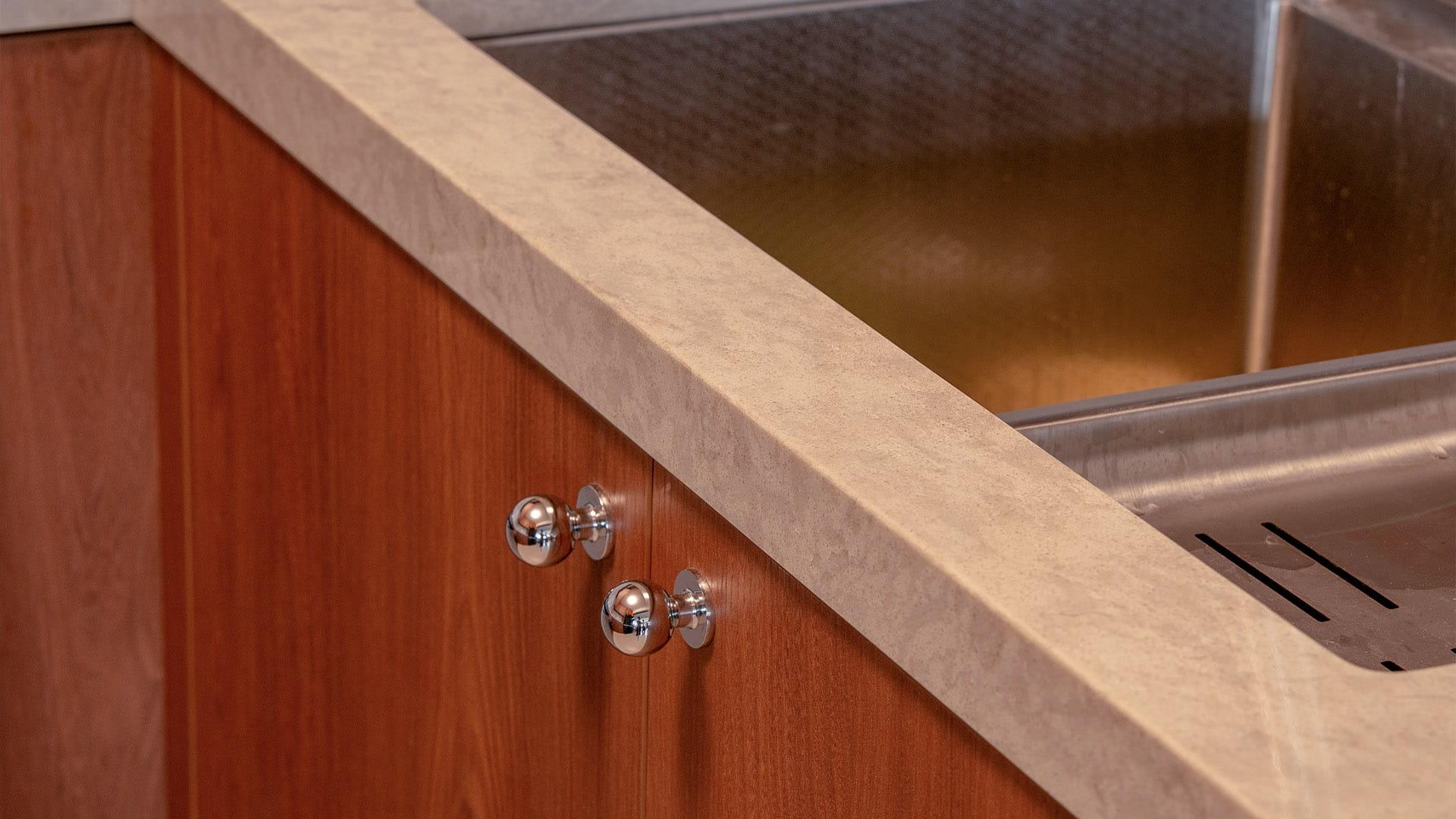
Your kitchen worktop can take years of daily cooking, scrubbing, and contact without showing a mark on the flat surface. Chip one corner or crack the edge near the sink, though, and the whole counter looks damaged even if 95% of it is still perfect.
That is not bad luck. Stone handles downward pressure well. What it struggles with is sideways force at a sharp, exposed point. An edge is exactly that. Understanding this changes what to look for when planning a kitchen renovation.
Why Stone Countertop Edges Break Before the Surface Does
When something hits the flat middle of a countertop, the force travels downward into the cabinet and spreads in all directions. Plenty of material around absorbs it. Granite, quartz, sintered stone, and marble all handle this kind of load without a problem.
At an edge, none of that spreading happens. Force concentrates into a thin exposed line where the stone ends, with material on only one side. Stone handles downward pressure well. Sideways force at a sharp, exposed point is a different story. Countertop chipping starts at the edge, not from the top of the slab down.
This is why a slab can look completely fine across its full surface but have a broken corner. The surface never took a hit hard enough to show damage. The corner did.
“The flat part of your countertop handles daily pressure without a problem. Edges and corners show the damage first, and that comes down to how they were shaped and cut, not what the stone is made of.”
Outside Corners, Sink Cutouts, and Overhangs: Where Countertop Chipping Happens Most
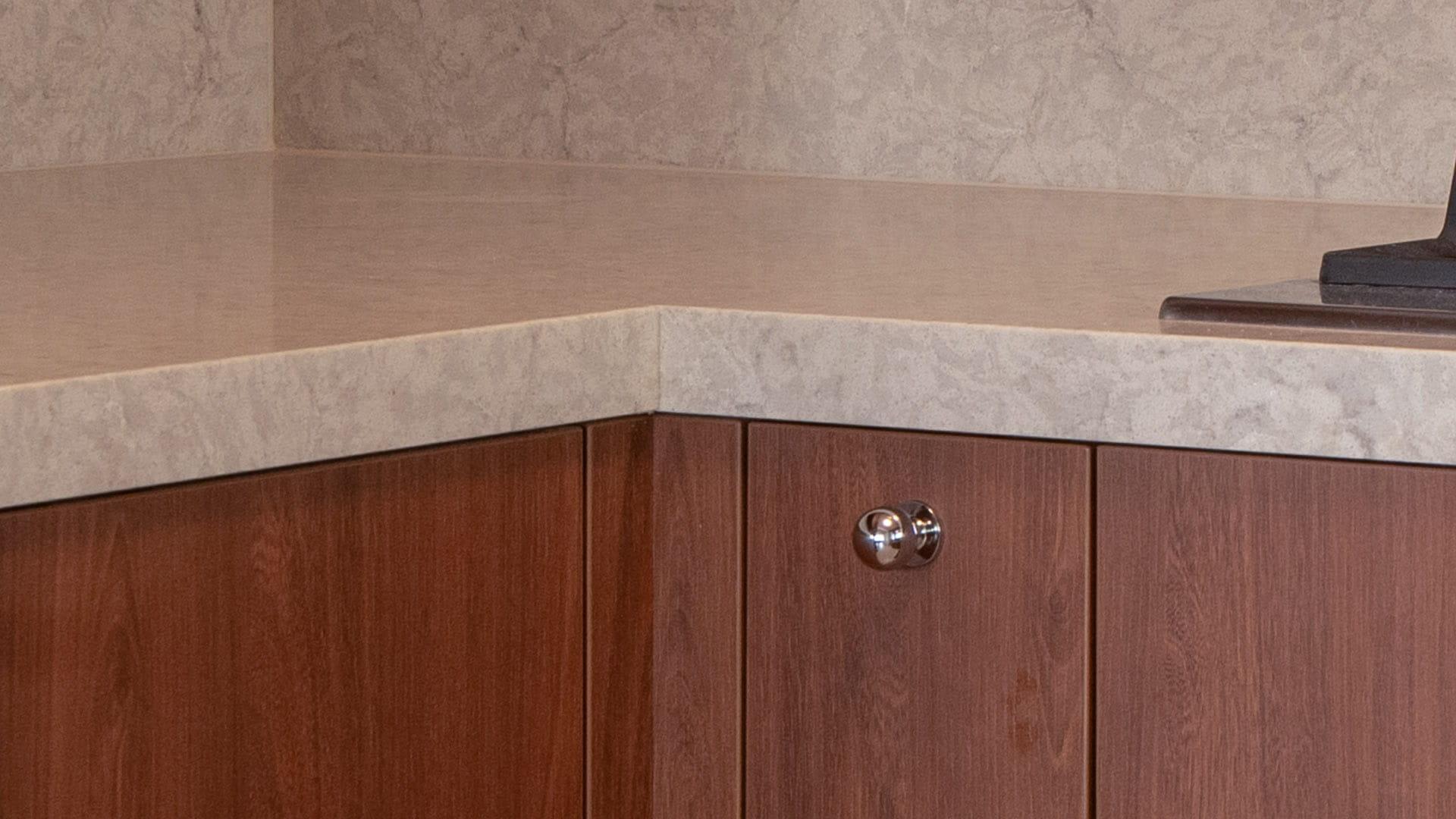
Not every edge on a worktop carries the same risk. Countertop chipping tends to happen in three specific places.
Outside corners
The front corner of a kitchen island or where two worktop runs meet is the most exposed spot in the kitchen. Shopping bags, ladders, and hip bumps all find it without trying. A perfectly sharp 90-degree corner gives impact force nowhere to go. Guidance on stone surface fabrication corner geometry confirms that square corners break off in small flakes rather than wearing down gradually, because all the impact concentrates at that single point.
Inside corners at sink and hob openings
Cutting a hole for the sink or hob leaves sections of stone hanging over space. When the worktop flexes slightly from weight or temperature, those sections put pressure on the inner corners of the opening. Sharp inside corners focus that pressure into a tiny notch instead of letting it spread. Small cracks start there and travel outward toward the edge. Countertop chipping near the sink happens far more often than anywhere else on the worktop for exactly this reason.
Long overhangs without support
Any worktop section that extends past the cabinet works like a diving board. Standard-length overhangs are not a problem. A long breakfast bar or an island with no bracket underneath can put more bending stress on the underside edge than the stone can handle, particularly with thinner slabs.
How Edge Shape Affects Countertop Chipping Risk
Edge shape is a style choice and a practical one, and they do not always point the same way.
A sharp square-cut edge looks clean and contemporary. It is also the profile most likely to chip, because every impact focuses directly onto that narrow line at the outermost point. There is no curve to spread the force.
An eased edge softens the corner with a slight bevel. Barely visible, but meaningfully different. Chips on eased edges tend to be smaller and less frequent because the same impact now spreads across a slightly wider area.
Sintered stone is very hard but can crack at exposed edge points more readily than quartz, which has resin in it that absorbs some impact. On sintered stone, an eased edge is worth considering even if a square cut is the preferred look. Our guide to countertop edge profiles covers how each profile works across the main stone materials.
What Stone Surface Fabrication Has to Do With Delayed Countertop Chipping
A lot of countertop chipping that shows up weeks or months after moving in was present before the worktop arrived. Two things during stone surface fabrication cause most of it.
Sharp inside corners at cutouts
Cutting the opening for a sink or hob correctly means rounding each inside corner rather than leaving a right angle. A sharp inside corner holds up fine for a while, then cracks under a small temperature shift or vibration weeks after countertop installation. The fix is simple: drill a small rounded hole at each inside corner before making the straight cuts.
Dull tools and cutting too fast
Sharp, correctly matched tools produce a clean edge. Cutting too fast, or with worn tools, leaves tiny invisible cracks along the edge. They will not show up when the worktop is polished and installed, but they can develop into chips from an impact that would have been harmless on a properly cut edge. Sintered stone needs slower cutting and specific tooling for a clean result.
Our sintered stone kitchen worktop guide covers how the cutting process differs by material and why that matters for edge durability.
What to Ask Your Fabricator Before Countertop Installation
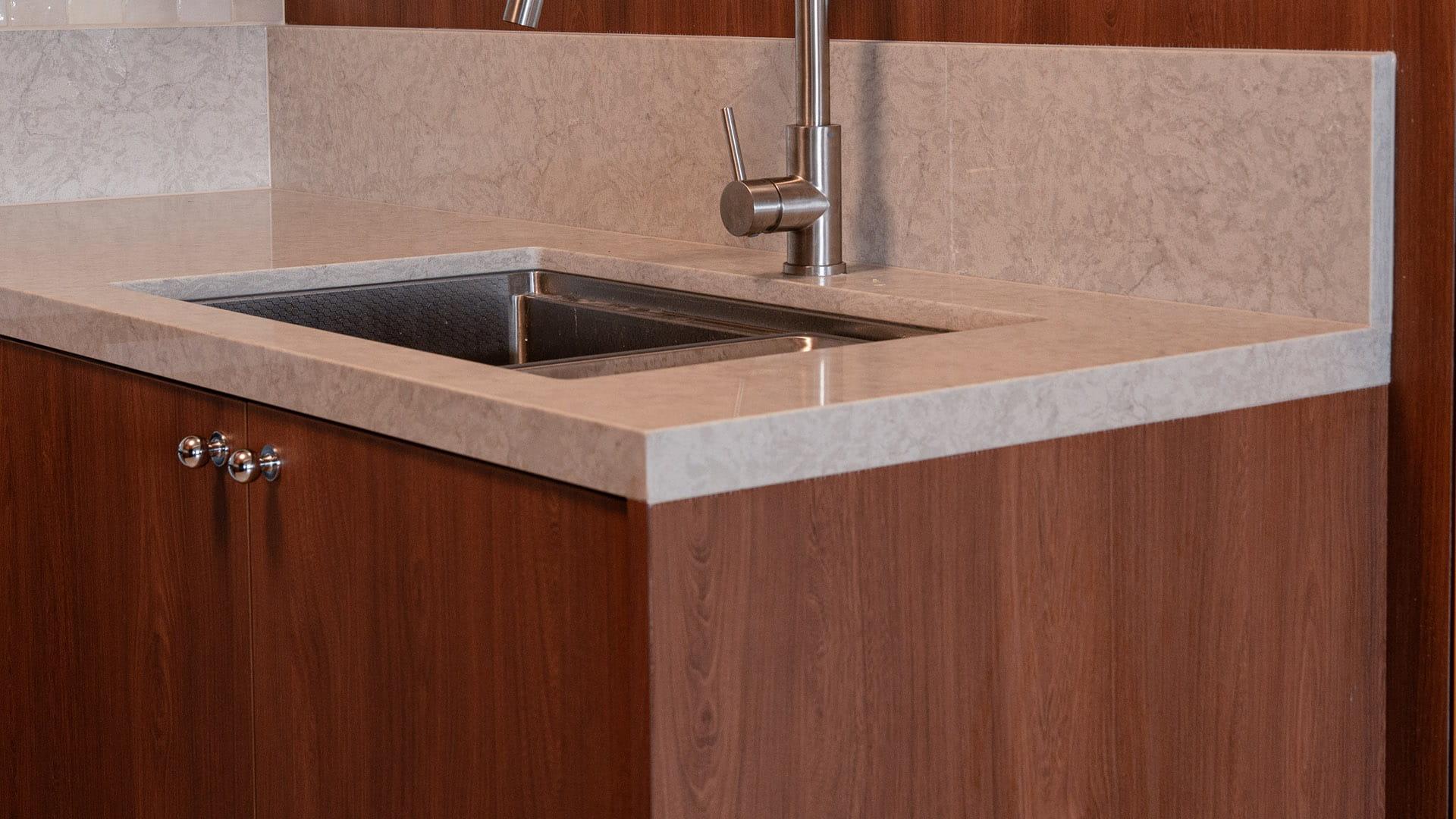
Most of the decisions that protect worktop edges get made during templating and fabrication. By the time the slab arrives, those choices are already set. A few questions beforehand help.
1. What radius do you cut at the inside corners of sink and hob openings?
A fabricator with a specific answer here is thinking about this carefully. One who treats it as unimportant probably is not. On sintered stone or marble, anything below about 5mm is worth questioning.
2. What edge profile would you suggest for this layout and material?
A considered answer mentions the difference between a corner facing into the room and one that ends at a wall. The same profile for every location is a style recommendation, not a structural one.
3. How far can the worktop overhang before I need a bracket?
Safe overhang distance varies by slab thickness and material. A fabricator who knows your chosen material should give a specific number.
Our countertop installation guide covers how TSD approaches these questions, including how in-house templating and fabrication keep everything consistent from measurement to installation day.
Frequently Asked Questions
1. Why does countertop chipping happen at the corners rather than in the middle?
Stone handles downward pressure well when force spreads across a supported surface. At a corner, force concentrates at a single exposed point with stone on only one side. A much smaller impact can cause damage there than it would in the middle of the worktop.
2. Can a chipped edge be fixed?
Small chips can be filled with colour-matched marble gum. The result is often visible in certain lighting because filler does not match the depth or texture of the original stone.
- Does sintered stone chip more easily than quartz at the edges?
At exposed corners and cutout edges, sintered stone can be more vulnerable. Without resin in its makeup, it is harder and denser than quartz but less able to flex under a sharp knock. Quartz handles edge impacts a bit more forgivingly. Sintered stone edges hold up well when the profile and fabrication quality are right.
4. What edge profile holds up best against countertop chipping?
An eased edge generally performs well because impact rolls along the curve rather than hitting a sharp point directly. An eased edge is a good middle ground: a more contemporary look with noticeably better protection than a sharp square edge. A sharp square profile is the most popular style but chips more readily when a corner takes a knock.
Countertop chipping is mostly predictable and largely avoidable. Edge shape, how sink and hob openings get cut, overhang length, and care taken during stone surface fabrication all play a role. Planning a kitchen renovation in Singapore? Visit TSD at 16 Joo Koon Circle or reach us at tsd.enquiry@gmail.com.