Key Takeaways
- Matching countertop and backsplash refers to two different decisions: matching the material versus matching the colour. The first is a structural choice about visual continuity. The second is a stylistic choice that dates differently.
- Running the same stone from countertop to backsplash is not a trend. It is a design logic that has held across kitchen styles for decades, and it solves a practical problem in compact kitchens by eliminating the visual break between the two surfaces.
- A contrasting backsplash is not wrong. It introduces definition and can be the right call where the countertop material is quiet, and the backsplash is meant to carry visual interest.
- The Houzz 2026 Kitchen Trends Study reports that slab backsplashes now account for 28% of renovated kitchens, up from 24% the previous year, with engineered quartz and quartzite as the most common materials.
- In Singapore’s compact HDB and condo kitchens, the matching approach has a practical advantage: a large-format stone panel running from countertop to upper cabinet eliminates grout lines, makes the kitchen easier to clean, and makes the space read larger.
Introduction
The matching countertop and backsplash look generates strong opinions. Some call it timeless, a design decision that removes the need to coordinate two competing surfaces. Others treat it as a passing trend, one that will feel dated once the next kitchen aesthetic takes over.
Both responses are missing a distinction that matters. Matching material and matching colour are two different decisions. The first is structural. The second is stylistic. That distinction is where the real design decision begins.
This piece works through both sides, maps the conditions where each works, and gives Singapore homeowners a practical framework for deciding.
What Does “Matching Countertop and Backsplash” Actually Mean?
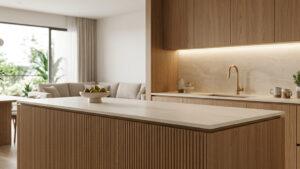
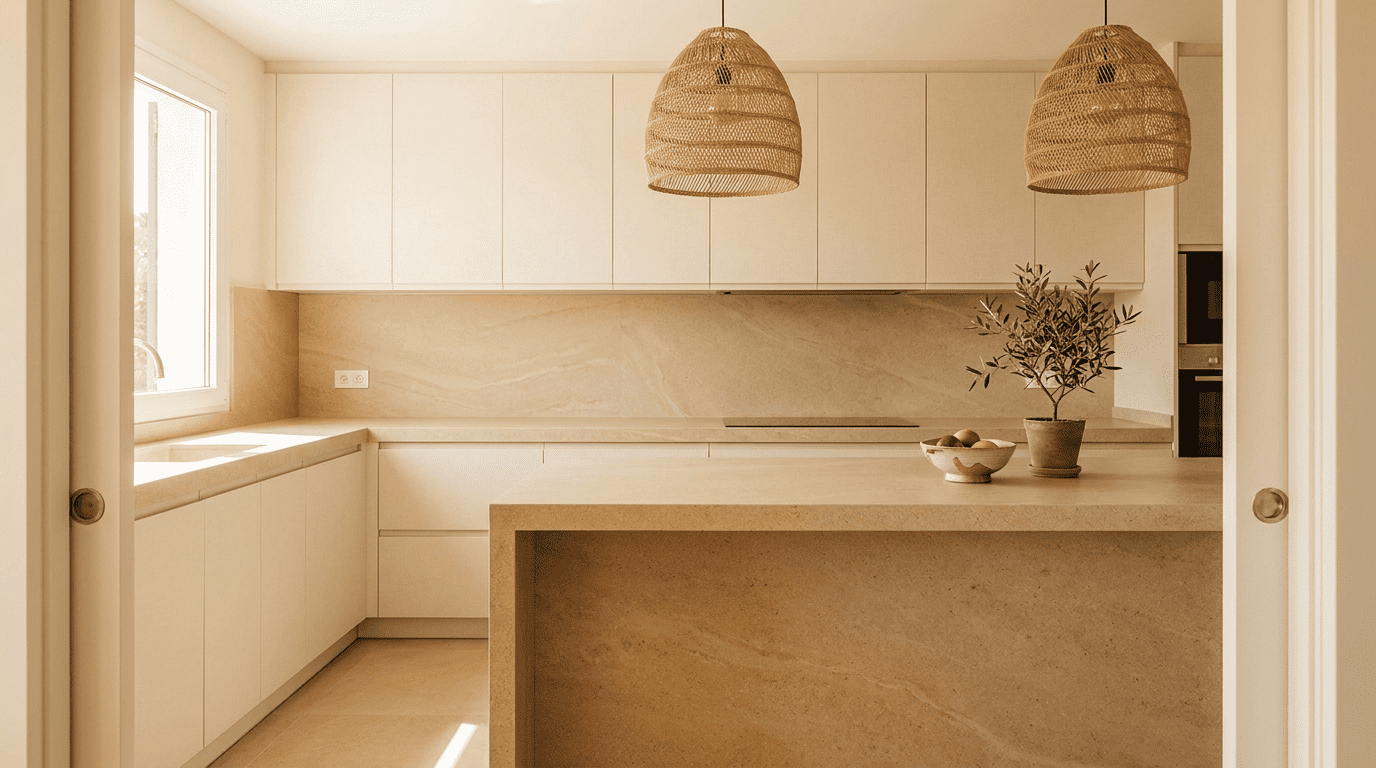
In kitchen design, this pairing can describe at least three different things. The first is running the same stone material from the countertop surface up through the backsplash in one continuous plane: the classic slab backsplash. The second is using the same colour but in different materials, such as a white quartz countertop paired with white ceramic subway tile. The third is using the same finish and tone family without matching exactly, which produces visual coordination without total uniformity.
Each produces a different result. The first eliminates the visual boundary and creates a monolithic surface quality. The second coordinates by colour but lets material texture do the differentiating work. The third is the loosest interpretation and the most common in practice.
The Case for Matching: When Continuity Is the Right Call
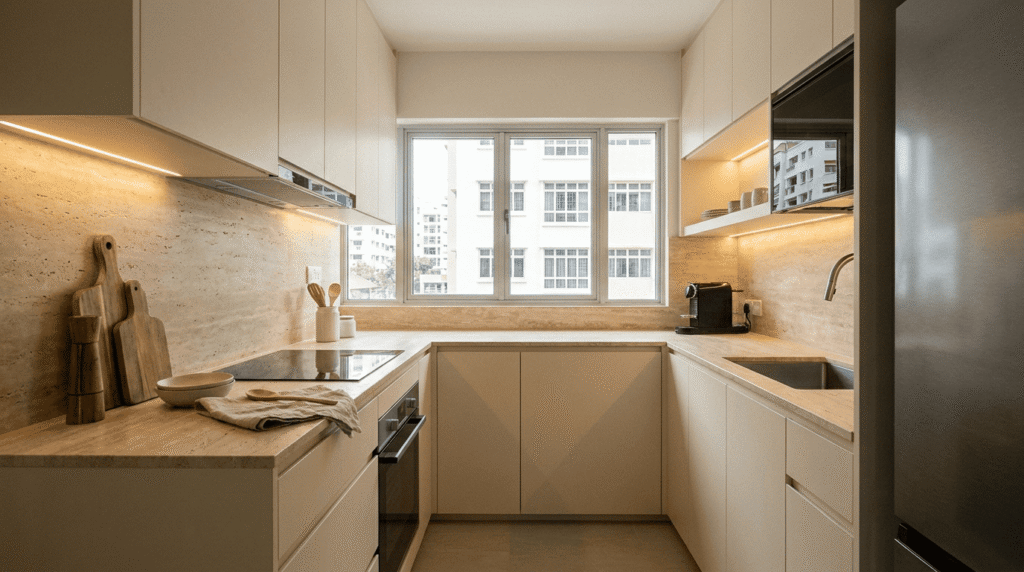
Running the same stone from countertop to backsplash has a specific visual logic. When there is no material break, the eye reads both as one continuous plane. In a compact kitchen, that continuity makes the space feel more coherent and larger.
The practical argument is at least as strong. A large-format stone panel with no grout lines has no joints for grease or cooking residue to accumulate in. In an active Singapore kitchen where wok cooking happens in a tight space, that maintenance difference is significant.
The 2026 Houzz Kitchen Trends Study reports that slab backsplashes now represent 28% of backsplashes in renovated kitchens, up from 24% the previous year. The growth reflects a broader shift toward surfaces chosen for continuity and ease of maintenance rather than decorative contrast.
The matching approach also removes one coordination decision. When countertop and backsplash are the same material, the question of whether they work together does not arise.
A continuous stone surface from countertop to backsplash does not require coordination because it already is coordinated. The design problem is solved by the material decision itself.
The Case for Contrast: When a Different Backsplash Works Better
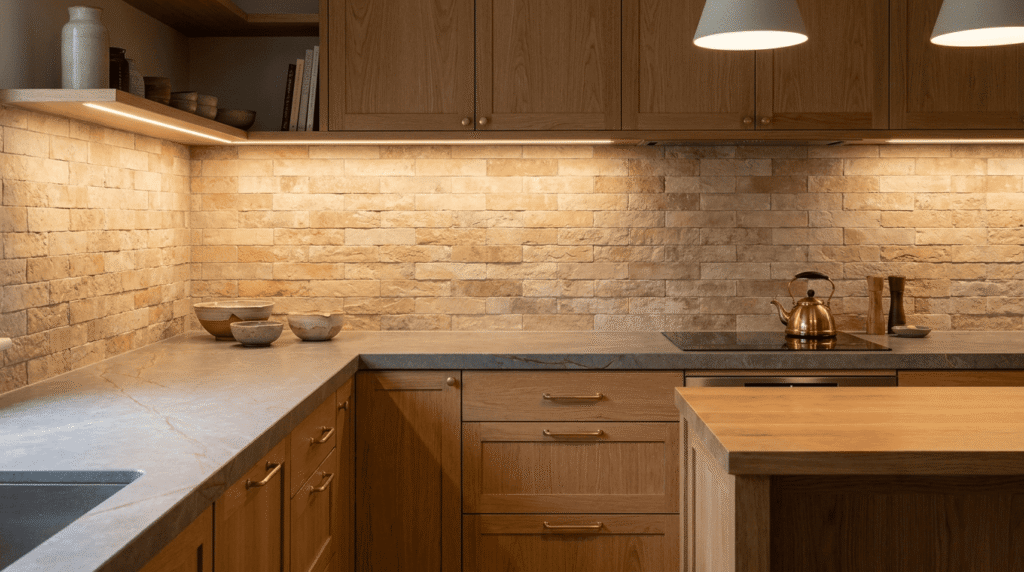
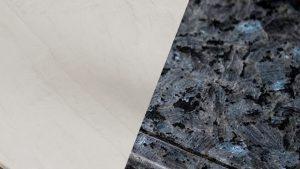
A contrasting backsplash works when the countertop is quiet and the backsplash carries the visual weight, or when the countertop has strong pattern and the backsplash should recede rather than compete.
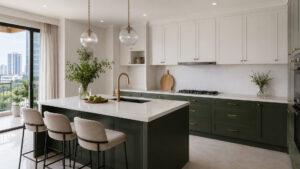
A matte grey quartz countertop with a patterned tile backsplash in a coordinated tone lets the tile introduce texture without creating conflict at the countertop level. Contrast also makes sense when the countertop is a premium natural stone: a highly veined marble countertop with a plain stone backsplash in the same colour family gives the countertop room to be the feature.
The risk of contrast is misalignment. Two surfaces chosen at different stages of the renovation, from different sample sets, under different lighting conditions, can look individually correct and still feel unresolved in the finished room. The fix is to select both materials together under the kitchen’s actual lighting, not under showroom conditions, and assess the combination before committing.
A contrasting backsplash works when the contrast is a deliberate decision about which surface carries visual weight. It fails when it is the result of two separate decisions that were never assessed together.
Which Materials Execute the Matching Look Well
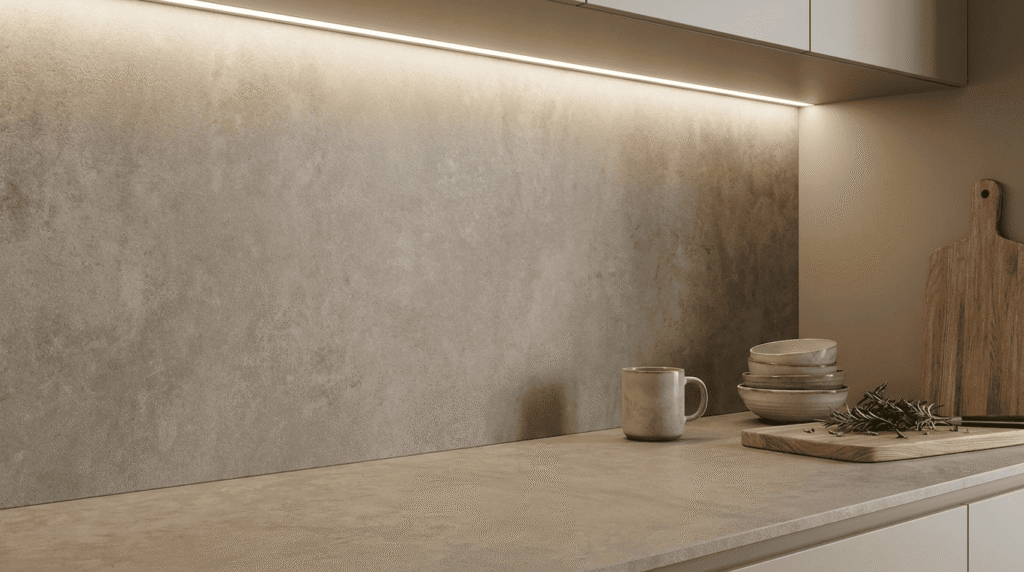
The matching approach depends on the availability of the countertop material in a format suitable for backsplash installation. Not every stone surface can be used on both planes equally well.
Sintered stone is the most practical choice for a continuous countertop-to-backsplash surface in Singapore. It is available in large-format slabs up to 3,200mm by 1,440mm, which means a single panel can cover the full wall height from countertop to upper cabinet with no visible join. The same material runs across the countertop surface and up the wall in a consistent colour, finish, and pattern. Its non-porous surface handles the heat, oil, and moisture of active Singapore kitchens without sealing or special maintenance. Our full overview of stone surfaces for kitchen backsplashes covers how sintered stone performs in this application across different Singapore kitchen formats.
Quartz is the more accessible choice. Its engineered consistency means countertop and backsplash panels match in colour and finish without the natural variation that makes two slabs of the same stone read differently. Quartz should not be installed directly behind a gas hob without adequate ventilation, as prolonged direct heat exposure can affect the resin content over time.
Natural granite and marble can be matched across both surfaces, but slab selection is critical. Countertop and backsplash panels should ideally be cut from the same slab to minimise visible variation in veining and tone.
How to Decide: A Framework for Singapore Kitchens
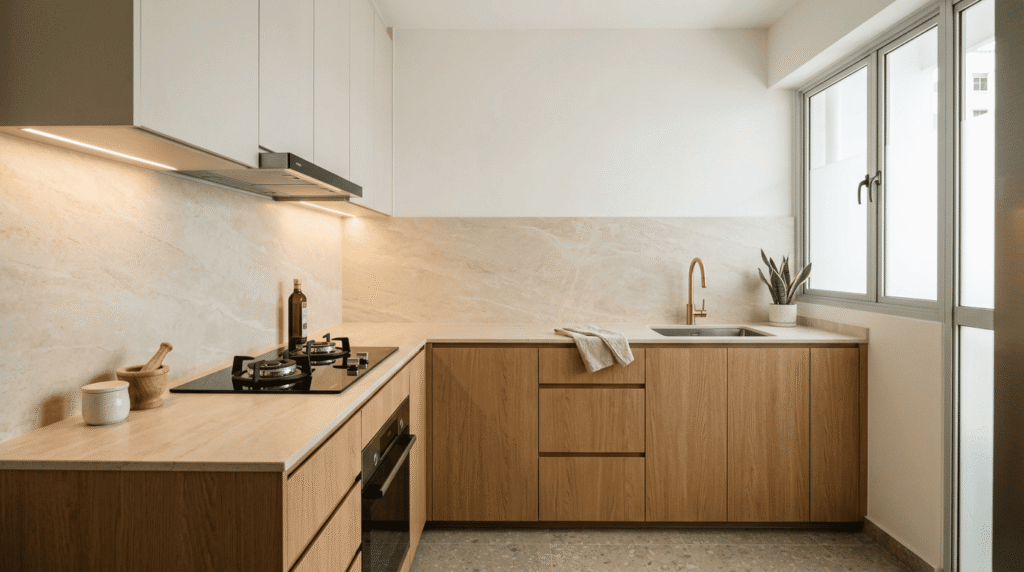
The matching versus contrast decision in kitchen design Singapore homeowners face is not a matter of taste alone. Kitchen scale, cooking intensity, and renovation scope all play a role.
In a compact HDB or condo kitchen under 8 square metres, the matching approach almost always produces a better result. Eliminating the visual break between surfaces makes the space read larger, and reduced grout maintenance matters more in a tight, active kitchen.
In a larger open-plan kitchen, contrast is more viable. The additional space gives each surface room to read independently, and the backsplash can carry more visual weight without the kitchen feeling closed in.
Before deciding, consider three questions. How intensively do you cook? If daily wok cooking is the norm, a matching sintered stone panel is the lower-risk option for maintenance and heat resistance. How does the countertop read on its own? A quiet countertop can support a contrasting backsplash. A countertop with strong pattern needs a backsplash that coordinates rather than competes. And how much backsplash area is visible? In a galley kitchen where the backsplash is a narrow strip, contrast matters less than in an open kitchen where it runs the length of a large island.
Our full range of kitchen countertops Singapore homeowners use covers material options across both applications, with our fabrication team able to discuss how each material performs when run across both the countertop and backsplash in the same kitchen.
Frequently Asked Questions
1. Is a matching countertop and backsplash timeless or just a trend?
Running the same stone from countertop through the backsplash is a structural decision, not a stylistic trend. It has worked across kitchen styles for decades because it solves a coordination problem and is easy to maintain. What dates is a specific colour or pattern, not the logic of material continuity.
2. What is the best kitchen backsplash to use with a stone countertop?
The most reliable approach for stone countertops is to extend the same material up the backsplash, particularly when the countertop is in sintered stone or quartz. This eliminates the coordination challenge and produces a kitchen that reads as one connected surface. A contrasting backsplash in a coordinated tone also works if the countertop has strong pattern and the backsplash needs to recede.
3. Do stone surfaces work for backsplashes in Singapore kitchens?
Yes, particularly sintered stone. Its large-format availability, non-porous surface, and heat resistance suit Singapore kitchens where cooking intensity is high. A sintered stone backsplash eliminates grout lines and can be matched to the countertop for a continuous surface. Our sintered stone countertop guide covers how the material performs across both applications.
4. What makes a contrasting backsplash work rather than look unplanned?
A contrasting backsplash works when both surfaces are chosen together, assessed under the kitchen’s actual lighting, and share the same undertone temperature. Contrast that results from two separate decisions made under different showroom conditions rarely holds together in the finished kitchen.
5. How is kitchen design in Singapore different when deciding on backsplash approach?
Singapore’s compact kitchen formats, particularly in HDB flats and condominiums, make the matching approach more consistently reliable than contrast. The elimination of grout lines in a small, active kitchen reduces maintenance and makes the space feel larger. The backsplash is also closer to the cooking zone in a compact layout, which means heat and oil resistance in the backsplash material matters more than it would in a larger kitchen with more separation between the surfaces.
Conclusion
The answer to the trendy-or-timeless question depends on which matching decision you mean. Matching material is structural and enduring. Matching a specific colour or finish can date. If you are planning a kitchen renovation and want to see how sintered stone and quartz perform across countertop and backsplash in the same finish and format, we carry the full range at our Singapore showroom and fabrication workshop.