Key Takeaways
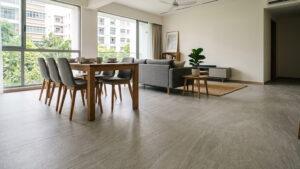
- The kitchen and dining areas should use a single color family for all open space kitchen surfaces to create an uninterrupted flow between the two spaces. The home reaches its maximum visual balance because unified color schemes produce an atmosphere which extends throughout the entire house and creates a sense of spaciousness that can be experienced from any viewpoint.
- The counter veins should be oriented in a horizontal direction because this design choice enables natural eye movement throughout the entire space. The design solution lets small Singapore apartments to achieve an appearance of greater space which establishes visual links between different areas through improved spatial awareness.
- The island stone surfaces should be finished with a medium-sheen rating because this finish will create an elegant center piece which does not produce strong light reflections. The product provides a combination of sophisticated appearance and functional features which require minimal effort to maintain throughout regular use.
- The kitchen design achieves vertical design continuity through the use of mirrored kitchen backsplash materials which extend to the countertop surfaces. The visual flow in high-ceiling executive condos and open-plan residences benefit from this design method.
- The kitchen area, dining space and living room space connect through the use of textured materials which appear in different parts of the house. The home achieves design harmony through matching finishes which enable each room to preserve its unique style.
Introduction
Open concept kitchens just keep blurring the lines between cooking, dining, and living, like it’s all one big area. In Singapore’s modern condo market, open-plan layouts still feel especially popular, since they maximise the visual space, bring in more natural light, and help with the social flow between rooms.
However, once you have fewer walls to separate everything, surface choices start to matter a lot more than people think. Countertops, backsplashes, islands, and even flooring are visible from multiple angles, so colour continuity, veining direction, and material pairings become the real anchors for keeping everything visually calm. Interior designers are also leaning into cohesive zoning and unified finishes, because in these layouts, everything gets seen together.
This blog looks at how careful surface selection can make the visual flow feel smoother across open kitchens, from island design and backsplash pairing to these smooth transitions between the living and dining zones.
Colour Continuity: Unify the Palette
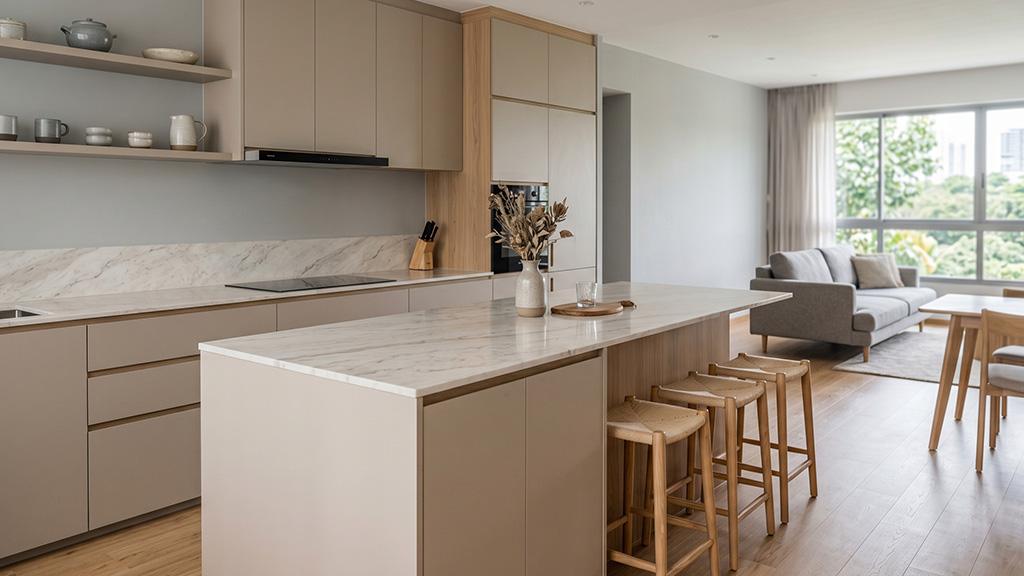
Colours link kitchen to living zones, whereas mismatched tones catch the eye uncomfortably from afar. Pick neutrals like soft greys or warm beiges for open-concept kitchen surfaces. These echo sofa fabrics or rug hues. Bold accents work if repeated, such as, navy cabinets mirrored in artwork.
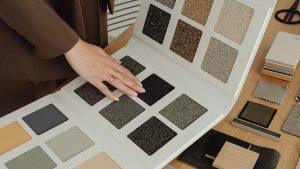
Samples should be tested in ambient light. Singapore’s bright afternoons wash out pastels; evenings reveal true shades.
- Grey quartz: Versatile base.
- White marble: Airy lift.
- Wood tones: Warmth tie in.
One shade family across counters and floors creates calm, clashing pops disrupt the harmony, and if colour is set, veining adds movement.
Veining Direction: Guide the Eye Smoothly
Veins in stone surfaces bring gaze, but random patterns confuse in open views. One should match veins horizontally on counters for length illusion. Vertical on kitchen backsplash draws eyes upward, while expanding space.
In L-shaped open kitchens, match vein flow from island to perimeter. This mimics water currents, pulling rooms together.
- Horizontal counter veins: Elongate sightlines.
- Bookmatched slabs: Mirror images at seams.
- Subtle patterns: Avoid busy marble in small condos.
Poor alignment fragments the space, plan vein maps during layout, and with veins flowing, islands anchor the design.
Island Surfaces: The Focal Spotlight
Islands command attention in open concepts. Their tops set the tone viewed from sofas.
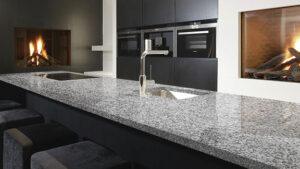
Choose polished stone surfaces like Calacatta quartz for gleam. Matte finishes hide fingerprints but dull from living room angles.
- Polish level: High for drama.
- Size match: Proportional to seating.
- Lighting sync: Under cabinet glows veins.
Scale to room: 4×6 feet suits most Singapore living dining combos. Edge details mitered for thickness impress up close and far, and island shines with the pairing of kitchen backsplash.
Backsplash Pairing for Smooth Transitions
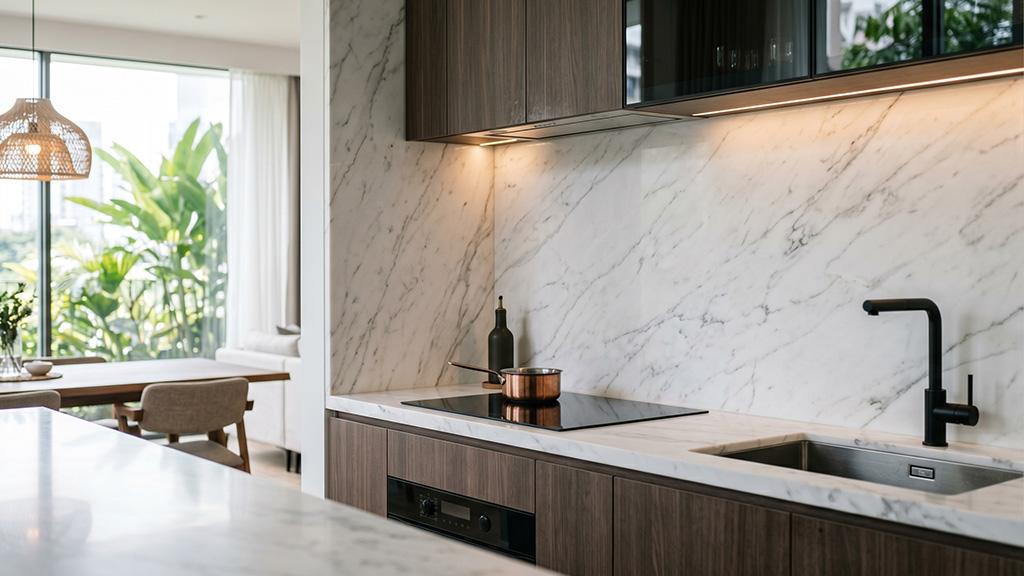
The backsplash serves as wall protection for the area behind the countertop while it establishes the kitchen’s complete design identity. In Singapore homes with open-concept designs, it shows kitchen to both dining and living spaces backsplashes that serve as design elements to complete the home’s interior aesthetic.
The right pairing helps surfaces flow naturally from countertop to wall which creates a cleaner appearance and more refined appearance throughout the space.
Different vantage points show various visual effects that backsplashes create in kitchens. From dining chairs, living spaces, or entryways, the backsplash often frames the main kitchen view.
A carefully matched surface creates an illusion of height and width for compact kitchens, which makes them seem more organised, while material mismatch creates the opposite effect by interrupting surface continuity.
Matching Materials for a Unified Look
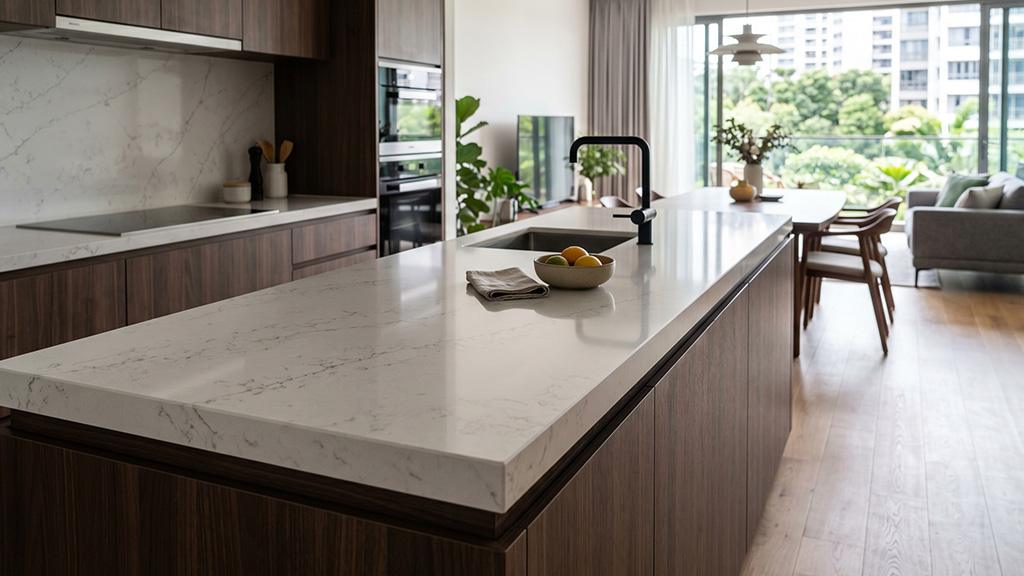
One of the most popular approaches in modern kitchen design is using the same material for both the countertop and backsplash. The process of extending quartz or sintered stone or granite materials upward creates a complete wall surface which showcases an elegant design and unified look.
- The combination of two surfaces through the use of one quartz slab creates an uninterrupted design which enhances the premium appearance of open kitchens throughout the space.
- The full-height stone backsplashes create design continuity which linked design breaks throughout the space because their heights extend from countertop level to upper cabinets and ceiling height.
- The countertop and backsplash display a more sophisticated and expensive appearance because their vein patterns match in orientation.
The approach proves effective in minimalist kitchens because their design elements create an unobstructed visual flow which creates a peaceful spacious environment.
Tile Pairings That Blend Smoothly
Homeowners who want tiled backsplashes need to choose their preferred color and finish because this choice determines their ability to achieve visual harmony between elements. The kitchen design achieves natural wall integration through subway tiles that match the countertop color because they produce minimal visual contrast.
The use of glass mosaics and textured ceramics and subtle reflective finishes allows designers to create spaces which possess both depth and brightness yet maintain an uncluttered design. The use of highly detailed patterns together with strong visual differences between colors will create a feeling of restricted space in small kitchen areas.
- Subway Tiles: Simple and versatile, especially when matched closely to the countertop tone.
- Glass Mosaics: Add a subtle reflective quality that helps brighten enclosed kitchens.
- Neutral Tones: Soft greys, whites, creams, and muted earthy shades maintain balance in modern interiors.
Why Backsplash Height Matters?
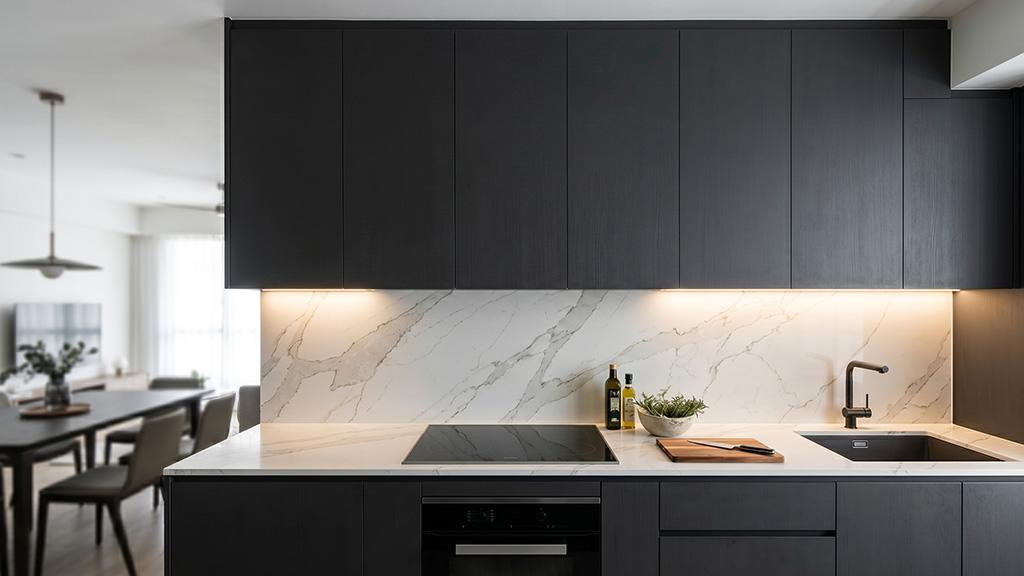
The height of the backsplash determines the degree of openness which a kitchen space presents to its users. The use of short backsplashes creates a traditional boundary which separates the wall from the countertop, whereas full-wall installations establish a stronger visual link between both elements.
Homeowners who use open-plan designs should extend their backsplash height because it enhances the visual connection between their cabinetry and lighting and their ceiling lines.
- Full-Wall Backsplashes: Ideal for open-concept kitchens where visual continuity is important.
- Partial Backsplashes: Suitable for smaller kitchens that prefer a simpler or budget-conscious design approach.
- Ceiling Extensions: Dramatic slab extensions create a high-end architectural appearance in larger kitchens.
Choosing the Right Scale and Finish
Large-format backsplash panels have gained popularity because they minimise grout lines which create a smoother surface for installation. The reduced number of grout joints makes kitchen cleaning and maintenance easier especially in kitchens that experience frequent cooking.
The kitchen lighting design depends on the choice of finishes which determine how light interacts with different surfaces. Highly polished surfaces create brighter compact spaces.
Through their increased light reflection while satin and matte finishes produce softer visual appearances with reduced glare.
- Large Formats: Minimise grout lines for a cleaner and more modern aesthetic.
- Satin Finishes: Reduce reflections and fingerprints while maintaining elegance.
- Gloss Finishes: Enhance brightness in smaller or darker kitchens.
Integrated Designs Create Better Flow
Standalone backsplashes often create a visible separation between countertop and wall surfaces. This makes kitchens feel segmented. Integrated backsplash designs, on the other hand, help surfaces transition more naturally.
When countertop and backsplash pairings are thoughtfully planned together, the result is a kitchen that feels smoother, brighter, and more cohesive not just as a cooking space, but as part of the home’s overall design experience.
Conclusion
The design of modern homes which feature open kitchen spaces depends on their kitchen surfaces which create continuous movement through the home. The design elements which include colour continuity, veining direction, island selections and backsplash pairings work together to create an interior space that feels complete and welcoming.
The right surface material lets people create attractive designs while achieving long-lasting results that require minimal upkeep and withstand their daily activities.
Create an open kitchen that feels visually connected from just about every angle with TSD’s premium stone surfaces. With custom fabrication and detailed countertop finishing services, it all comes together in a way that just feels right. You can do full‑height kitchen backsplash installations, then move straight into quartz islands, granite countertops, and those flowing vein patterns that look elegant in real life too.
TSD’s surface solutions are made for the way people actually live, in modern Singapore condos, HDB flats, and landed homes. If you’re exploring collections like River Blanc, Ivory White, Black Marquina, and Calacatta‑inspired designs, you’ll notice how we help keep smoother visual flow between cooking areas, dining zones, and living spaces.
Contact us, or visit TSD at 16 Joo Koon Circle Singapore 629047, or call +65 6908 5147, to talk about open‑concept kitchen surfaces built for style, durability, and everyday living.
FAQs
- How do I pick open-concept kitchen surfaces visible from the living room?
Choose surfaces with consistent colours, subtle patterns, and finishes that blend naturally with your living space. Always view samples under your home lighting and from different angles to ensure the material looks balanced throughout the open layout.
- What kitchen countertops do Singapore homes pair with open layouts?
Quartz countertops in soft greys, whites, and beige tones remain popular for their durability and clean appearance. Natural stone options like marble or sintered stone are also chosen for luxury-focused interiors when properly maintained for Singapore’s humid climate.
- Should island and perimeter open-concept kitchen surfaces match exactly?
Not necessarily. Matching tones, textures, or veining creates visual harmony, while slight variations can add depth and character to the kitchen. The key is ensuring all surfaces complement the overall interior palette.
- How does kitchen backsplash affect open kitchen flow?
A backsplash visually connects the countertop to the rest of the kitchen, helping the space feel taller and more smooth. Using matching or coordinated materials creates continuity that looks elegant from dining and living areas.
- What common mistakes affect open-concept kitchen surfaces in Singapore condos?
Highly reflective finishes can create glare from natural light, especially in compact condos. Busy patterns or dramatic veining may also overwhelm smaller open spaces, so calmer designs often work better for a clean and spacious look.