Choosing the right surface material for your home or commercial project can be challenging. In this guide, we explore the key differences between sintered stone, porcelain, and quartz surfaces — three of the most popular materials used in modern interior design. You’ll learn how each material is made, their unique advantages, how they compare in performance, maintenance, cost, and aesthetic appeal. We’ll also include professional insights to help you decide which surface suits your space best, followed by answers to three common FAQs.
1. Introduction: Why Surface Material Matters
In modern interior design, surfaces are more than just functional elements — they define style, durability, and the overall feel of your space. Whether you’re renovating your kitchen, designing a bathroom, or creating a sleek office countertop, choosing between sintered stone, porcelain, and quartz can make all the difference.
Each material has its own strengths, unique composition, and practical considerations. Understanding their differences ensures your investment stands the test of time — both in performance and aesthetic appeal.
2. Understanding the Materials
Sintered Stone
Sintered stone is one of the latest innovations in surface technology. It’s created through a process called sintering, where natural minerals such as quartz, feldspar, and clay are subjected to extreme heat and pressure (over 1,200°C). This mimics the natural process of stone formation — but accelerated.
The result is an ultra-dense, non-porous, and incredibly durable material that is resistant to scratches, stains, UV rays, and high temperatures. Brands like Dekton, Neolith, and Lapitec have popularised sintered stone for both indoor and outdoor applications.
Best For: Kitchen countertops, outdoor dining areas, bathroom vanities, and flooring.
Porcelain
Porcelain is a time-tested ceramic material made from refined clay and natural pigments, fired at high temperatures to achieve exceptional hardness. Modern porcelain slabs are engineered to be thin yet strong, with a glazed or matte finish that can replicate the look of marble, wood, or concrete.
Porcelain’s low porosity and resistance to heat, stains, and moisture make it ideal for both residential and commercial use.
Best For: Wall cladding, countertops, flooring, and bathroom surfaces.
Quartz
Quartz surfaces are engineered stones, made from approximately 90–95% natural quartz crystals combined with resins and pigments. This results in a uniform, non-porous material available in a wide range of colours and designs.
Quartz offers exceptional stain resistance and a luxurious finish, though it’s not as heat-resistant as sintered or porcelain surfaces.
Best For: Kitchen countertops, islands, and bathroom vanities in indoor settings.
3. Key Differences: Sintered vs Porcelain vs Quartz
Let’s break down how these materials compare across key performance areas.
| Feature | Sintered stone | Porcelain | Quartz |
|---|---|---|---|
| Composition | 100% natural minerals | Refined clay + natural pigments | 90–95% quartz + resins |
| Durability | Extremely high | Very high | High |
| Heat resistance | Excellent | Excellent | Moderate |
| Scratch resistance | Exceptional | Excellent | Good |
| UV resistance | Excellent | Good | Poor (can fade outdoors) |
| Porosity | Non-porous | Low | Non-porous |
| Maintenance | Very low | Very low | Low |
| Applications | Indoor & Outdoor | Indoor & Outdoor | Indoor only |
| Aesthetic range | Natural & textured | Wide range | Rich, glossy finishes |
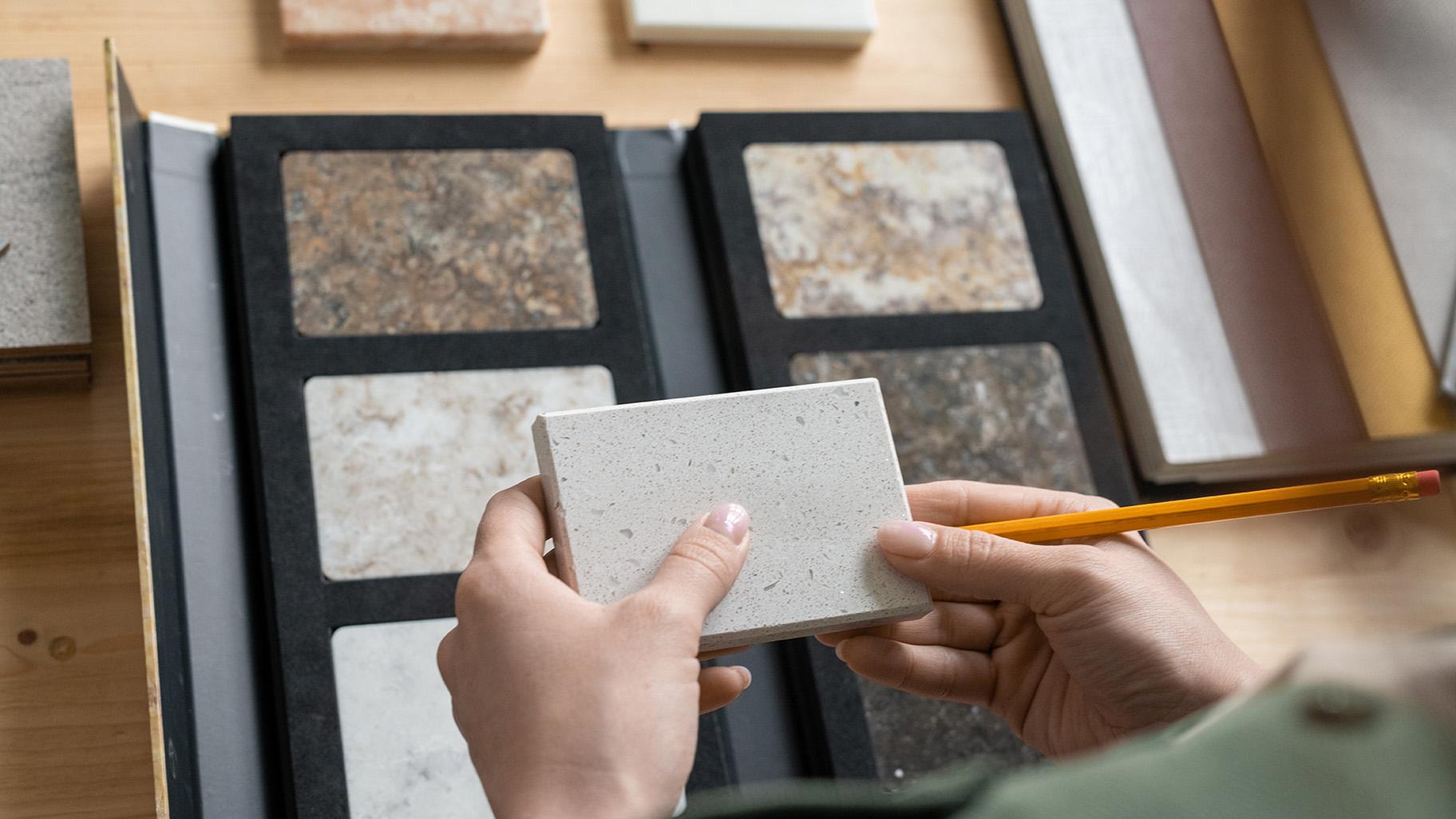
4. Aesthetic Appeal: Design Versatility
Sintered Stone
If you appreciate natural beauty with a modern edge, sintered stone is unmatched. It offers realistic patterns that mimic marble, granite, or concrete — without the maintenance worries. Thanks to advanced digital printing, no two slabs are alike, offering designers creative freedom for custom interiors.
Porcelain
Porcelain excels in design versatility. From high-gloss marble effects to matte cement finishes, it offers almost limitless options. It’s also available in large-format slabs, making it ideal for seamless wall cladding or sleek countertops with minimal joints.
Quartz
Quartz surfaces deliver a more consistent, elegant aesthetic. The resin content allows for smoother finishes and uniform colouration, making it perfect for minimalist or contemporary interiors. Popular shades include pure whites, greys, and veined marble-look styles.
5. Durability and Performance
Heat and Scratch Resistance
- Sintered stone can withstand direct contact with hot cookware — perfect for kitchens and outdoor settings.
- Porcelain also performs well under high heat, though extreme temperature changes may cause minor surface stress.
- Quartz, while durable, should be protected from direct heat as the resin can discolour or crack over time.
Scratch and Stain Protection
Both sintered and porcelain surfaces outperform quartz in scratch resistance. Sintered stone is particularly tough, making it ideal for heavy-use areas like commercial kitchens or outdoor bars.
Quartz, being slightly softer, is more susceptible to scratches but remains stain-proof due to its non-porous nature.
6. Maintenance and Longevity
One of the biggest advantages of all three materials is their low maintenance.
- Sintered stone and porcelain require only regular cleaning with mild soap and water — no sealing or polishing needed.
- Quartz is equally easy to maintain but should not be exposed to harsh chemicals or prolonged sunlight.
When it comes to longevity, sintered stone leads the way, with an expected lifespan exceeding 25 years — even under demanding conditions.
Read More: Sintered Stone vs Natural Stone: Which is Best for Modern Interior Design?
7. Environmental Impact
Sustainability is increasingly important in Singapore’s design and renovation landscape.
- Sintered stone is the most eco-friendly of the three, as it’s made entirely from natural minerals without synthetic binders or resins.
- Porcelain also scores well, though it requires significant energy for firing during production.
- Quartz, while durable, contains resin that makes recycling more complex.
If you’re pursuing Green Mark certification or eco-conscious design goals, sintered stone offers the most sustainable option.

8. Cost Comparison
While prices vary depending on brand and finish, here’s a general comparison:
- Porcelain: Most cost-effective option, offering premium looks at a moderate price.
- Quartz: Mid-to-high range, depending on design and brand.
- Sintered Stone: Highest cost, reflecting its cutting-edge technology and superior performance.
However, it’s essential to view cost as an investment. Sintered and porcelain surfaces, for instance, can outlast cheaper alternatives, saving costs on future replacements or repairs.
9. Applications: Where Each Material Shines
Sintered Stone
- Kitchen countertops and splashbacks
- Outdoor kitchens and dining spaces
- Bathroom walls and floors
- Commercial reception counters
Porcelain
- Floor and wall tiles
- Kitchen backsplashes
- Shower walls and vanity tops
- Feature walls and furniture panels
Quartz
- Indoor countertops
- Bathroom vanities
- Kitchen islands
- Custom tabletops
Each material’s performance characteristics make it better suited to specific environments. For instance, quartz’s resin base makes it perfect for indoor applications, while sintered and porcelain surfaces excel outdoors.
10. Making the Right Choice
Choosing between sintered vs porcelain vs quartz depends on your project’s priorities — durability, aesthetics, budget, and intended use.
- Choose Sintered Stone if you value longevity, outdoor versatility, and sustainable design.
- Choose Porcelain for a versatile, cost-effective, and stylish surface for walls or floors.
- Choose Quartz if you prefer a refined, consistent finish ideal for indoor countertops and bathrooms.
Ultimately, each material brings distinct benefits — and when paired with the right design expertise, any of them can elevate your interior or architectural project.
11. Conclusion
In the debate of sintered vs porcelain vs quartz, there’s no universal winner — only the right choice for your specific needs.
- Sintered stone leads in durability, sustainability, and design versatility.
- Porcelain offers timeless appeal and affordability.
- Quartz delivers consistent elegance for contemporary interiors.
At TSD, we believe every surface should combine style, performance, and sustainability. Whether you’re creating a statement kitchen, a serene bathroom, or a high-traffic workspace, our curated range of surface materials ensures you’ll find the perfect balance between beauty and practicality.

Read Next: The Ultimate Resource for Finding Reliable Quartz Suppliers in Singapore
Frequently Asked Questions
Q1. Is sintered stone better than quartz for kitchen countertops?
Yes — sintered stone generally outperforms quartz in terms of heat and scratch resistance. It can handle direct contact with hot pots and sharp utensils, making it ideal for kitchens. Quartz, while beautiful and durable, is less resistant to heat due to its resin content.
Q2. Can porcelain be used outdoors?
Absolutely. Porcelain is resistant to UV rays, temperature changes, and moisture, making it suitable for outdoor applications such as patios, façades, and alfresco dining areas. Always choose exterior-grade porcelain slabs for enhanced durability.
Q3. Which material requires the least maintenance?
All three — sintered, porcelain, and quartz — are low-maintenance compared to natural stone. However, sintered and porcelain surfaces require no sealing, polishing, or special cleaners, giving them a slight edge in terms of convenience and longevity.
Final Word:
When comparing sintered vs porcelain vs quartz, focus on your space’s function, environment, and style goals. With the right material, you’ll enjoy a surface that’s not only beautiful but built to last for decades.