Key Takeaways
- The layout of an HDB kitchen is largely fixed. The surfaces are not. Countertop material, finish, colour, and backsplash format are the decisions that determine whether the space feels standard or considered.
- Finish is the fastest way to change how a kitchen reads. A honed or matte countertop in the same space as a polished one produces a noticeably different room, even with identical cabinetry.
- Colour and undertone do more visual work than most homeowners realise. A warm-toned countertop coordinates with natural wood cabinetry in a way a cool-grey one doesn’t, regardless of how similar both look in a showroom.
- The backsplash is the most underused surface decision in HDB kitchens. Upgrading from small tiles to a large-format sintered stone panel eliminates grout lines, adds visual continuity, and changes how the whole kitchen reads.
- Treating countertop, backsplash, and floor as a connected surface system rather than three separate choices is what separates a custom-feeling kitchen from an assembled one.
Introduction
HDB kitchens come with fixed layouts. The position of the hob, sink, and cabinets is determined by the floor plan. The structural footprint doesn’t change. For most homeowners, the renovation brief starts within those constraints and stays there.
What changes is the surface. Countertop material, finish, backsplash format, and colour are all decisions within the homeowner’s control regardless of layout. They account for most of what makes one HDB kitchen feel considered and another feel off-the-shelf. The HDB kitchen surface ideas that produce a genuinely custom result are all surface-level decisions, not structural ones.
What Makes an HDB Kitchen Feel Standard in the First Place?
A standard HDB kitchen reads as standard for a predictable set of reasons. The cabinet configuration follows the same general template across most flat types. The contractor-default finishes tend to cluster in the same directions: white laminate surfaces, subway tile backsplash, and a polished quartz or laminate countertop. Each of those choices is practical. None of them is wrong. But together, they produce a kitchen that could be anyone’s.
The distinction between a standard kitchen and a custom-feeling one isn’t usually a question of budget. An HDB kitchen design with a honed stone countertop, a coordinated large-format backsplash, and a warm neutral palette can feel genuinely considered at a similar cost to contractor defaults. The difference is in the decisions, not the spend.
The layout of an HDB kitchen is fixed. The surfaces aren’t. Most of what makes a kitchen feel custom happens at the surface level, within the same footprint.
The Countertop Decision: Where Most of the Visual Work Happens
The countertop is the most prominent horizontal surface in any kitchen. In an HDB kitchen, where the space is compact and often visible from the living area, it carries particular visual weight. It sits at standing height, runs the full kitchen length, and sits directly under the lighting.
Among the kitchen countertops Singapore homeowners install in HDB flats, quartz and sintered stone are the most reliable choices. Both are non-porous, require no sealing, and hold their appearance over years of daily use in Singapore’s heat and humidity. The difference between them comes down to finish and colour, which is where the custom-feeling result is actually built.
How Finish Choice Changes the Feel of a Standard Layout
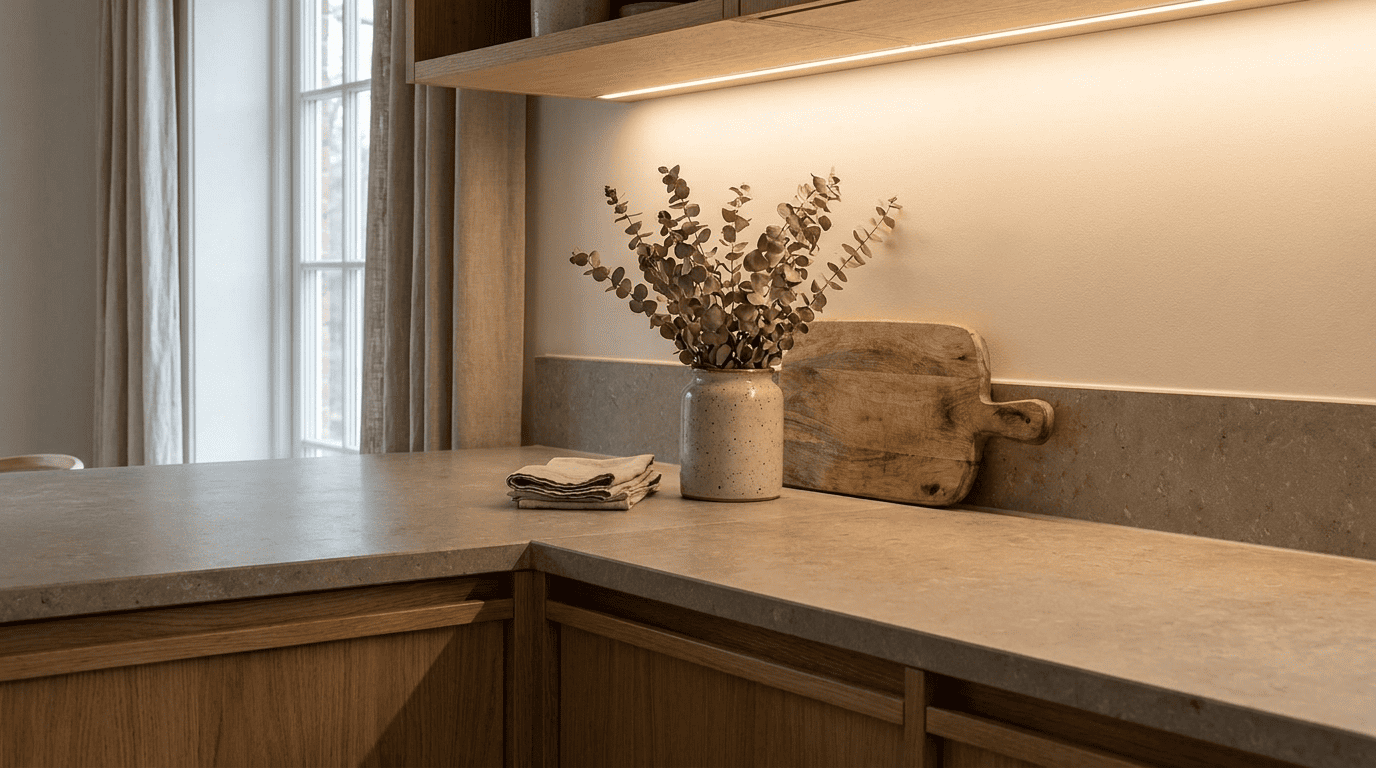
Finish produces the most immediate visual result for the least additional cost. Two countertops in the same material and colour read differently under kitchen lighting depending solely on their finish.
A polished finish amplifies colour and reflects light directly. Under the LED downlights common in most HDB kitchens, it produces bright reflection spots along the counter’s length. That’s not always wrong, but it produces a kitchen that reads as hard-edged rather than warm and personal.
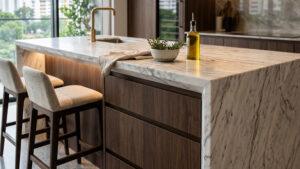
A honed finish scatters light rather than reflecting it. The surface reads softer than the same material in polished form and produces the quiet surface quality that suits warm, personalised kitchens. For an HDB kitchen where low maintenance matters, honed sintered stone or honed quartz deliver the right finish without adding upkeep.
TSD’s overview of kitchen countertops in Singapore covers how these countertop finishes interact with different materials and use patterns in local homes.
Colour and Undertone: The Quickest Way to Personalise the Space
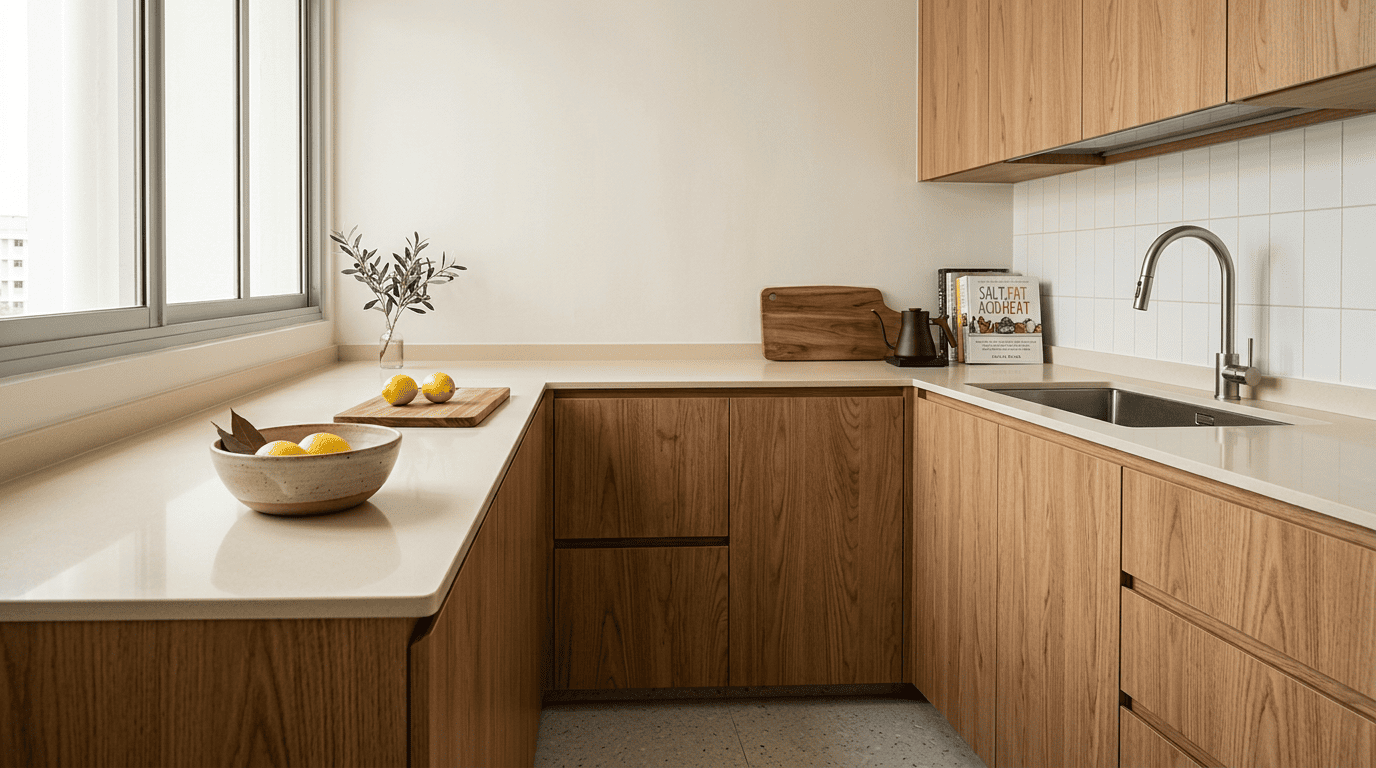
The default colour direction for HDB kitchen countertops tends toward white, light grey, and cool neutrals. Those choices are safe, but they can make a compact HDB kitchen feel clinical under the cool-white LED downlights common in local homes.
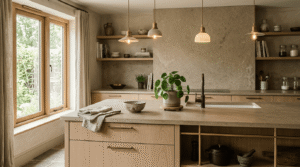
A warm-toned countertop (cream, sandy greige, warm taupe) changes the temperature of the whole room. Warm tones read more settled under warm LED downlights and coordinate more naturally with wood cabinetry.
The undertone beneath the named colour matters as much as the colour itself. Two slabs described as “beige” in a sample catalogue can pull in different directions depending on whether their secondary hue runs warm (yellow or sand) or cool (blue or grey). Identify the undertone of the cabinetry first, then select a countertop that carries the same temperature. Hold samples together in the kitchen under the actual lighting before committing.
Undertone is the decision that most HDB homeowners skip because it’s invisible in a sample catalogue. It’s also the one that determines whether a kitchen feels coordinated or slightly off, regardless of how good each surface looks.
Backsplash Format: The Surface Decision Most HDB Homeowners Underuse
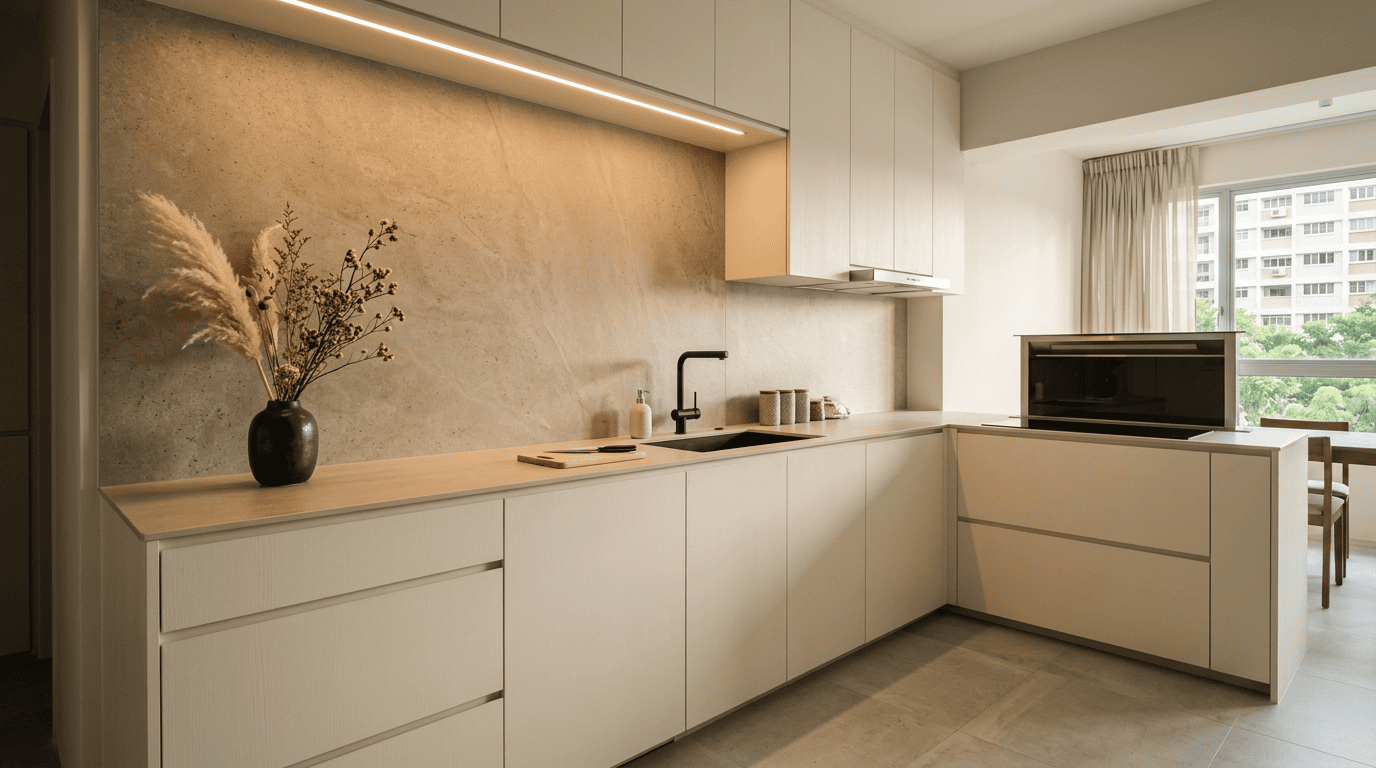
The backsplash is the most consistently underused surface in HDB kitchen design. Most homeowners default to small-format tiles with grout lines, or a laminate panel from the contractor’s standard range. Both work. Neither produces a custom result.
In an active HDB kitchen, grout lines behind the hob accumulate grease and cooking residue with every meal. Even with regular cleaning, grout discolours over months. A large-format sintered stone panel running from countertop to upper cabinet underside eliminates that maintenance cycle. It reads as one continuous surface in a compact kitchen, making the space feel cleaner and larger.
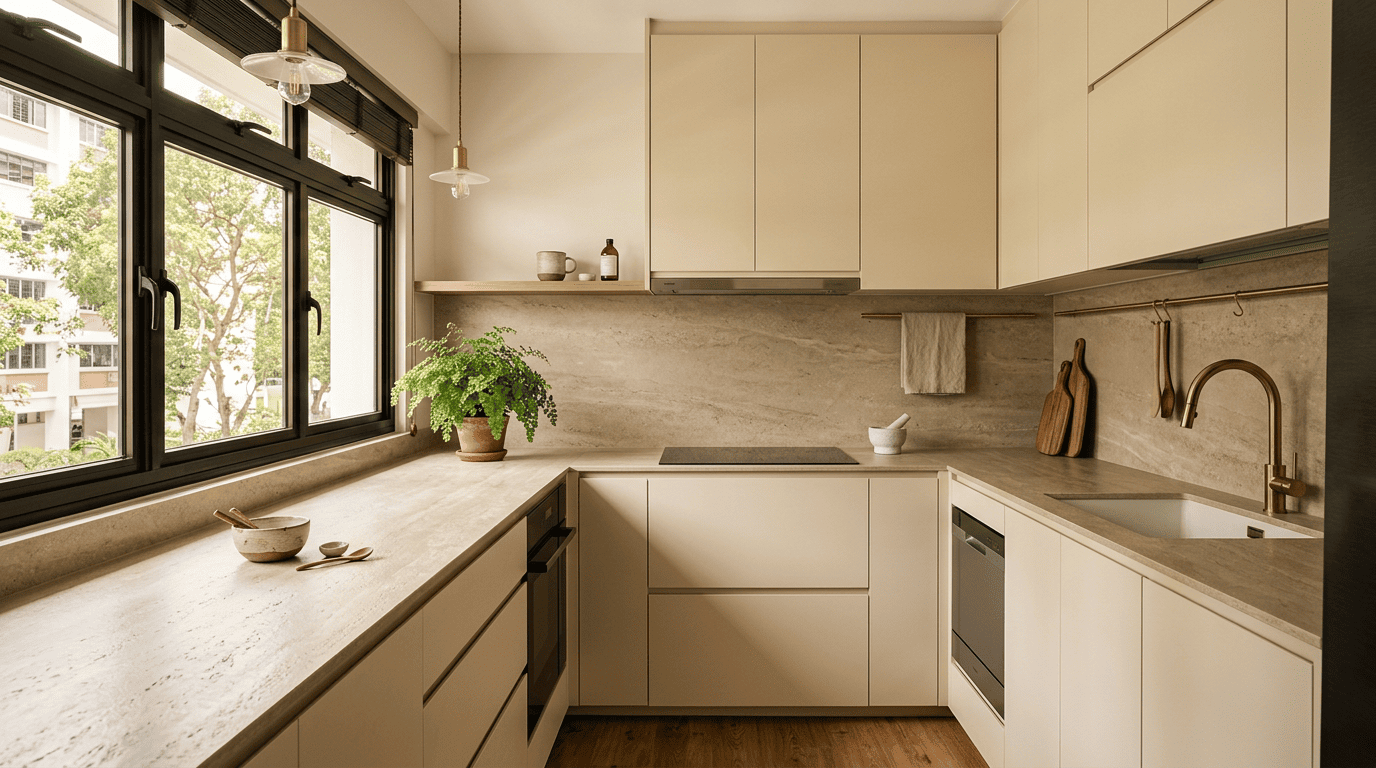
The backsplash is also where surface continuity can connect the countertop and the wall as one decision. Running the same sintered stone material from the countertop up the backsplash creates a unified surface that is particularly effective in smaller HDB kitchens where visual simplicity helps the space read better. TSD’s guide to kitchen backsplash materials covers how this continuity works in practice and how sintered stone panels perform specifically in HDB and condo kitchen conditions.
HDB renovation guidelines require that any work involving wall finishes and hacking be carried out by a registered contractor under a valid permit. The HDB renovation guidelines for building works confirm which kitchen renovation works require a permit and which registered contractors are eligible to carry them out.
Bringing It Together: How Surfaces Work as a System
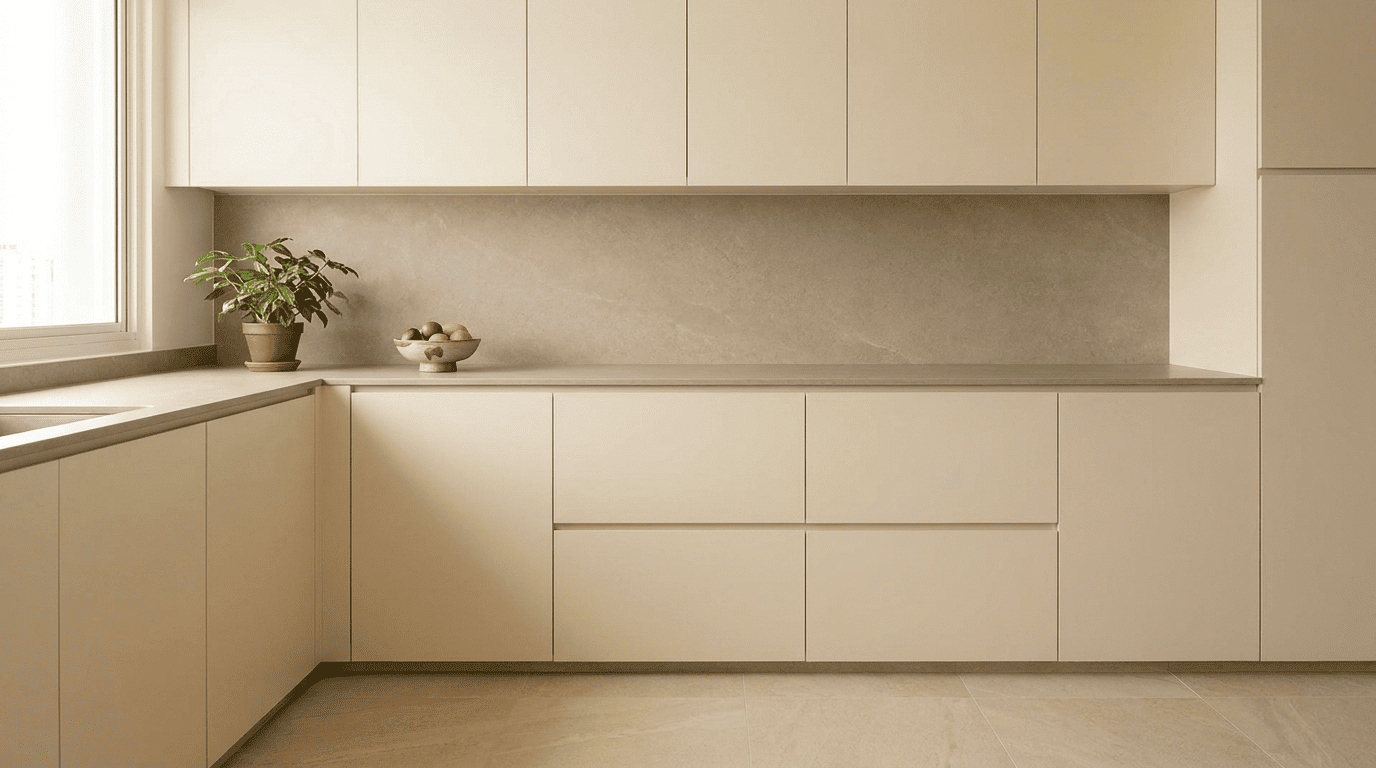
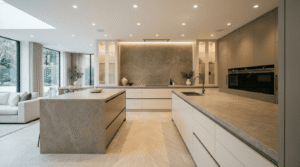
The HDB kitchen surface ideas that produce the most custom-feeling result are not individual decisions made in isolation. They work as a system. A honed countertop in a warm tone, a coordinated large-format backsplash, and a stone-look floor in a matching undertone create a room that reads as designed rather than assembled.
Most of the best HDB kitchen surface ideas sit within this system logic: countertop, backsplash, and floor chosen together rather than independently. The result is surfaces that each look acceptable independently but don’t read as a connected whole. Treating all three as one decision means choosing the same undertone temperature across countertop, backsplash, and floor. A honed countertop with a coordinated backsplash panel and a stone-look floor in the same warm neutral family produces a room where the eye moves across surfaces rather than stopping at each one. TSD’s guide to sintered stone countertops covers material performance across HDB kitchen conditions in detail.
FAQS
1. What are the best HDB kitchen surface ideas for making a standard layout feel custom?
Four decisions produce the most visible difference: a honed or matte countertop finish, a warm-toned neutral colour with matching undertone, a large-format sintered stone backsplash panel instead of small tiles, and all three surfaces coordinated to share the same undertone temperature. None requires structural changes to the layout.
2. Which countertop finishes work best in HDB kitchens?
Honed finishes perform well. They scatter light rather than reflecting it, which suits compact kitchens under LED downlights where a polished surface creates visual noise. Both honed sintered stone and honed quartz are non-porous, require no sealing, and hold their appearance over years of use in Singapore’s conditions.
3. Why does backsplash format matter so much in an HDB kitchen?
A large-format sintered stone panel eliminates grout lines, reducing maintenance behind the hob and creating visual continuity between countertop and wall. In a compact HDB kitchen, that simplicity makes the space read cleaner and more open. Running the same material from countertop to backsplash produces a unified surface plane rather than two separate decisions.
4. What countertop colour works best for an HDB kitchen?
Warm-toned neutrals work well: cream, sandy greige, warm taupe, and warm grey. These coordinate naturally with wood cabinetry and read settled under warm LED downlighting. The undertone is as important as the named colour. A slab with a warm undertone settles into the palette; one with a cool blue-grey undertone can sit apart from warm cabinetry regardless of how similar the colours look in a showroom.
5. Do HDB renovation rules affect which kitchen surfaces I can choose?
The surface materials themselves can generally be selected freely. What HDB regulates is the renovation work involved in installing them. Any work involving hacking wall or floor finishes requires a valid renovation permit and a registered contractor under HDB’s Renovation Contractor Listing. Confirm the permit requirements for the specific works before appointing a contractor.
Conclusion
HDB kitchens work within fixed layouts. What they don’t have to accept is a fixed surface result. Countertop finish, colour, and backsplash format are all decisions that remain within the homeowner’s control, and they account for most of what makes a kitchen feel considered rather than standard. TSD’s full range of surfaces is available at their Singapore showroom, with in-house fabrication and installation handled end to end.