Key Takeaways
- This aesthetic is produced by specific surface decisions, not accessories or styling alone. The island or table top material, finish, and colour are the choices that make a kitchen feel worth lingering in.
- The island or table top is the surface people gather around and see first. It sets the atmosphere of the whole room more than the countertop or cabinetry does.
- Honed and matte finishes on stone surfaces produce the unhurried, warm quality a café environment relies on. Polished surfaces read as too formal for the aesthetic.
- Warm-toned neutrals, cream, sandy taupe, and warm concrete grey carry the palette of a café interior better than cool whites or stark greys.
- Sintered stone and quartz are the most practical materials for the island or table surface in Singapore: both are non-porous, require no sealing, and hold their surface quality over daily use.
Introduction
Settling into a home café kitchen has a feeling that’s easy to recognise. It’s a kitchen or dining space where sitting down with a coffee feels natural rather than incidental. The surfaces are warm. The light sits well on them. Nothing competes for attention.
What produces that feeling at home is less about décor and more about the surfaces themselves. The café kitchen aesthetic has become a deliberate approach to home design, built on warm materials, a settled palette, and surfaces that feel good to spend time with rather than surfaces that simply photograph well.
This piece covers the surface decisions behind the aesthetic: which materials suit the central surface, how finish and colour create the café atmosphere, and how the island or table top connects to the wider palette.
What Is a Home Café Kitchen?
This style of kitchen is designed around the experience of being in it rather than just moving through it. The aesthetic borrows from the physical quality of a good café: warm surfaces, settled colour, and a central surface worth sitting at. It’s distinct from a standard kitchen that has been styled with café accessories. The difference is in the materials and finishes, not the objects placed on top of them.
Why the Island or Table Top Is the Surface That Sets the Tone
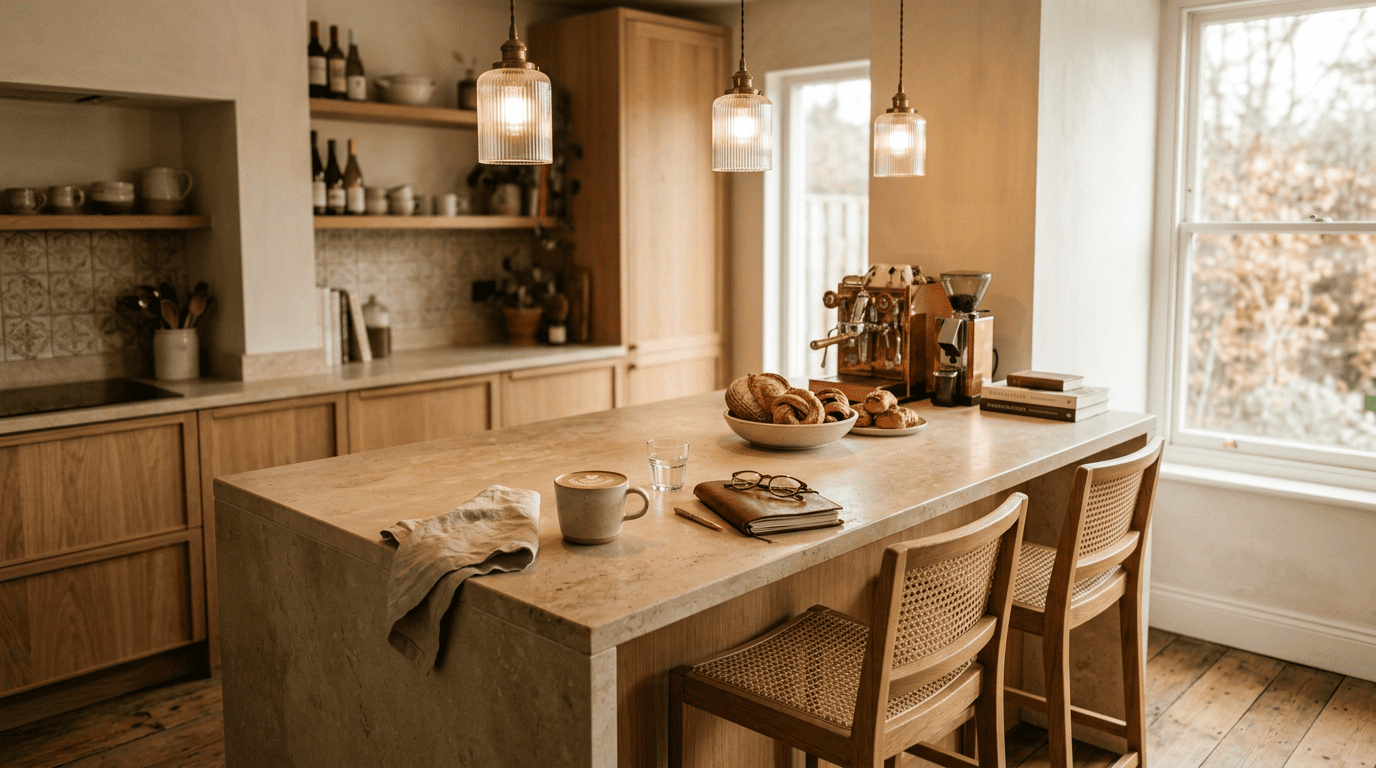
In this style of kitchen, the island or dining table is the surface people sit at, gather around, and see from across the room. It’s the visual and functional centre of the space.
That distinction matters for surface selection. A countertop’s primary requirement is durability. The island or table carries that requirement but adds another: it needs to feel good to be at. A polished surface reads as formal. A honed surface in a warm tone reads as settled and inviting. The café feeling comes from the second.
In an open-plan Singapore condo or HDB flat, the island reads from the sofa, the entryway, and the dining zone. A warm-toned honed stone island makes the kitchen feel like a place worth walking toward. A cool, polished surface makes it feel like something to walk past.
In a home café kitchen, the island or table top isn’t just a work surface. It’s the reason the room feels worth stopping in.
Which Materials Suit a Kitchen Island Table or Custom Table Top
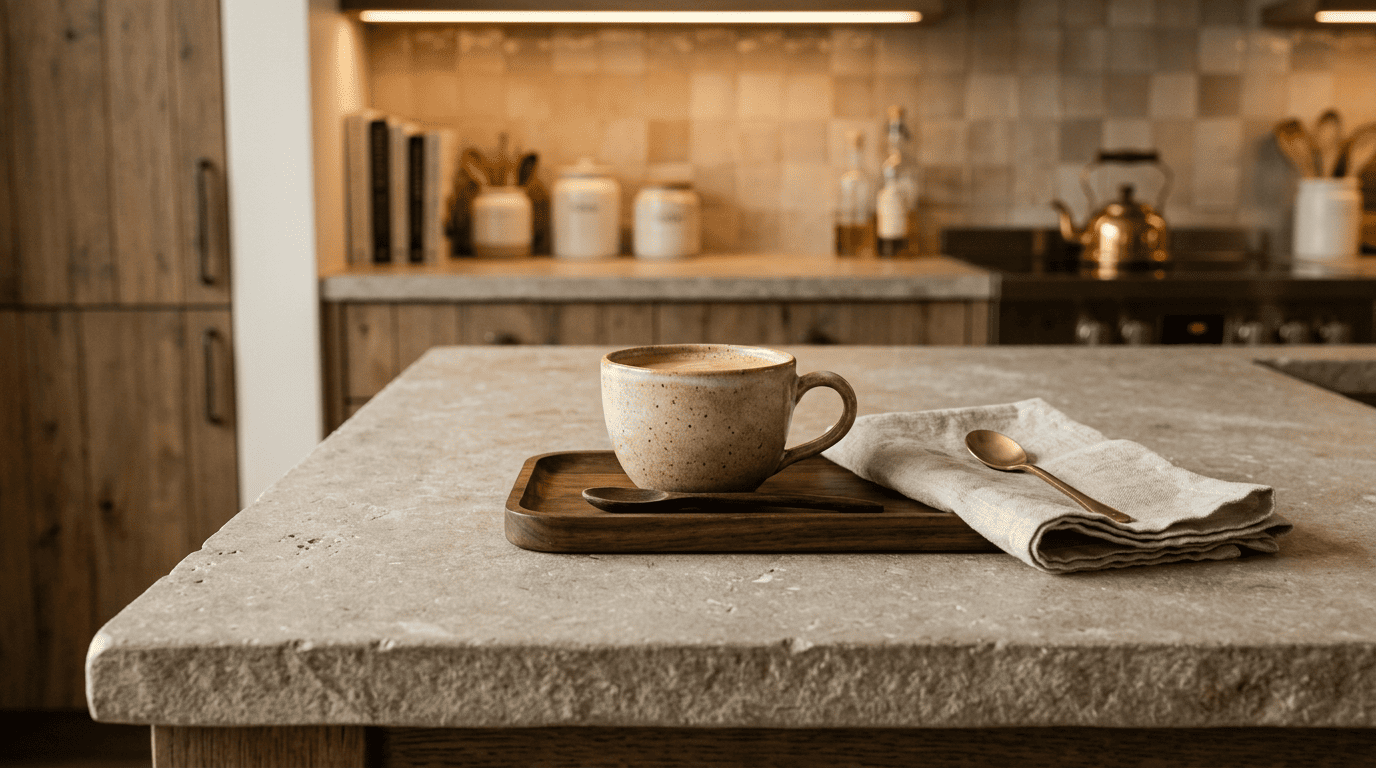
Not every material delivers the surface quality this aesthetic needs. Three are worth understanding for Singapore conditions.
Sintered stone is the most reliable choice for the island surface in an open-plan Singapore home. It’s fully non-porous, handles direct heat without trivets, and resists scratching from ceramic mugs and cutlery used daily. Warm concrete-effect and stone-effect finishes in honed sintered stone carry the organic, settled quality this aesthetic requires. TSD’s guide to kitchen island table materials covers how sintered stone and other materials compare for Singapore island applications.
Quartz is the more accessible choice for a stone table or smaller island. It’s non-porous, requires no sealing, and is available in a range of warm neutral tones. A custom table top in quartz, fabricated to the room’s exact dimensions, gives the surface the right proportions without compromise. A trivet near the coffee station is the one habit it requires, as quartz is not recommended for direct heat contact. TSD’s overview of dining table top options in Singapore covers how quartz and sintered stone compare across daily table use.
Natural stone, marble in particular, carries organic variation that no engineered surface fully replicates. A warm-veined marble island brings genuine visual depth. The trade-off for a surface used daily for coffee is real: marble etches when acidic liquids contact it, and coffee is mildly acidic. A surface that requires careful handling each time a cup is set down adds friction that works against the unhurried quality this aesthetic depends on.
Finish and Colour: How Surfaces Create the Café Feeling
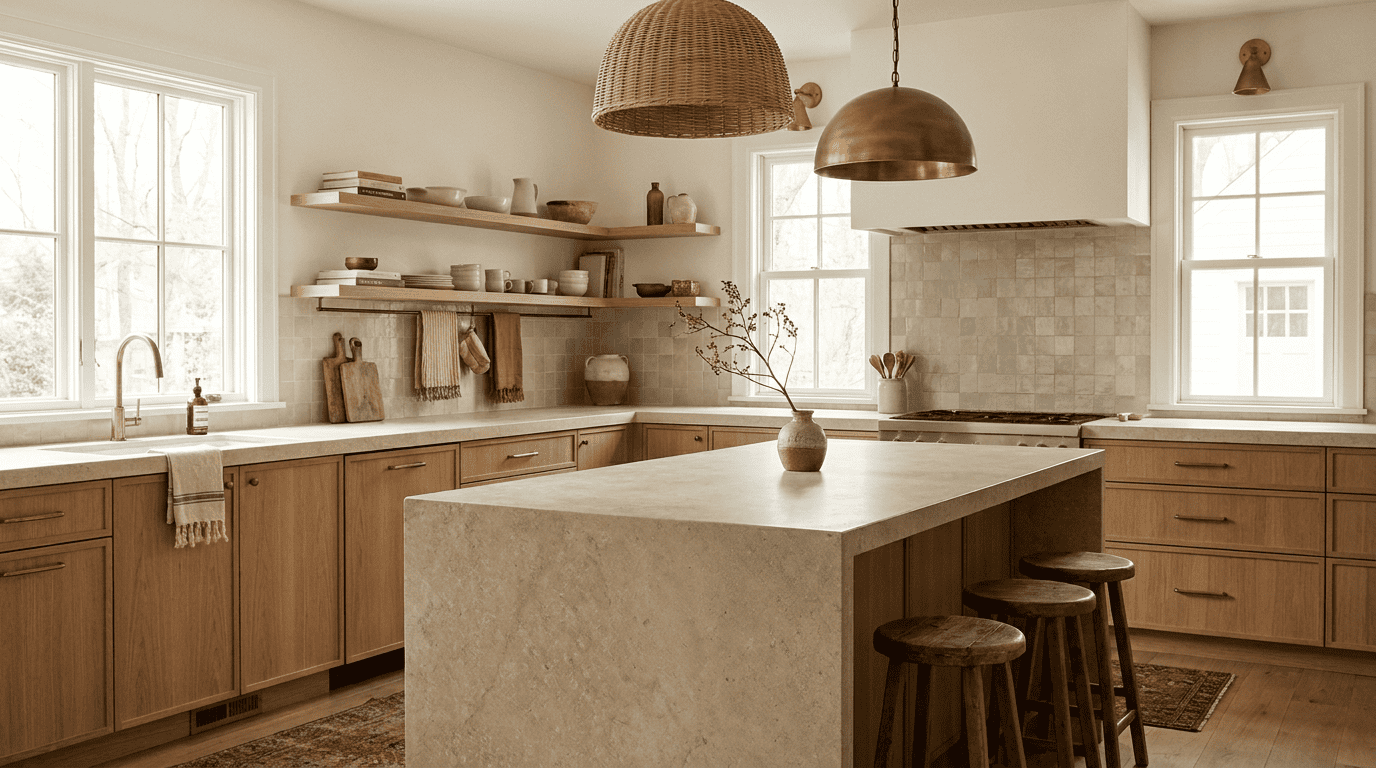
Finish is the decision that separates a café-aesthetic surface from a standard kitchen surface most directly. A polished finish amplifies colour and reflects light sources directly. It draws the eye to the surface. In a kitchen design Singapore café-aesthetic homeowners are working toward, that reflective prominence is the poor quality. The surface should settle into the room, not announce itself.
A honed finish scatters light rather than reflecting it. The same stone material in honed form reads softer and more muted than in polished form. It produces a surface that feels warm under the hand and holds its quality over years of daily contact. A matte finish suits the most organic, unhurried café palettes. For Singapore kitchens where low maintenance matters, honed sintered stone or quartz in a warm neutral tone delivers the right finish without adding upkeep.
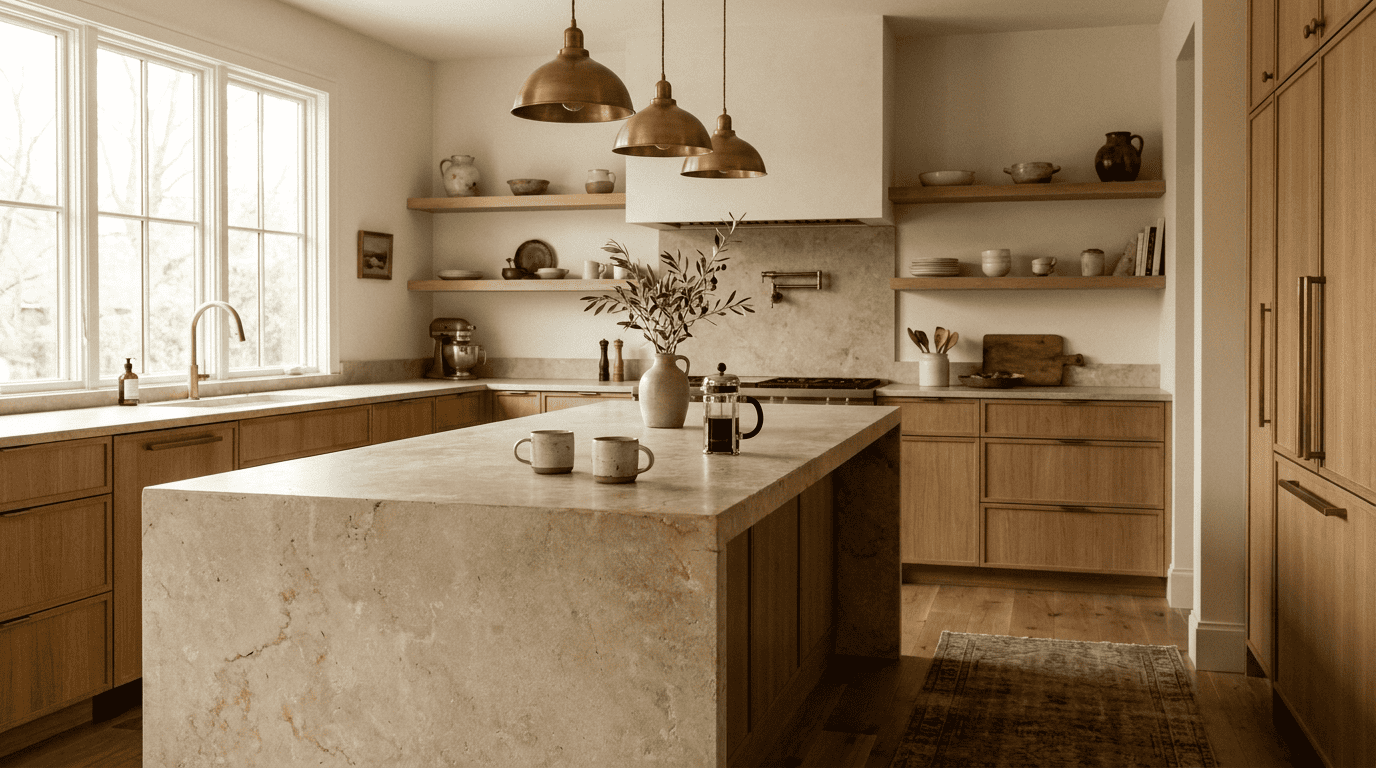
Colour follows finish in importance. The café palette runs warm: cream, sandy taupe, warm greige, and warm concrete grey. Cool whites, stark greys, and blue-undertone surfaces read as clinical and work against the aesthetic. A warm-toned island settles into the room under warm LED pendant lighting in a way that cool-toned surfaces don’t.
The undertone beneath the named colour matters as much as the colour itself. Two slabs described as “cream” in a catalogue can carry different secondary hues: one pulls warm toward sand, the other pulls cool toward grey. In this palette, the warm-undertone slab belongs. The cool-undertone slab sits slightly apart from it.
Finish and undertone are the two decisions that most directly produce the café feeling. Getting both right means the surface reads as warm and settled before a single cup is placed on it.
Connecting the Island or Table Top to the Rest of the Kitchen
This aesthetic feels settled when every surface in the room pulls in the same direction. The island or table top sets the tone, but if the countertop reads cool against a warm island, or the cabinetry sits at a different undertone temperature, the café warmth unravels. The surfaces around it need to support it.
Identify the undertone of the island or table top first, then choose cabinetry and countertop to match that temperature. A warm sandy stone island with warm cream cabinetry and a coordinated honed countertop layers warmth across the whole room. Nothing competes. Everything settles into the same quiet register that makes a kitchen feel worth sitting in.
For homeowners working through this in a Singapore condo or HDB kitchen, TSD’s full range of kitchen countertops Singapore covers how material and finish choices coordinate across countertop, island, and table surfaces.
FAQS
1. What surfaces work best for a home café kitchen in Singapore?
Honed sintered stone and honed quartz in warm neutral tones are the most practical choices. Both are non-porous, require no sealing, and hold their warm, settled surface quality over daily use. Sintered stone handles direct heat without trivets, which suits an island where hot coffee equipment is placed down regularly.
2. What finish suits the island surface in this aesthetic?
Honed and matte finishes work best. Both scatter light rather than reflecting it, producing the warm, unhurried surface quality this aesthetic depends on. Polished finishes read as too reflective and formal. For Singapore conditions, honed sintered stone delivers the right finish with minimal maintenance.
3. Does the countertop material matter alongside the island surface?
Yes, because the countertop and island or table top share the same visual plane. A polished countertop next to a honed island creates a finish mismatch that disrupts the settled, quiet quality the café aesthetic depends on. Keeping both surfaces in a honed or matte finish, and in the same undertone temperature, is what makes the kitchen read as one warm, cohesive space rather than a collection of separate decisions.
4. Which colour palette suits kitchen design Singapore café-style kitchens?
Warm neutrals work best: cream, sandy taupe, warm greige, and warm concrete grey. These tones settle into the palette under warm LED pendant lighting and coordinate naturally with wood cabinetry and warm-toned accessories. Cool whites and stark greys read as impersonal and work against the relaxed café feeling. Undertone matters as much as the named colour: choose a slab with a warm secondary hue rather than a cool one.
5. Does this aesthetic work in a small Singapore HDB or condo kitchen?
Yes. A compact kitchen can achieve this aesthetic through surface decisions alone. A honed stone island or table in a warm neutral tone, coordinated with matching cabinetry and a warm palette, produces the café feeling in a smaller footprint. Keeping the countertop, island, and floor in the same undertone family makes the space feel more open and settled.
Conclusion
This style of kitchen is less about what you add and more about what the surfaces already give. The island or table top material, finish, and colour temperature determine whether the kitchen feels like a place worth sitting in or a room you move through. Getting that right starts with the central surface, not the accessories around it. A warm, honed stone island in the right undertone does more for the daily ritual than any amount of styling. TSD’s showroom carries sintered stone and quartz across warm finishes and neutral tones, with fabrication and installation handled by the same team from selection through to fit-out.