Key Takeaways
- Your daily cooking habits matter the most, regarding countertops for kitchen. Heavy wok cooking with high heat demands granite or sintered stone; casual cooking suits solid surface or quartz.
- Non-porous surfaces suit Singapore’s climate. Humidity and frequent cooking create hygiene risks. Quartz, sintered stone, and solid surface all resist bacteria better than natural granite.
- Seamlessness is not just about aesthetic. Invisible joins in solid surface mean fewer bacteria traps, a real advantage in kitchens that see daily use.
- Budget planning should also include installation. Material cost is one part; edge profiles, cutouts, and installation add to the total factor. These are in before deciding.
- Design direction should drive the final pick. A minimal flat aesthetic fits quartz; a warm, natural look suits granite; a smooth or curved design calls for solid surface.
Introduction
Buying a kitchen surface in Singapore is a hassle. People want a balance of aesthetics, longevity, and maintenance. Many property owners are now increasingly prioritising materials that withstand tropical humidity.
Singaporean kitchens in modern HDB and condominium buildings continue to use quartz as their primary material because it withstands various challenges including stains and humidity and everyday use. The 2026 industry pricing trends show that mid-range residential projects will require approx. SGD 100 per sq. ft. for quartz countertop installations depending on the chosen layout and material options.
This guide explores these important materials to help you select the perfect centrepiece for your culinary space. It also highlights how durability, maintenance, and design trends influence your countertop choice in Singapore’s tropical climate.
Why Singapore’s Kitchen Conditions Change Everything?
Singaporean kitchens have to work harder than the average. High-heat cooking, usually in very humid conditions (and apartments often tight), means the requirements for countertop material here are very different from those in a temperate climate.
In a sunny tropical climate, porous surfaces such as unsealed granite often absorb moisture, cooking oils, and food pigments much more quickly. The countertop that works great in Europe may blotch or rot within months in a Singapore kitchen. Non-porous materials, such as quartz, solid surface, and sintered stone, perform much better under these conditions.
4 Things to Compare Before You Commit
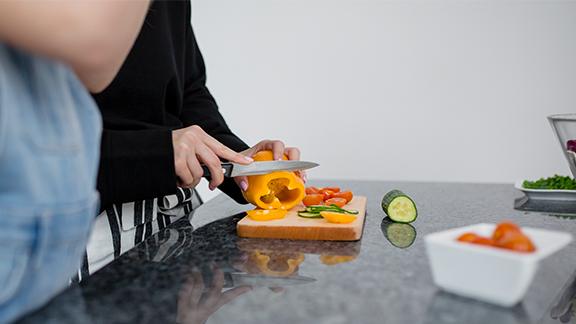
Before looking at individual materials, it helps to frame your decision around four filters. Run your shortlisted materials through each one.
How You Actually Cook?
Kitchen habits matter when buying a new surface. High-heat cooking with woks and cast-iron pans needs a surface with strong thermal resistance. Granite and sintered stone handle direct heat well. Quartz is moderately tolerant, but hot pots should not be placed directly on it. Solid surface has the lowest heat tolerance of the common options. Trivets are a must.
Kitchens are used the most for light meal prep and reheating; this distinction matters far less, and other factors like aesthetics or budget become more relevant, nowadays.
Cleaning Expectations
Think about how much time you would like to dedicate to upkeep. Granite is the most needy, as it needs to be sealed at least once a year, or it can absorb oils and stains. Quartz and solid surface are significantly lower maintenance, requiring only normal wiping with a gentle soap.
Sintered stone falls into the same category: it’s highly stain-resistant, easy to clean, and you wouldn’t put uncooked chicken on it, but it should wipe off pretty easily.
In busy households with young children or elderly family members, it is a low-maintenance surface that reduces the effort required to keep the kitchen hygienic.
also read : Types of Bathroom Countertops: How to Choose the Best Bathroom Countertops in 2026?
Kitchen Layout and Seams
L-shaped and U-shaped kitchen layouts involve corners and joins. Solid surface can be fused with a meaningful advantage for hygiene and aesthetics invisibly. There are granite, quartz, and sintered stone that joiners are visible to some degree, though skilled fabricators can minimise their appearance.
If you are working with an island or a long straight run, the seam question matters less. But in a complex layout, it is worth asking your supplier how they handle joints and what the result will look like.
Design Direction
Every material has a visual identity. Granite offers natural variation, no two slabs are identical, ideal for homes seeking a warm, organic look. Quartz, on the other hand, provides uniform colour and pattern, in turn, simplifying the accurate matching of cabinetry and tiling.
Of these materials, solid surface is the most versatile in form, it is curveable, shapeable, and can be blended with the sink for a seamless finish. At the architectural finish level, for durability, sintered stone often imitates natural materials convincingly, even mimicking mottled marble and concrete looks.
The right choice is the one that fits your design direction without fighting your lifestyle.
Material Comparison at a Glance
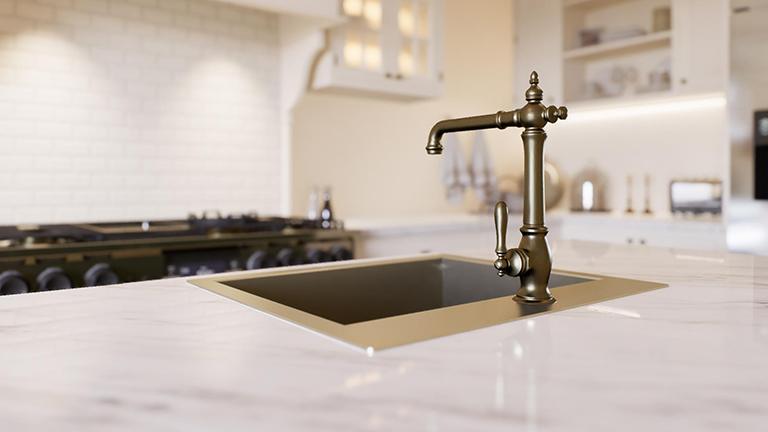
The table below covers the key performance and practical differences across the four most common countertop materials used in Singapore homes in 2026.
| Feature | Solid Surface | Granite | Quartz | Sintered Stone |
| Material Origin | Acrylic/polyester resin blend | Natural stone (quarried) | Engineered quartz + resin | Ultra-compressed mineral/glass |
| Heat Resistance | Low – use trivets always | High – handles hot pots well | Moderate – avoid direct heat | Very High – highly resistant |
| Scratch Resistance | Low – can be sanded out | High – very hard surface | High – very durable | Very High – hardest surface |
| Stain Resistance | High – non-porous surface | Low – needs sealing annually | Very High – non-porous | Very High – non-porous |
| Maintenance | Low – easy to clean | Moderate – periodic sealing | Low – minimal upkeep | Low – almost maintenance-free |
| Seams Visible | Invisible – fused seamlessly | Visible on larger slabs | Slightly visible | Slightly visible |
| Customisation | High – colours, shapes, curves | Limited by natural slab | Moderate – colour range | Moderate – varies by brand |
| Cost Range (SGD) | SGD 200–600 per metre run | SGD 350–900 per metre run | SGD 400–1,000 per metre run | SGD 500–1,200 per metre run |
| Ideal For | HDB kitchens, wet areas | Landed homes, showpiece kitchens | Most Singapore homes | High-end, high-use kitchens |
| Edge Profiles | Fully customisable curves | Standard to intricate profiles | Standard profiles | Standard profiles |
| UV Resistance | Moderate – may yellow over time | High – stable colour | Moderate – varies by brand | High – colour-stable |
| Antibacterial | Yes – non-porous, hygienic | No – porous, harbours bacteria | Yes – non-porous | Yes – non-porous |
| Weight | Light – easy installation | Very heavy – structural support may be needed | Heavy | Very heavy |
| Repairability | Easy – buffable scratches | Difficult – chips hard to hide | Moderate – chip fills visible | Difficult – very hard material |
| Eco Credentials | Moderate – synthetic material | Low – quarrying impact | Moderate – uses recycled content | High – some brands use recycled materials |
Three Common Assumptions Worth Questioning
Even with all the information available today, property owners still fall for a few persistent assumptions about countertop materials, and questioning them can make all the difference in your renovation choices.
-
“Granite is always the premium choice.”
In Singapore’s cooking climate, a well-specified quartz or sintered stone surface can outperform granite on every practical metric, at a comparable or lower cost.
-
“Solid surface is too cheap-looking.”
Modern solid surface materials, particularly from European and Korean manufacturers, are significantly more refined in texture and finish. The seamless integration with sinks and curved edge options is a feature that other materials simply cannot match.
-
“Price equals durability.”
The most expensive material is not automatically the most durable one for your situation. Sintered stone costs more than quartz, but if your cooking style does not generate extreme heat, you are paying for performance you will not use.
Matching the material to your kitchen’s actual demands is more cost-effective than defaulting to the highest-priced option.
Conclusion
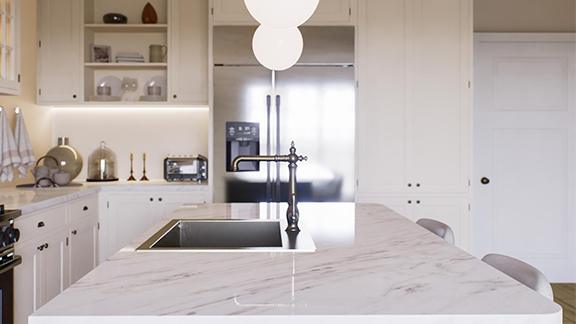
Picking the best kitchen countertops is not always about going for the pricey ones or whatever everyone else is talking about, or even what your neighbour picked. It has to fit how your family really uses the space.
Like, the way you cook and clean, plus the overall setup and style you want. In Singapore, with all the heat and humidity, and how people cook here, it adds extra challenges. Sometimes, it feels like the obvious choices might not hold up as well as you expect.
At TSD, every countertop project is approached with both functionality and craftsmanship in mind. The team specialises in the architectural application of quartz, granite, sintered stone, and natural stone surfaces, helping homeowners create kitchens and interiors that are practical, elegant, and built to last.
TSD focuses on delivering surfaces that combine design, durability, and long-term practicality. With decades of experience across both residential and commercial stonework projects, whether you need a compact kitchen countertop for an HDB flat or a statement island for a landed property, our team provides recommendations based on your actual usage and renovation goals.
To explore countertop materials, compare finishes, or discuss a customised kitchen or table top solution, contact TSD today.
You can also call +65 6908 5147 or visit the showroom at 16 Joo Koon Circle, and enquire about quartz countertops, granite countertops Singapore solutions, sintered stone surfaces, fabrication services, and custom installations for your next renovation project.
Learn More : Sintered Stone Table Top Guide: Why is Ultra-Hard Surface Perfect for Modern Singapore Homes?
FAQs
1. What are the best kitchen countertops for HDB flats in Singapore?
When it comes to picking best kitchen countertops for HDB flats in Singapore, quartz and solid surface are pretty practical options for most people. They handle everyday stuff well, like cooking stains, and you get a bunch of designs without breaking the bank.
2. How do I choose countertops that balance kitchen aesthetics and function?
Maybe start by thinking about how you actually use the kitchen, you know, what kind of cooking you do and how easy you want cleaning to be. Layout matters too, especially in those tight HDB setups. Once you narrow down the materials that work for that, then look at colours or edges; it kind of follows from there.
3. Is sintered stone vs quartz really that different in practice?
Now, sintered stone vs. quartz, in real home use for just normal cooking, the differences do not hit you that hard. Both are non-porous, so cleaning is straightforward, and they hold up fine day to day. It is noticeable if you are picky, but it’s not a huge deal for average folks.
4. How long do kitchen countertops last in Singapore?
How long these things last depends on care. Quartz or solid surface can last 15 to 20 years if you treat them right. Sintered stone feels even tougher, maybe longer if conditions are good. That part gets a bit messy to predict exactly.
5. Does kitchen countertop material affect resale value in Singapore?
On resale value in Singapore, materials like granite or sintered stone seem to catch buyers’ eyes more, especially for bigger flats or landed homes. But for HDB, it might not shift things as much. Some people might not even notice, but others do.