Key Takeaways
- Getting reception counter design right matters more than most businesses realise. It is the one surface in the space that every visitor actually stops at, leans on, and looks at up close.
- Granite, sintered stone, and quartz each suit a different brief. Granite brings natural character. Sintered stone handles heavy traffic with barely any upkeep. Quartz maintains consistent colour across multiple counters.
- Edge profile, counter height, and finish all shift how the same counter reads in a room. These details are easy to underspecify and hard to change once fabrication is done.
- A custom countertop for a commercial space requires on-site templating, not floor plan measurements. Cutouts, spans, and load requirements all affect which material and thickness are right.
- Stone surfaces chosen for commercial use need to perform under sustained daily contact, not just look good on day one.
Introduction
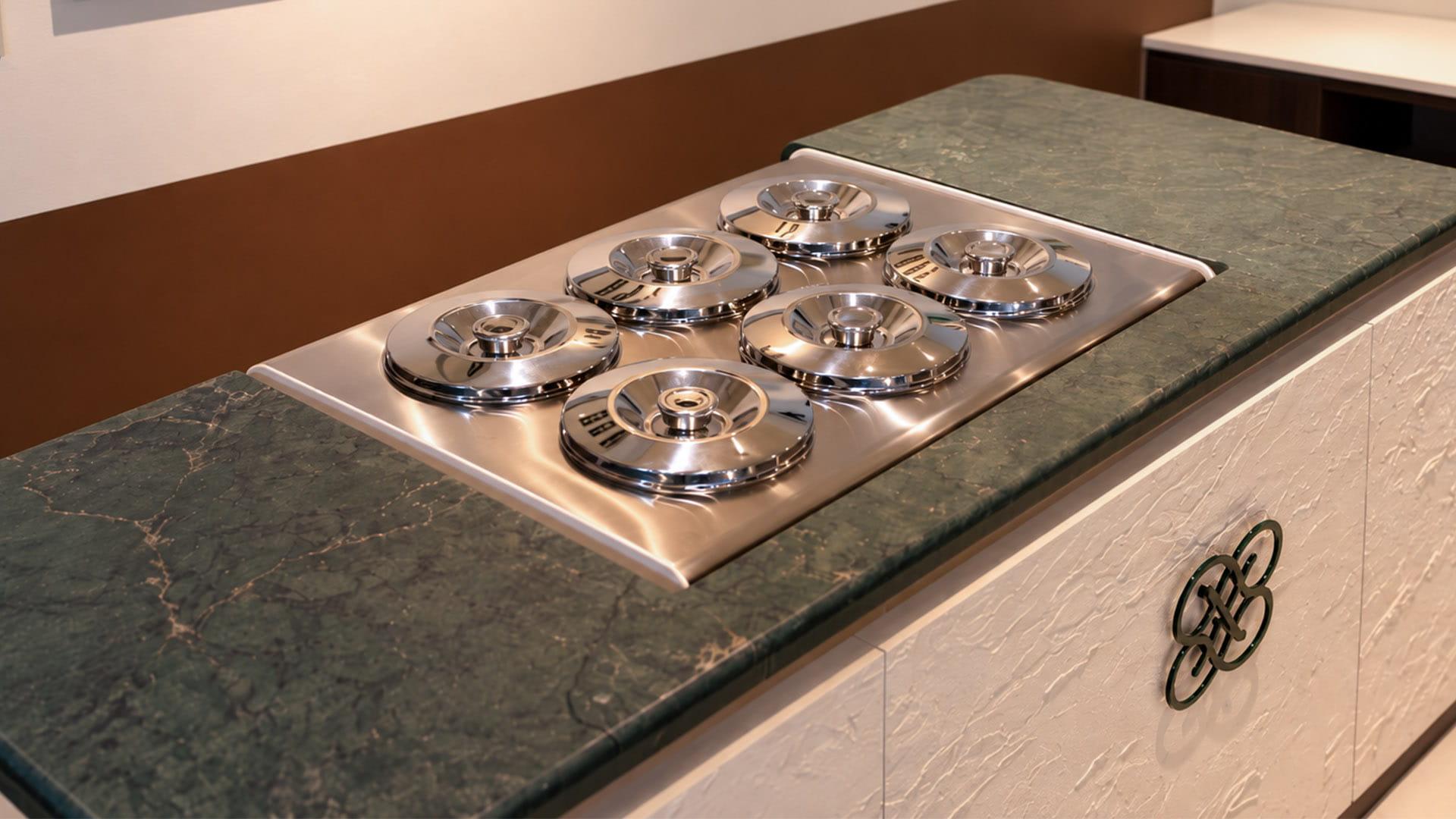
Walk into any office, clinic, hotel, or retail space in Singapore and the first surface a visitor actually stops at is the reception counter. Not the artwork. Not the seating. The counter.
A surface that chips or stains within a year tells a story. One that holds up and looks like someone thought about it tells a different one.
Reception counter design in Singapore commercial spaces has shifted noticeably. Businesses that once defaulted to laminate are now specifying stone, for the durability and for what the material communicates. This piece covers the main stone options and what to work out before fabrication starts.
Why the Surface Material of a Reception Counter Matters
Most surfaces in a commercial space stay in the background. Flooring gets walked on. Walls get glanced at. The reception counter gets leaned on, touched, and looked at closely by every person who walks in.
A counter surface needs to handle daily contact without showing it, look considered up close and from across the lobby, and hold that standard for years.
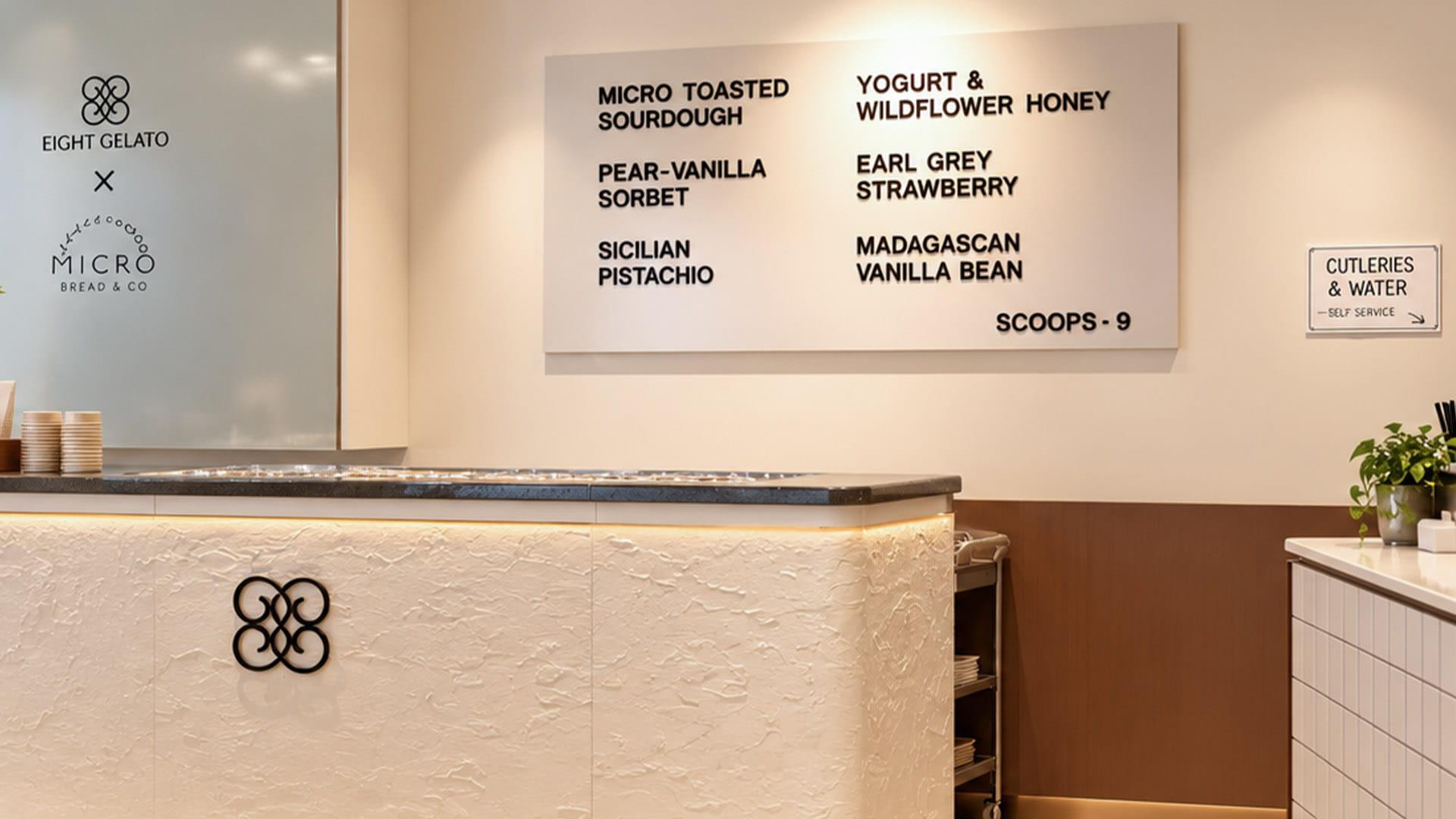
In commercial interiors Singapore settings, the counter is where a visitor forms their first physical impression of the business. A dark polished granite counter reads very differently from a honed concrete-effect sintered panel. One reads formal and established. The other reads contemporary and considered. The material makes that read happen before anyone opens their mouth.
“The counter is where a brand’s first physical impression actually lands. The surface confirms your brief or contradicts it the moment someone leans on it.”
Which Stone Surfaces Work Best for Reception Counters?
Granite, sintered stone, and quartz are the three materials that hold up well for reception counter design in Singapore across different commercial settings. Here is what makes each one the right or wrong call.
Granite: Presence and Longevity
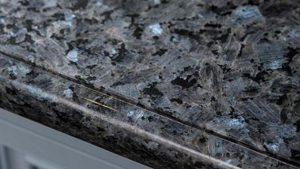
No two granite slabs are identical. The natural variation in grain and tone is exactly the point. A granite reception counter does not look like it came off a production line. It looks like a decision was made.
In hotel lobbies, law firms, and professional offices, that is a considered choice. Granite handles constant contact without scuffing, is naturally heat-resistant, and comes in a wide range of tones. See our granite stone in commercial settings guide for performance details across different reception counter design environments.
Granite is porous and needs resealing roughly once a year. In a large office or hotel with a facilities team, that is routine. In a smaller space with no dedicated maintenance, it adds up. Sintered stone is more practical in those cases.
Sintered Stone: Low Maintenance Under Heavy Use
Sintered stone is made by compressing natural minerals under extreme heat, producing a dense, non-porous slab with no resins or binders. Nothing penetrates the surface. Coffee, hand sanitiser, cleaning chemicals: all of it wipes off.
That matters for a counter that sees heavy daily use. Two years of hard contact and a sintered stone counter looks the same as day one. Laminate and unsealed natural stone do not.
Sintered stone also comes in large-format slabs, which means a full counter run can be fabricated with very few visible seams. See the formats and finishes available in our sintered stone countertop Singapore overview.
Quartz: Colour Consistency Across Multiple Counters
When a fit-out involves more than one counter and colour matching matters, quartz is worth considering. Because it is engineered, slabs from the same production batch are identical. That makes it reliable for retail chains, clinic groups, or corporate offices fitting multiple reception points.
Quartz handles daily contact well and is non-porous. One thing worth knowing: it contains resin, which can discolour under sustained direct heat. For a lobby counter, this rarely applies, but worth flagging if the counter sits near heat-producing equipment.
Edge, Height, and Finish: The Details That Change the Reading
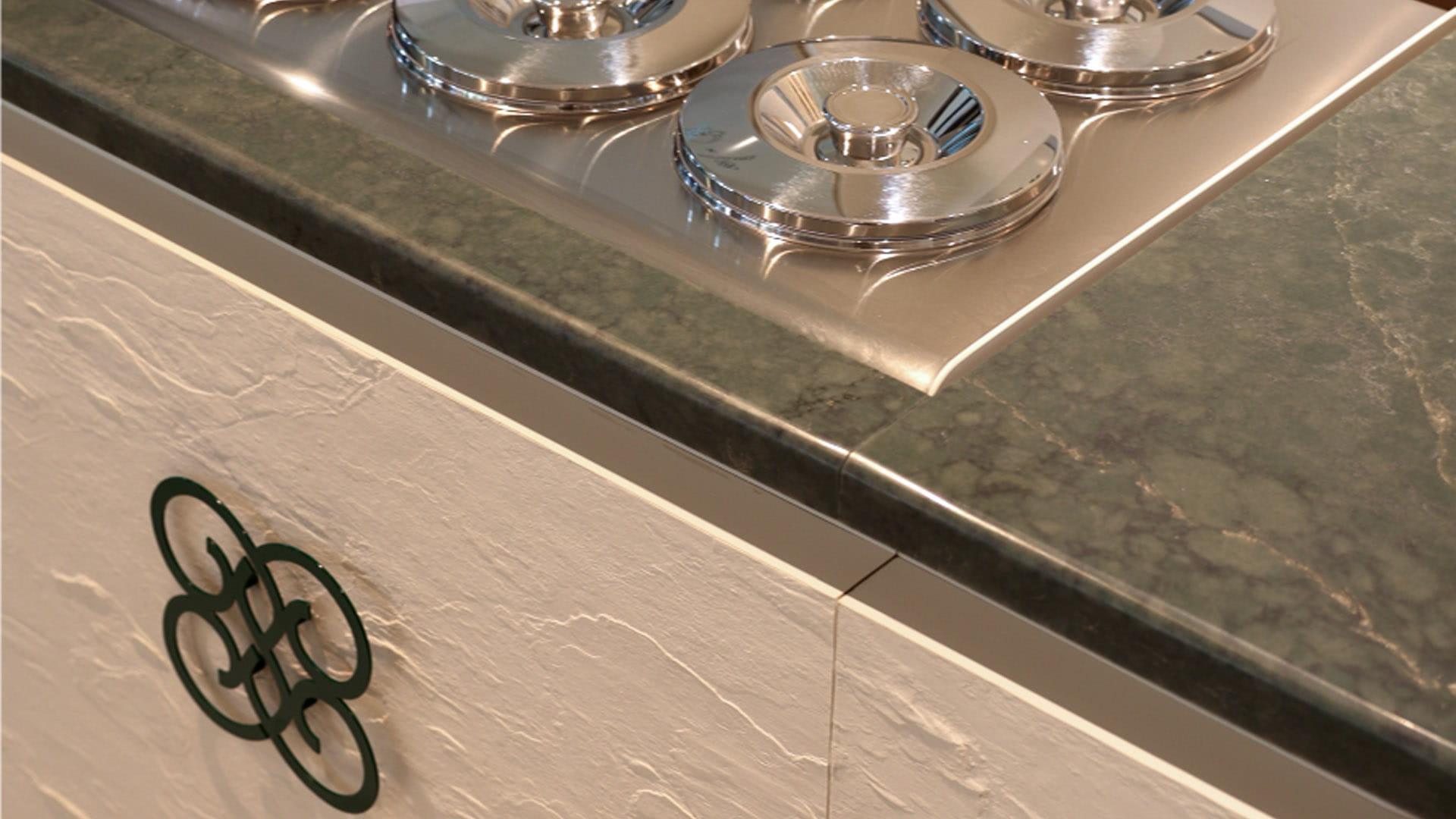
Surface material is only part of the story. Three details often decided too late can shift how the same counter reads in a room significantly.
Edge profile is probably the most underspecified detail. A square-cut edge reads sharp and architectural, which suits corporate offices, legal practices, and clinics. A pencil-round edge is slightly softer and works better in hospitality and retail. A waterfall or mitre-joined edge is a statement for high-end lobby counters, but it costs more and requires more precise fabrication. Lock this in before templating. It cannot be changed after cutting.
Counter height shapes how the space feels for both visitors and staff. Standard standing counter height is around 1,100mm. A dual-level counter with a raised visitor-facing front panel and a lower staff working surface creates clear separation without a physical barrier. That raised front panel is also where the material has the highest visual impact. It sits directly in a visitor’s sightline from the entrance.
Finish type directly affects how much cleaning a counter needs. Polished finishes show every fingerprint and smudge. On a surface that gets touched constantly, expect to wipe it down multiple times a day. Honed or matte finishes hide contact marks far better. For sintered stone, matte comes as standard. For granite, honed needs to be specified at sourcing.
Custom Fabrication for Commercial Reception Counters
A reception counter is rarely a standard size. Entrances have columns or alcoves. Equipment needs cutouts. None of that is on a floor plan.
Fabrication for a commercial setting requires on-site templating, not drawings. Slab thickness is determined by the actual span and load. Cutouts for sockets, screens, and built-in equipment need accurate placement from the start: a miscut in stone cannot be fixed.
At TSD, we handle custom counter top work for commercial fit-outs across Singapore, including reception desks, clinic registration counters, and retail service points. We template on-site and fabricate in-house.
“A commercial counter needs the same care as any structural element in the fit-out. Fabrication quality is just as visible as the material.”
What to Think Through Before You Brief a Fabricator
A few things are worth working out before any slab gets ordered.
How much contact the counter will see day to day. A hotel lobby counter handling hundreds of guests is a different brief from a corporate reception that sees a handful of visitors. Sintered stone and sealed granite handle high contact well. Quartz is strong for moderate contact. Marble is not a practical working surface for a commercial counter, whatever it looks like in photos.
Cleaning routine. Sintered stone and quartz need nothing more than mild soap and water, with no sealing schedule. Granite needs annual resealing. If there is no one whose job includes that, it becomes a problem over time.
How the surface will read alongside everything else in the space. A slab that looks right in isolation can look off next to the flooring, joinery, or wall cladding already specified. Bring samples to the actual site, under the actual lighting, before committing.
According to design guidance on commercial reception spaces, surface material is one of the highest-impact specification decisions in a reception fit-out. Stone and quartz outperform laminate on both durability and professional perception.
Frequently Asked Questions

1. Which stone surface handles the most daily contact in a commercial reception?
Sintered stone holds up best under sustained daily use. It is non-porous, needs no sealing, and resists cleaning chemicals and sanitisers without degrading. Granite is a strong second for settings where natural stone character matters, as long as a resealing schedule is in place.
2. What does fabrication involve for a commercial reception counter?
On-site templating rather than floor plan measurements. Dimensions, cutouts for equipment, load-bearing thickness, and edge profile are confirmed on site before any cutting begins. This produces a result that fits cleanly, rather than one adjusted on installation day.
3. What edge profile suits a reception counter design in a professional office?
A square-cut edge reads precise and architectural, which suits professional services, legal firms, and clinics. A pencil-round edge is slightly softer and suits hospitality and retail. Waterfall and mitre-joined edges work for high-end lobby feature counters but add fabrication cost.
4. Does the surface finish affect how much maintenance a reception counter needs?
Yes, noticeably. Polished finishes show fingerprints on a counter that gets touched all day. Honed or matte finishes hide daily contact marks far better. For sintered stone, matte is available as standard. For granite, honed needs to be specified at the sourcing stage.
5. Can curved or irregularly shaped reception counters be fabricated in stone?
Yes. Sintered stone and quartz can both be cut to curved profiles using waterjet or CNC fabrication. Quartz handles tighter curves more easily, being slightly more workable under tooling. For granite, curves are fabricated in joined sections with seams at the least visible points.
Stone surfaces bring something to a reception counter that laminate does not: a sense that the specification was made deliberately. Whether that reads as granite, sintered stone, or quartz depends on the brief. Visit TSD at 16 Joo Koon Circle by appointment to see the materials at full slab scale, or reach out to discuss fabrication.