Key Takeaways
- Retail countertops face a different kind of wear from residential or office surfaces. Products slide across them constantly, cleaning chemicals are harsher, and edge impacts happen dozens of times a day.
- Polished stone finishes fail faster in retail than in homes. Not because of scratches alone, but because retail downlighting makes micro-abrasion visible within weeks in ways domestic lighting does not.
- Seam placement on a long service counter affects hygiene and visual quality for the lifetime of the counter, but it rarely gets discussed before fabrication begins.
- Sintered stone handles retail wear better than most alternatives because it is non-porous, needs no sealing, and resists the acids and solvents that different retail categories put through surfaces daily.
- Seeing samples in the actual space under retail lighting before committing is not optional. A stone that reads right in a showroom can look completely different under warm amber LEDs.
Introduction
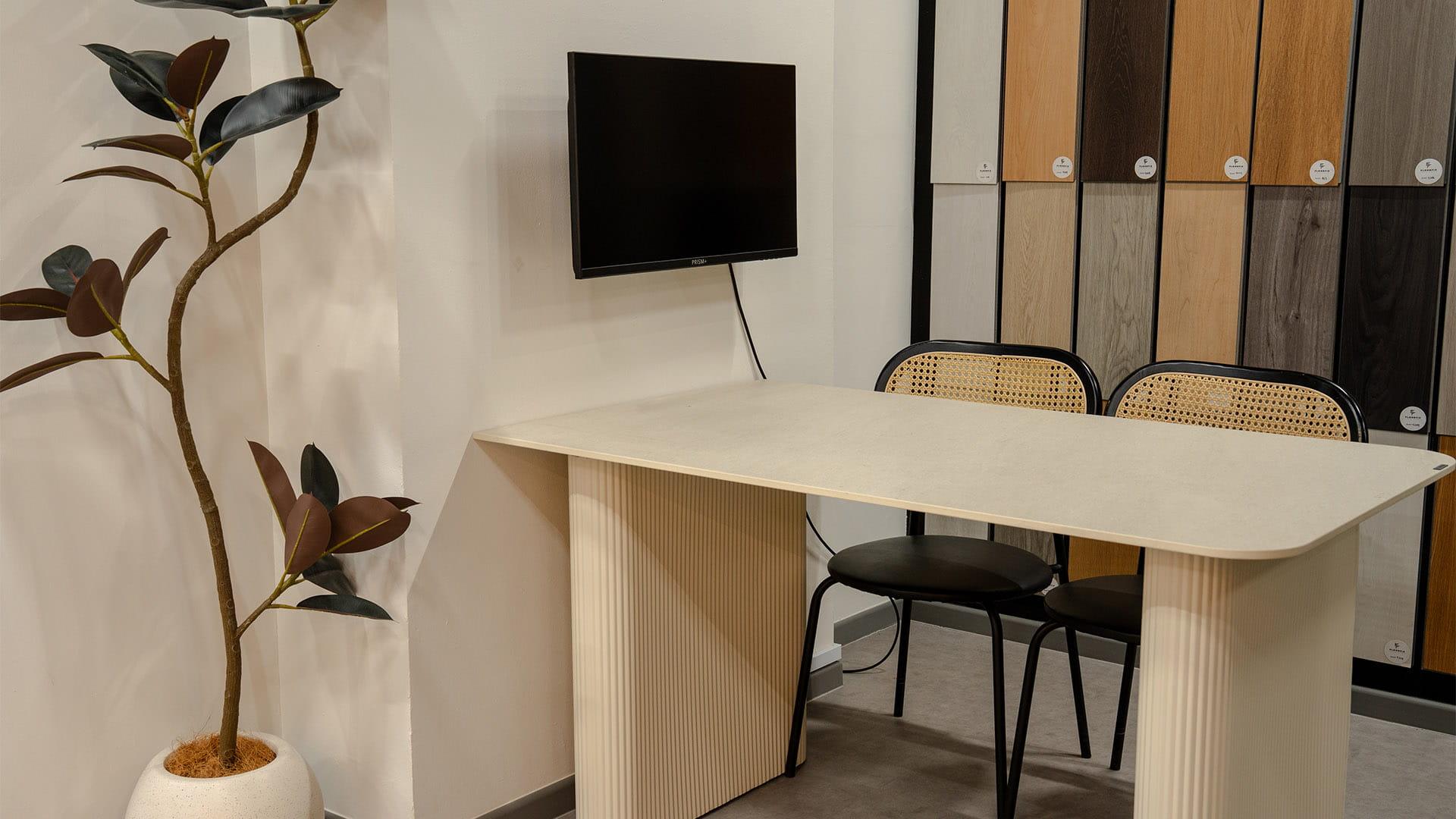
A retail counter is not a kitchen countertop with a longer run. Merchandise gets dragged across it hundreds of times a day. Cleaning products are far more aggressive than anything used at home. Edge impacts from bags and trolleys happen constantly. A material that holds up for a decade in a Singapore kitchen can look worn in under twelve months behind a busy checkout.
This is the gap that catches most retail fit-outs off guard. The surface looks right on install day, then shows its limitations within months of trading. Knowing where those limitations appear, and which materials avoid them, separates a counter that still looks considered after three years from one replaced before the lease renewal.
What Are Retail Countertops?
Retail countertops are the stone or engineered surface panels installed on service counters, checkout points, display plinths, and consultation desks in commercial retail environments. They must perform under sustained daily traffic that no residential surface is designed for. Common settings include fashion boutiques, beauty and skincare counters, F&B service points, electronics stores, and jewellery retailers. Each retail category brings its own surface damage profile.
What Retail Environments Actually Do to Stone Surfaces
The wear on a retail counter concentrates in two places: the service zone where transactions happen, and the counter edge where customers stand.
In the service zone, merchandise slides across the same patch of stone with every transaction. Keys, coins, packaging, and payment devices cross it daily. Guidance on stone surface performance in retail counter applications confirms that materials that scratch easily look worn within months. Those that stain accumulate marks from drinks, ink, and cleaning agents quickly.
Damage agents vary by retail category. Beauty and skincare counters deal with acetone, alcohol sanitisers, and citric acids from toners, all active etching agents on porous stone. Sintered stone and non-porous quartz resist them without sealing. Unsealed granite and marble do not. F&B service counters handle food acids, oils, and hot beverages. Fashion retail sees ink transfers and abrasion from metal fixings on bags and clothing. Most surface consultations ask about traffic volume. Very few ask what substances the counter sees daily. Most surface consultations ask about traffic volume. Very few ask what substances the counter will see daily.
The counter edge is the other failure point. The customer-facing front takes repeated impacts from bags, trolleys, and display products. Thin, detailed edge profiles that look refined in a showroom become vulnerable on a working counter. Bullnose and eased edges absorb impact better. The edge choice is a structural decision that happens to have an aesthetic dimension.
“We specify retail counters to perform on the busiest trading day of the year, not the average day. A surface that holds up at peak looks fine every other day. One specified for average use fails when it matters most.”
Why Polished Stone Fails Under Retail Lighting
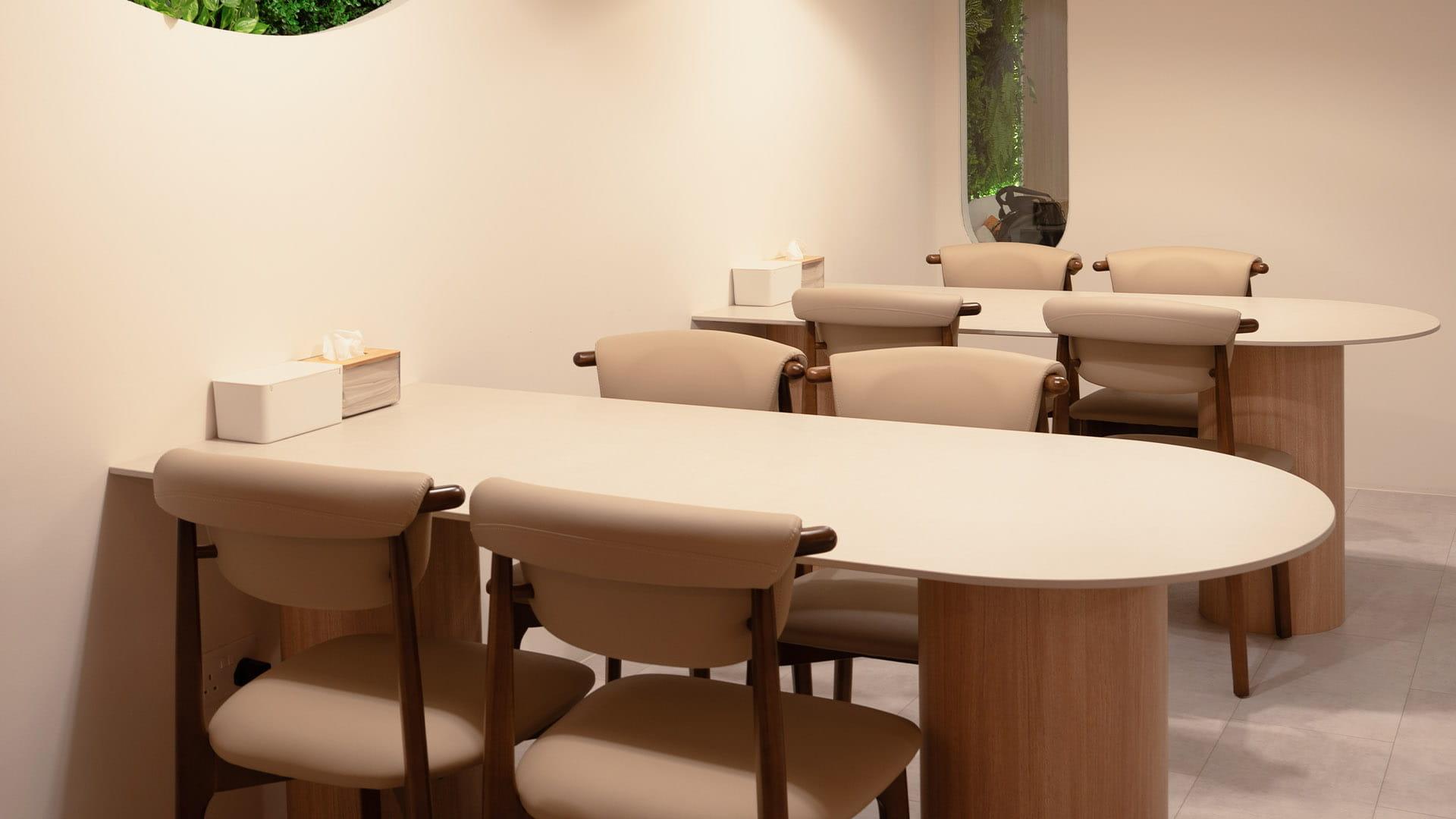
Most stone samples are viewed in showrooms under neutral light. Retail stores almost universally use warm amber LED downlighting at low angles. Under that lighting, polished stone surfaces reveal micro-abrasion far more visibly than in a home.
This is a lighting physics issue, not a finish quality one. A polished surface reflects directional light sharply. Micro-abrasion catches the light and reads as a dulled surface within weeks of trading.
Honed and matte finishes do not reflect directional light the same way. Micro-abrasion on a honed surface disappears into the texture. The counter reads consistently whether it is the first week of trading or the third year.
This also affects colour selection. A cool grey sintered stone that reads clean in a neutral showroom can shift towards green or blue under warm amber LEDs. Seeing slab samples in the actual space under actual lighting before fabrication is the most reliable way to avoid a colour mismatch post-installation.
Seam Placement on Long Counter Runs
A 4-metre retail service counter will have at least one seam. Where that seam falls relative to the transaction point and the payment terminal determines hygiene and visual quality for the lifetime of the counter.
A seam under a card reader or at the main service point becomes a hygiene trap. Liquids and residue settle into it with every transaction. A seam in the display zone, away from active service, is nearly invisible. Planning seam placement against the store’s floor plan before templating is the work of an experienced fabricator.
Large-format sintered stone slabs reduce seam frequency on longer runs, which is one practical advantage for retail fit-outs. Fewer seams means fewer hygiene points to manage and a cleaner visual line. Our overview of sintered stone countertop Singapore specifications covers slab sizes and how they apply to commercial surfaces in Singapore applications.
Which Stone Materials Suit Retail Countertops in Singapore?
| Material | Retail strength | Key limitation |
| Sintered stone | Non-porous, no sealing, resistant to acids and solvents, large-format slabs | Requires skilled fabrication for cutouts |
| Engineered quartz | Non-porous, colour-consistent, strong scratch resistance | Resin content; can discolour under direct sustained heat |
| Granite | Hard, dense, natural character | Porous; needs sealing on a scheduled basis |
| Marble / limestone | Luxury aesthetic | Soft, acid-sensitive; not suited to high-contact zones |
Sintered stone handles the damage agents across retail categories without a sealing schedule, which matters when staff will not apply sealer on a quarterly rotation. It is available in honed and matte finishes that suit the retail lighting issue described above.
Engineered quartz suits fit-outs involving multiple counter units where colour matching matters. Slabs from the same production batch are identical, which works for retail chains fitting several locations. The resin content is relevant only if the counter sits adjacent to high-heat equipment.
Granite suits briefs where natural stone character is the point: jewellery boutiques or high-end fashion counters where permanence is part of the brand. The sealing commitment needs to be built into the maintenance plan. Marble and limestone are for display plinths only, not service counters.
Our comparison of sintered stone vs quartz covers the performance trade-offs in detail.
Fabrication for Retail Counter Runs
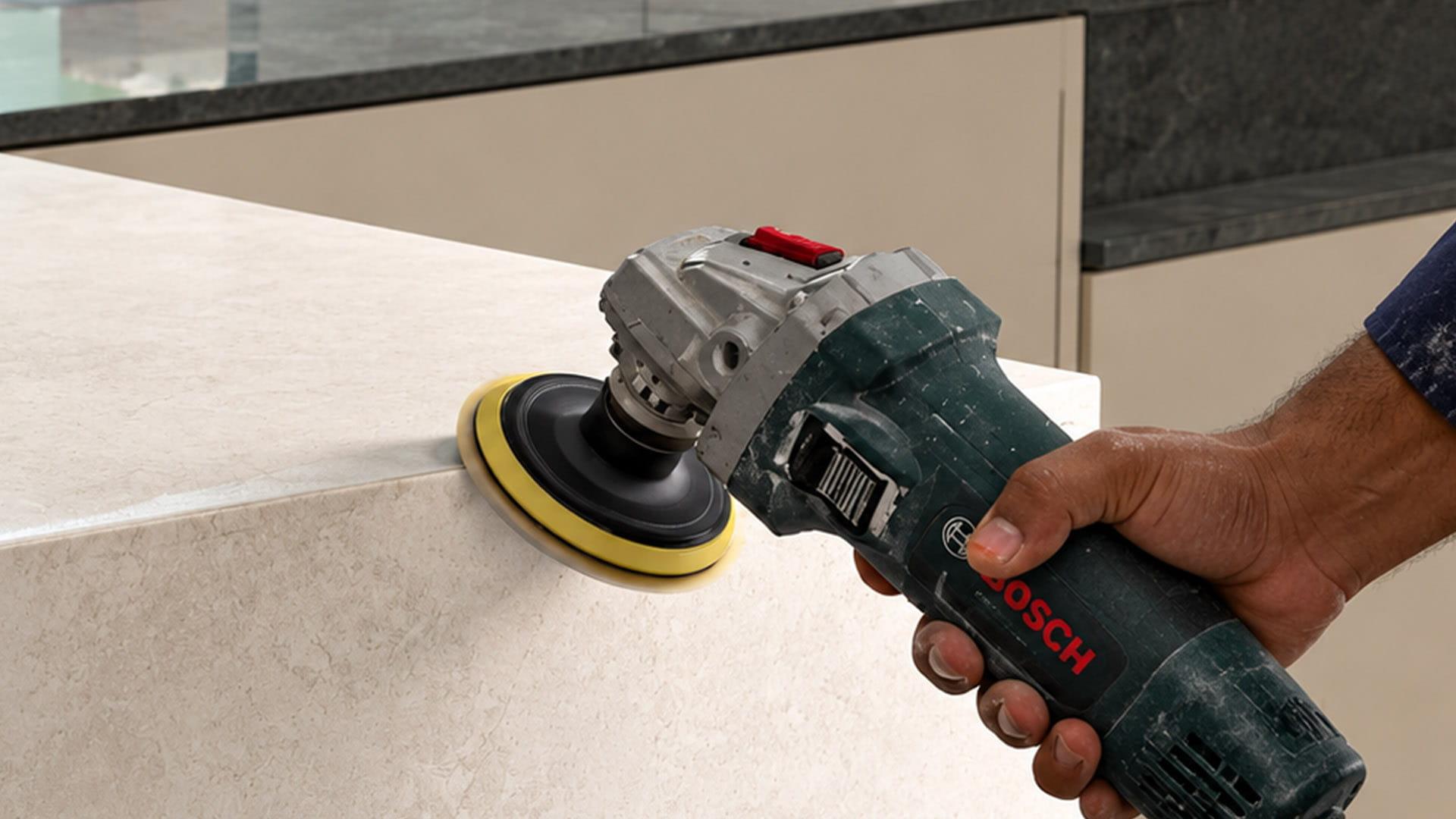
Retail counters require cutouts for payment terminals, receipt printers, scanner mounts, and cable pass-throughs. Each cutout is a stress point. Corners must be radiused and positioned over solid substrate support to prevent cracking under daily load.
For the countertop installation timeline, the template must be taken early based on accurate site measurements, before services and substrate are fixed. Any dimensional error at template stage affects every subsequent step. On a fixed store opening date, a late template cascades through the whole fit-out. See the countertop installation guide for questions worth asking any fabricator before signing the brief.s-to-ask-before-installation/) covers the questions worth asking any fabricator before signing the brief.
“Retail countertop installation sits on the critical path for a store opening. The fabricator who coordinates early with the contractor is the one who delivers a counter ready when the doors open.”
Frequently Asked Questions
1. What makes retail countertops different from office or hospitality counters?
Retail counters concentrate wear at specific points: the service zone and the customer-facing edge. These face a frequency of contact that office desks and hotel surfaces never see. They also encounter retail-specific damage agents like acetone, alcohol, food acids, and ink. The material and finish specification has to account for these patterns, not just general commercial durability.
2. Why do polished stone surfaces fail faster in retail environments?
Retail stores use warm, directional LED downlighting that reveals micro-abrasion on polished stone quickly. The same surface contact that would be invisible at home reads as visible dulling under angled retail light within weeks of trading. Honed and matte finishes handle the same daily contact without showing it.
3. Which stone surface is best for a beauty or skincare retail counter?
Sintered stone handles the chemical exposure of beauty retail better than alternatives. Acetone, alcohol-based sanitisers, and citric acid from skincare products are active etching agents on porous stone. Sintered stone is non-porous and resists all of these without sealing. Engineered quartz is a strong second choice.
4. How should seam placement be decided on a long retail service counter?
Seams should be positioned away from the active service zone and payment terminal location. A seam under the card reader is a hygiene and maintenance problem from day one. The fabricator needs the store’s equipment layout and transaction point positions before templating so seams can be planned deliberately.
5. Can the same materials used in residential kitchens work for retail countertops?
The materials can be the same, but the specification decisions are different. Finish, edge profile, seam planning, and cutout positioning for retail equipment all require commercial-context thinking that differs from a home kitchen brief. A supplier without retail fit-out experience may deliver the right material with the wrong fabrication decisions for a trading counter.
Retail countertops fail in predictable ways when the specification ignores how the space actually trades. The damage agents, lighting conditions, seam placement, and edge profile all shift the outcome. To see how commercial surfaces Singapore retailers choose perform at full slab scale, contact us at tsd.enquiry@gmail.com or visit 16 Joo Koon Circle.